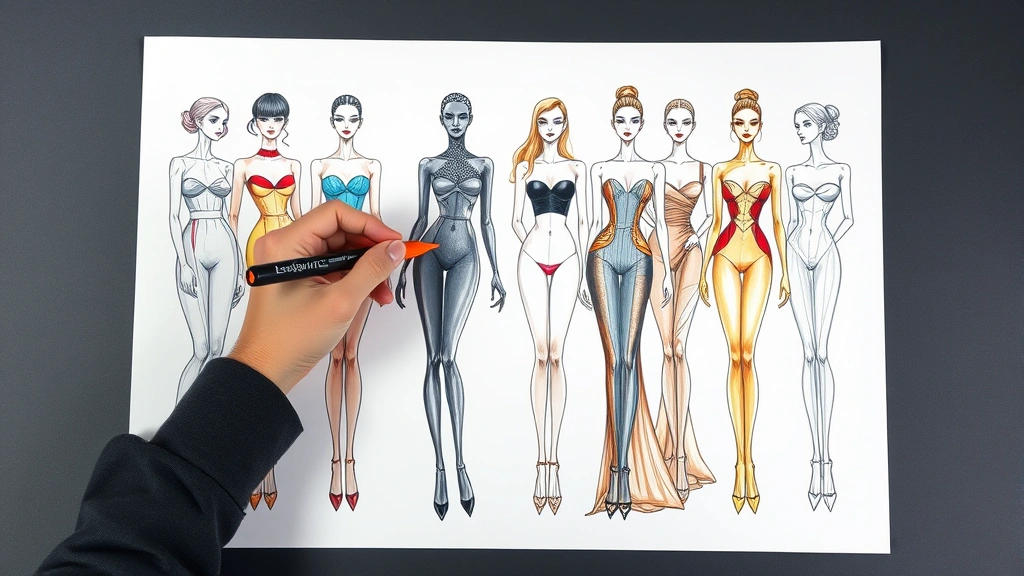
Master Fashion Croquis: Designer’s Guide
Fashion croquis is the foundational language of design, a visual shorthand that transforms imagination into tangible sketches. Whether you’re an aspiring fashion designer, a seasoned professional, or an enthusiast exploring the creative world of fashion, mastering the art of croquis drawing is essential. This specialized technique allows designers to communicate their vision with precision, capturing silhouettes, proportions, and design details that will eventually become wearable art. The croquis serves as the bridge between conceptual thinking and technical execution, making it an indispensable skill in the fashion industry.
The journey to mastering fashion croquis begins with understanding its purpose and significance. Unlike anatomical figure drawing, fashion croquis emphasizes elongated proportions, stylized features, and the relationship between fabric and form. Professional designers use croquis to rapidly prototype ideas, present collections to clients, and communicate design intent to pattern makers and manufacturers. Understanding the fundamentals of fashion croquis will elevate your design presentations and help you develop a distinctive visual voice that sets your work apart in the competitive fashion landscape.
Understanding Fashion Croquis Basics
Fashion croquis, derived from the French word “croquer” meaning to sketch quickly, represents the foundation of all fashion illustration. The purpose of croquis extends beyond simple figure drawing; it’s a specialized art form that distills the human form into proportions and poses that best showcase clothing design. A well-executed croquis demonstrates movement, elegance, and the designer’s understanding of how garments interact with the body.
The modern fashion croquis evolved from classical figure drawing but with distinct modifications. The standard fashion figure is typically nine to ten heads tall, compared to the anatomically correct seven to eight heads of a realistic human figure. This elongation serves a practical purpose: it provides more space for detailed design work and creates the aspirational silhouette that dominates high fashion imagery. Understanding this fundamental principle is crucial when you begin exploring different fashion types and how they’re represented visually.
Professional designers recognize that croquis isn’t merely artistic expression—it’s a communication tool. When you present a collection to investors, manufacturers, or clients, your croquis drawings convey professionalism and clarity. A poorly proportioned or sloppily executed croquis can undermine even the most innovative design concepts. This is why mastering the technical aspects of croquis drawing is as important as developing your creative vision. Many designers spend years refining their croquis technique, developing a personal style that becomes recognizable and distinctive within their body of work.

Essential Proportions and Measurements
Proportions form the backbone of effective fashion croquis. The standard fashion figure follows a mathematical system of measurements that ensures consistency and professional appearance. The head serves as the basic unit of measurement, with most fashion figures measuring nine heads in total height. Breaking this down: the head occupies one unit, the torso (from chin to waist) spans approximately two and a half units, the hips to knees measure about two and a half units, and the legs from knee to ankle take up approximately two units.
The shoulder width in fashion croquis typically measures two head widths, creating the broad, elegant shoulders that characterize high fashion silhouettes. The waist is drawn significantly narrower—approximately one and a quarter head widths—emphasizing the hourglass or streamlined proportions favored in design presentation. Hip width generally matches shoulder width or is slightly narrower, depending on whether you’re drawing a more voluptuous or androgynous figure. These proportions aren’t arbitrary; they’ve been refined through decades of fashion illustration tradition and serve the practical purpose of showcasing garment construction clearly.
Understanding these measurements allows you to draw croquis quickly and consistently. Many professional designers develop a personal grid system or use template overlays to maintain accurate proportions while working rapidly. The ability to sketch multiple croquis variations efficiently is particularly valuable when developing different fashion styles within a single collection. Once you internalize these proportions, your hand develops muscle memory, allowing you to produce professional-quality croquis without constant measurement checks.
Mastering the Female Figure
The female fashion croquis represents the most commonly illustrated figure type in the industry. Mastering this form requires attention to subtle anatomical details while maintaining the stylized proportions that define fashion illustration. The female croquis emphasizes curves, grace, and elegance, with careful attention to how the body’s natural lines can be enhanced or abstracted to create visual interest.
When drawing the female figure, begin with a basic skeleton or construction lines. Start with a vertical center line representing the figure’s spine and balance. Mark the head position at the top, then measure downward in head-units to establish key anatomical landmarks: shoulders, bust, waist, hips, knees, and ankles. The female figure typically features a narrower shoulder-to-hip ratio compared to the male form, with curves emphasized at the bust and hip areas. The neck should appear graceful and elongated, connecting the head smoothly to the shoulders without anatomical accuracy that would disrupt the fashion silhouette.
The pose significantly impacts how effectively you communicate design elements. Three-quarter views, where the figure turns slightly away from the viewer, create dynamic presentation and allow you to show garment details on both front and side simultaneously. The contrapposto stance—where the body’s weight shifts to one leg—introduces natural movement and elegance. When drawing the female croquis in various poses, pay attention to how the torso twists, how the hips shift with weight distribution, and how fabric drapes differently depending on body positioning. These nuances transform static drawings into dynamic presentations that capture the essence of movement inherent in fashion.
Professional female croquis typically feature minimal facial features—often just a suggestion of eyes and lips rather than detailed portraiture. This intentional simplification keeps focus on the clothing design rather than the model’s face. The hair should be suggested rather than meticulously rendered, allowing viewers to concentrate on the garment silhouette. Understanding how to balance detailed clothing illustration with simplified figure representation is a key skill that separates amateur sketches from professional design presentations.
Drawing the Male Silhouette
Male fashion croquis presents distinct challenges and opportunities compared to female figure drawing. The male form emphasizes broader shoulders, a straighter silhouette from shoulder to hip, and more angular lines overall. The male fashion figure, while still elongated compared to realistic human proportions, often appears slightly less stylized than female croquis, reflecting contemporary menswear’s emphasis on tailoring and structural precision.
When constructing the male croquis, begin with the same foundational proportions but adjust the shoulder width to approximately two and a quarter head widths, slightly broader than the female figure. The male torso extends from the shoulders in a relatively straight line to the hips, without the pronounced waist curve of the female form. The chest area should be defined with subtle musculature suggested through shading rather than exaggerated anatomy. Hip width in the male croquis typically measures narrower than shoulders, creating the inverted triangle silhouette associated with masculine tailoring.
Male fashion illustration benefits from attention to garment-specific details that communicate menswear’s technical precision. Lapels, button placement, pocket construction, and seam lines become particularly important in male croquis since menswear often relies on structured tailoring rather than body-conforming draping. The stance for male croquis can be more static and grounded than female figures, reflecting menswear’s emphasis on power and stability. However, contemporary menswear design increasingly embraces more relaxed, dynamic poses that challenge traditional masculinity representations in fashion.
Understanding both female and male croquis allows designers to explore diverse fashion style possibilities and create inclusive collections. Modern fashion design increasingly features androgynous figures and gender-neutral silhouettes, requiring designers to adapt traditional croquis techniques to represent evolving fashion sensibilities. Mastering the foundational male and female forms provides the technical base from which these experimental variations emerge.
Advanced Fabric Rendering Techniques
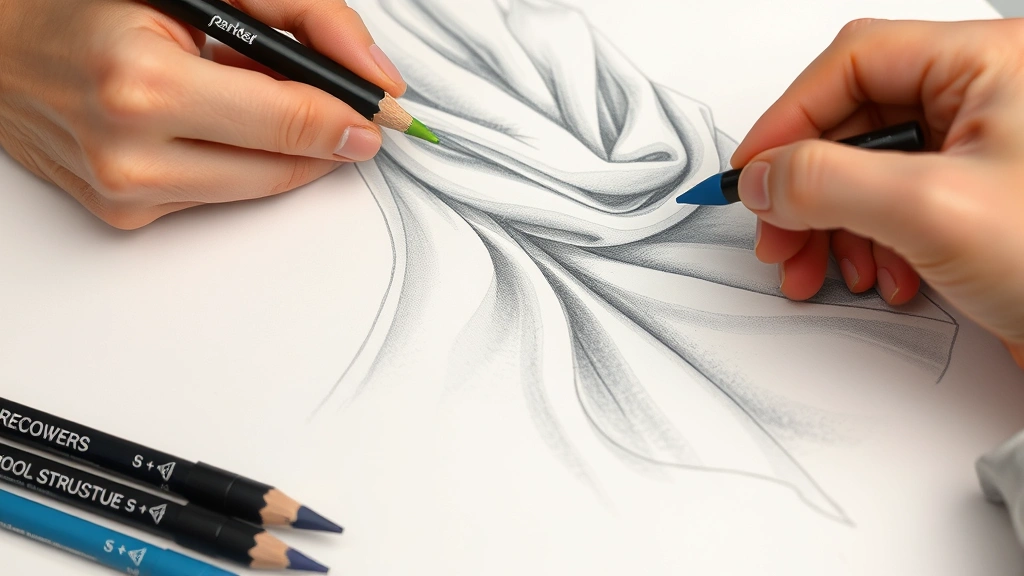
The distinction between amateur fashion sketches and professional illustrations often lies in how fabric is rendered. Advanced croquis work goes beyond simply outlining garment shapes; it communicates fabric weight, texture, and movement through strategic use of shading, line weight variation, and artistic technique. A silk chiffon drapes differently than structured wool, and your illustration should communicate these material differences clearly.
Professional designers employ various techniques to suggest fabric characteristics. Light, flowing fabrics like chiffon or silk charmeuse are rendered with soft, curved lines that suggest gentle movement and fluidity. Heavy fabrics like wool or denim require more angular, deliberate folds that suggest structure and weight. The use of white space, or negative space, becomes crucial in fabric rendering—knowing where NOT to draw creates the illusion of light reflecting off smooth surfaces. Strategic shading with colored pencils, markers, or digital tools adds dimension and helps viewers understand three-dimensional garment construction from a two-dimensional illustration.
Texture rendering adds another sophisticated layer to croquis illustration. Patterns, prints, and surface treatments require careful consideration of scale and perspective. A large-scale floral print reads differently on a full skirt than on a fitted bodice. Metallic fabrics benefit from bright highlights and reflective line work. Textured knits might be suggested through subtle stippling or cross-hatching. Mastering these techniques requires practice and observation—studying how actual fabrics behave in photographs, on runways, and in person develops the visual vocabulary necessary for convincing fabric illustration.
Digital tools have revolutionized fabric rendering possibilities, allowing designers to layer textures, adjust transparency, and experiment with color combinations rapidly. However, traditional media remains valuable for developing fundamental skills. Many professional designers sketch initial concepts in pencil, refine them with markers or colored pencils, and then translate successful designs into digital formats. This hybrid approach combines the spontaneity and tactile feedback of traditional media with the flexibility and precision of digital tools.
Professional Tools and Materials
Creating professional-quality fashion croquis requires appropriate tools and materials. The choice between traditional and digital media depends on personal preference, project requirements, and workflow efficiency. Many designers maintain proficiency in both approaches, selecting the medium most suitable for each design phase.
Traditional Media Essentials:
- Quality pencils in various grades (HB for sketching, 2H for light construction lines)
- Erasers that don’t damage paper (kneaded erasers for precision, vinyl erasers for general use)
- Fine-tip markers for outline work and detail
- Colored markers or pencils for rendering and shading
- Specialty papers designed for fashion illustration (smooth surfaces for marker work)
- Rulers and proportional dividers for maintaining accurate measurements
- Fashion croquis templates or figure templates for consistency
Digital Tools and Software:
- Drawing tablets with pressure sensitivity for natural mark-making
- Professional illustration software (Procreate, Adobe Illustrator, Clip Studio Paint)
- Digital fashion croquis templates and brushes
- Color management tools for accurate representation
- Stylus pens with ergonomic design for extended use
Investing in quality materials demonstrates commitment to your craft and produces superior results. Professional-grade markers, for instance, offer better color saturation and blending capabilities than student-grade alternatives. Similarly, illustration paper designed specifically for fashion work provides the right surface texture for marker application and color layering. While quality materials represent an initial investment, they ultimately improve your work’s presentation and longevity, making them essential for serious designers building professional portfolios.
Many designers create personal croquis templates that reflect their preferred proportions and style. These templates, whether hand-drawn originals scanned and printed repeatedly or digital files saved for consistent use, dramatically increase efficiency. Templates allow designers to focus creative energy on garment design rather than repeatedly constructing accurate figure proportions. Professional design studios often maintain standardized templates ensuring consistency across multiple designers’ work.
Building Your Croquis Portfolio
Your croquis portfolio represents your technical skills, design sensibility, and creative vision. Building a strong portfolio requires strategic selection of your best work, demonstrating range while maintaining cohesive visual identity. Unlike illustration portfolios that showcase finished artwork, croquis portfolios emphasize the design development process and your ability to communicate design concepts clearly.
When curating your portfolio, include croquis that demonstrate technical proficiency across multiple figure types, poses, and garment categories. Showcase your ability to draw both simple, elegant silhouettes and complex, detailed designs. Include examples of different fashion categories—evening wear, sportswear, menswear, accessories—to demonstrate versatility. Professional portfolios typically feature 15-25 of your strongest pieces, each telling a story about your design perspective and technical capabilities.
Document your design process by including preliminary sketches alongside finished croquis. This progression illustrates your design thinking and demonstrates that your final work represents intentional creative decisions rather than lucky accidents. Many design schools and employers value seeing the developmental work that leads to polished final presentations. This transparency showcases your professionalism and design methodology.
Consider how your croquis style reflects your personal design aesthetic. Some designers favor minimalist line drawings emphasizing silhouette clarity. Others employ rich color and detailed rendering suggesting specific fabrics and finishes. Your consistent visual approach becomes your signature, making your work recognizable within the fashion industry. Developing this distinctive style requires experimentation, practice, and willingness to refine your technique continuously. Explore various fashion quotes and design philosophies that inspire your visual direction, allowing these influences to shape your unique croquis approach.
Professional croquis portfolios increasingly include digital presentations alongside traditional examples. Creating a digital portfolio website or PDF presentation allows you to showcase your work to potential employers, collaborators, and clients efficiently. Many designers maintain Instagram accounts dedicated to croquis work, building professional networks and demonstrating consistent productivity. The digital landscape has democratized portfolio presentation, allowing emerging designers to reach industry professionals without traditional gatekeepers.
Networking within the design community provides invaluable feedback and opportunities. Sharing your croquis work with fellow designers, mentors, and industry professionals generates constructive criticism that accelerates skill development. Fashion communities online and in-person offer critique sessions, collaborative projects, and professional connections that benefit your career trajectory. Engaging authentically with the design community demonstrates your commitment to the profession and your openness to continuous improvement. Understanding broader fashion industry trends helps position your work within contemporary design conversations.
Consider how your croquis portfolio evolves as your skills develop and your design perspective matures. Regularly updating your portfolio with new work maintains relevance and demonstrates continued growth. Many professional designers maintain archives of earlier work to track their development journey, finding value in recognizing how their technical skills and design sensibility have evolved. This historical perspective provides context for your current work and informs future directions.
For designers interested in fashion for diverse age groups and body types, including croquis that represent fashion for women over 50 and other underrepresented demographics demonstrates inclusive design thinking. Contemporary fashion increasingly emphasizes representation across age, body type, and ability, making diverse croquis work valuable professionally and ethically important.
FAQ
What is the standard height of a fashion croquis figure?
Fashion croquis figures typically measure nine to ten heads in total height, compared to the anatomically correct seven to eight heads of realistic human proportions. This elongation provides space for detailed design work and creates the aspirational silhouette characteristic of high fashion illustration.
Can I use fashion croquis templates if I’m a professional designer?
Yes, absolutely. Professional designers frequently use croquis templates to increase efficiency and maintain consistency across collections. Templates allow designers to focus creative energy on garment design rather than repeatedly constructing accurate proportions. Many design studios maintain standardized templates ensuring cohesive presentation across multiple designers’ work.
What’s the difference between fashion illustration and fashion croquis?
Fashion croquis focuses on the figure and garment silhouette with minimal background or additional detail. Fashion illustration encompasses broader artistic approaches, often including backgrounds, accessories, styling details, and finished artistic presentation. Croquis serves the practical design development purpose, while illustration emphasizes artistic expression and finished presentation.
Should I include facial features in my fashion croquis?
Professional croquis typically feature minimal facial features—often just a suggestion of eyes and lips rather than detailed portraiture. This intentional simplification keeps focus on clothing design rather than the model’s face. However, contemporary fashion illustration increasingly features more detailed faces reflecting the importance of inclusive representation and personality in fashion.
Is digital or traditional media better for fashion croquis?
Both approaches have distinct advantages. Traditional media offers spontaneity and tactile feedback valuable for developing fundamental skills. Digital tools provide flexibility, rapid iteration, and easy color experimentation. Many professional designers maintain proficiency in both, selecting the medium most suitable for each design phase or personal preference.
How long does it take to master fashion croquis?
Developing basic proficiency in fashion croquis typically requires several months of consistent practice. However, mastering advanced techniques, developing a distinctive personal style, and achieving the speed necessary for professional work generally requires years of dedicated practice. Most designers continue refining their croquis technique throughout their careers as their design sensibility evolves.