Revive 1940s Fashion? Vintage Expert Insights on Timeless Dresses
The 1940s remain one of fashion’s most captivating eras, a decade when elegance met necessity and style emerged from rationing constraints. As vintage fashion continues its resurgence, 1940s fashion dresses have become the cornerstone of contemporary wardrobes, offering women a blueprint for sophisticated, timeless dressing. This transformative period gave us silhouettes that flattered every body type, fabrics that whispered luxury, and design philosophies that prioritized quality over quantity—lessons remarkably relevant in today’s sustainable fashion movement.
What makes 1940s style so magnetic today isn’t merely nostalgia; it’s the inherent sophistication embedded in every seam. Whether you’re drawn to the structured femininity of swing dresses, the practical elegance of utility wear, or the glamour of wartime evening gowns, understanding the nuances of this era unlocks a treasure trove of styling possibilities. Fashion experts, vintage curators, and style historians have increasingly recognized the 1940s as a goldmine for anyone seeking to build a wardrobe that transcends fleeting trends.
The Historical Context of 1940s Fashion
Understanding 1940s fashion requires acknowledging the profound impact of World War II on design and textile availability. The decade split into two distinct fashion narratives: wartime austerity (1940-1945) and post-war exuberance (1945-1949). During the war years, fabric rationing meant designers had to innovate brilliantly within constraints. The British government implemented the Utility Scheme, which standardized clothing production and eliminated unnecessary embellishments—yet paradoxically, this restriction sparked incredible creativity. Women learned to maximize every piece, layering strategically and accessorizing ingeniously.
This era’s fashion philosophy centered on making do and looking marvelous. Hemlines rose to conserve fabric, shoulder pads broadened to create an imposing silhouette, and women embraced practicality without sacrificing femininity. The connection between 1940s style and earlier decades becomes evident when you explore 1930s men’s fashion, which established the broader silhouette trends that evolved into 1940s designs. Post-war, Christian Dior’s revolutionary “New Look” in 1947 shifted fashion dramatically, reintroducing abundance and femininity after years of restraint.
Fashion historians and vintage experts emphasize that 1940s dresses embodied resilience and adaptability—qualities that resonate powerfully with modern consumers seeking meaningful wardrobe investments. The decade taught us that true style transcends material abundance; it emerges from understanding proportion, knowing your body, and choosing pieces that serve multiple purposes.
Iconic 1940s Dress Silhouettes
The most recognizable 1940s fashion dresses showcase several distinctive silhouettes that have remained relevant across generations. The A-line dress emerged as the decade’s workhorse silhouette, cinching at the waist and flowing gently over the hips—incredibly flattering and endlessly versatile. This shape proved so successful that contemporary designers continue referencing it, understanding its universal appeal and comfort.
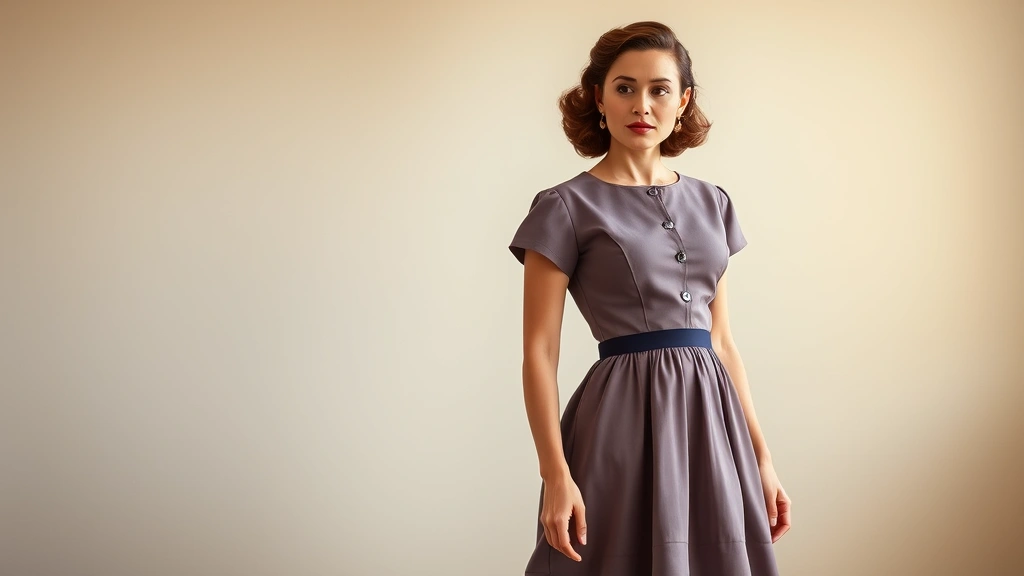
The swing dress or tea dress represents perhaps the most iconic 1940s silhouette. Fitted through the bodice with a dramatically gathered skirt, these dresses allowed women freedom of movement while maintaining an hourglass figure. The swing dress became synonymous with wartime dancing and socializing, embodying the decade’s spirit of finding joy amid uncertainty. Vintage experts note that swing dresses flatter most body types because the gathered skirt skims the body rather than clinging.
Another quintessential style is the shirt dress, which married practicality with elegance. Designed with a button-front closure, structured shoulders, and often a belt at the waist, shirt dresses offered women professional attire that didn’t sacrifice femininity. This silhouette bridges the gap between utilitarian wartime wear and sophisticated dressing.
The wrap dress gained popularity during the 1940s, offering adjustable fit and the ability to transition from day to evening wear. Its versatility made it invaluable during fabric rationing, and its flattering crossover bodice has ensured its survival in contemporary wardrobes.
Evening wear showcased more elaborate designs: bias-cut gowns that clung to the body with liquid elegance, often featuring dramatic draping or strategic cutouts. These gowns, typically sleeveless or with delicate straps, represented the glamour that persisted even during wartime, reserved for special occasions and sophisticated social events.
Fabrics and Materials of the Era
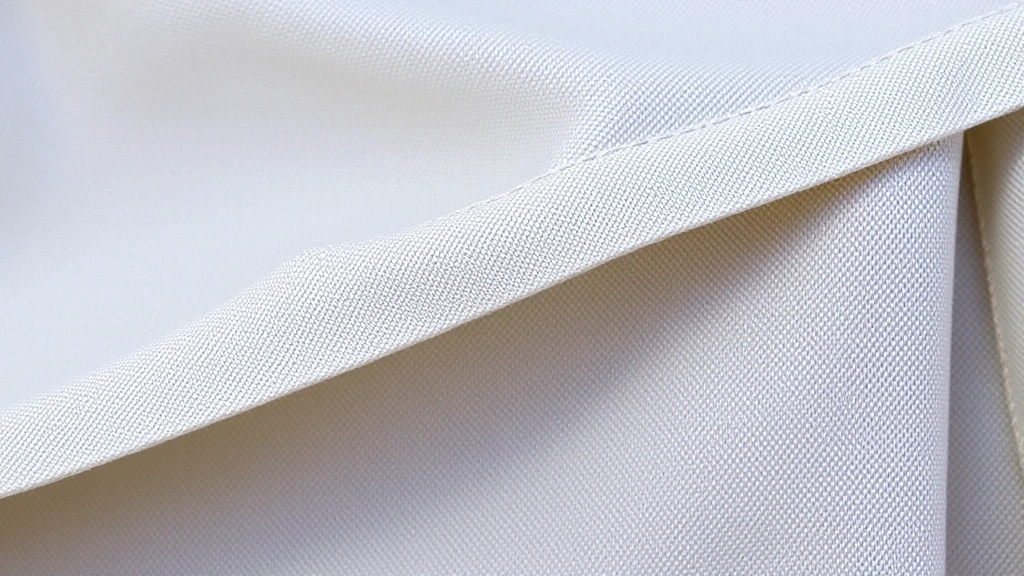
The fabric choices of the 1940s tell stories of innovation born from necessity. During wartime, silk became scarce and was often reserved for parachutes, pushing designers toward alternatives. Rayon, a semi-synthetic fiber, became the darling of 1940s fashion, offering a luxurious drape and sheen at a fraction of silk’s cost and scarcity. Vintage experts prize authentic 1940s rayon dresses for their liquid movement and characteristic luster.
Cotton gained prominence during the 1940s, particularly for daywear and practical dresses. Quality cotton fabrics—including cotton sateen and cotton gabardine—provided durability and visual richness. Wool appeared in structured dresses and suits, particularly for autumn and winter wear, offering the weight and formality that 1940s silhouettes required.
The decade also saw experimentation with synthetic blends and early polyesters, though these remained relatively uncommon until the 1950s. Designers worked with what was available, often combining fabrics ingeniously—silk panels with cotton bodies, rayon linings with wool exteriors—creating pieces that balanced aesthetics with practicality.
Textile patterns reflected the era’s mood: florals offered escapism and femininity, geometric prints provided modern sophistication, polka dots delivered cheerful practicality, and stripes created visual interest while hiding wear. Solid colors dominated, with jewel tones (emerald, sapphire, burgundy) and pastels favored for evening wear, while earth tones and primary colors appeared in daywear.
Understanding fabric composition helps contemporary vintage shoppers identify authentic 1940s pieces. The weight, hand, and drape of period-appropriate fabrics differ markedly from modern reproductions, and experts recommend learning to recognize these tactile differences when sourcing vintage dresses.
How to Style 1940s Dresses Today
Reviving 1940s fashion dresses doesn’t require full costume recreation; instead, it’s about understanding the era’s principles and translating them into modern contexts. The key lies in balancing vintage with contemporary—pairing a 1940s dress with modern accessories, shoes, and styling creates an approach that feels current rather than costumey.
For daywear, style a 1940s swing dress or shirt dress with contemporary sneakers or flat leather shoes, minimal jewelry, and a structured coat. This juxtaposition grounds vintage pieces in the present while honoring their original design. A simple 1940s day dress pairs beautifully with modern denim jackets, contemporary sunglasses, and minimal makeup—creating an effortlessly chic aesthetic that appeals to minimalist sensibilities.
Professional settings welcome 1940s silhouettes gracefully. A fitted 1940s dress with modest neckline and three-quarter sleeves transitions seamlessly into office environments when styled with contemporary blazers and modern accessories. The structured shoulders and cinched waists of 1940s dresses create an inherently polished appearance that aligns with professional dress codes.
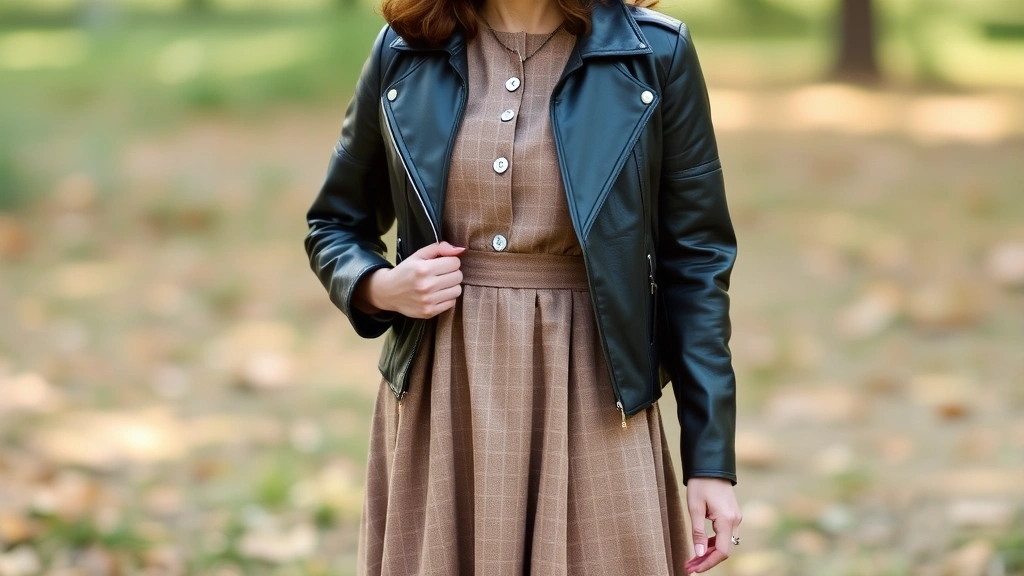
Evening wear offers opportunities for more dramatic styling. A 1940s bias-cut gown worn with contemporary strappy heels, art deco jewelry, and a modern clutch creates sophisticated elegance. Alternatively, pair a 1940s evening dress with unexpected modern elements—metallic sneakers, a leather jacket, or contemporary statement jewelry—for a more avant-garde approach.
Hair and makeup significantly impact how 1940s dresses read in contemporary contexts. Soft waves, victory rolls, or sleek low ponytails reference period styling without appearing theatrical. Opt for vintage-inspired makeup—defined brows, subtle liner, and matte lipstick—but keep it wearable by modern standards. The goal is evoking the era’s spirit rather than recreating period-accurate costume.
Layering extends the versatility of 1940s dresses considerably. Cardigans, slip dresses underneath sheer fabrics, tights in various opacities, and contemporary outerwear transform the same dress for different seasons and occasions. This styling flexibility aligns beautifully with contemporary sustainability values—maximizing the utility of fewer pieces.
Sourcing Authentic Vintage Pieces
Finding genuine 1940s fashion dresses requires knowledge, patience, and understanding what distinguishes authentic pieces from later reproductions. Vintage experts recommend examining several key indicators: seam construction, which in the 1940s typically featured flat-felled or French seams rather than modern serged finishes; labels and tags, which evolved throughout the decade and can help date pieces accurately; and fasteners, including zippers (which became common but remained relatively primitive), buttons, and hooks-and-eyes used in specific configurations.
The fiber content provides crucial dating information. Authentic 1940s labels list fibers in specific ways, using terminology like “rayon” or “art silk” rather than modern synthetic names. Seam allowances in 1940s garments tend to be generous—often ½ inch or more—reflecting the era’s construction standards. Hand-stitching details, particularly in hems and seams, indicate quality and authentic vintage construction.
Reputable vintage dealers, specialized vintage boutiques, and carefully vetted online platforms offer the best chances of acquiring authentic pieces. Established sellers provide detailed provenance information, transparent descriptions of condition, and accurate sizing based on measurements rather than modern size labels. Vintage clothing sizing differs dramatically from contemporary standards—a 1940s size 12 often corresponds to a modern size 4-6—making measurements essential for successful purchases.
Auction houses specializing in vintage fashion, museum deaccessioning sales, and estate sales frequently offer authentic 1940s dresses. Building relationships with local vintage dealers, attending vintage fashion fairs, and joining online communities dedicated to vintage fashion provide access to pieces before they reach mainstream markets.
Condition assessment matters significantly. Authentic vintage dresses may show age appropriately—slight discoloration, minor wear, or historical alterations—but should have structural integrity. Expert vintage dealers can advise on restoration possibilities, from simple cleaning to professional mending that preserves the garment’s integrity while improving wearability.
Modern Designers Reviving 1940s Aesthetics
Contemporary fashion designers increasingly draw inspiration from the 1940s, recognizing the era’s timeless design principles and enduring appeal. Understanding fashion style evolution reveals how 1940s silhouettes continue influencing modern collections. Major fashion houses regularly reference 1940s design elements—structured shoulders, cinched waists, A-line skirts, and bias-cut details—in their ready-to-wear and haute couture collections.
Brands specializing in vintage-inspired contemporary fashion have built successful businesses around 1940s aesthetics. Vogue frequently features contemporary interpretations of 1940s silhouettes, and designers like Hell Bunny, Collectif, and Lindy Bop have built devoted followings through their faithful yet wearable 1940s-inspired collections. These modern pieces offer the advantage of contemporary construction, sizing consistency, and accessibility while maintaining the visual integrity of the original era.
Sustainable fashion brands increasingly embrace 1940s principles of quality, durability, and timeless design. The decade’s philosophy of buying less but better aligns perfectly with contemporary ethical fashion movements. Designers are revisiting 1940s construction techniques—reinforced seams, quality fabrics, and attention to detail—recognizing these elements create garments that endure decades rather than seasons.
High-end designers reference 1940s aesthetics in innovative ways. Runway collections frequently feature draping techniques inspired by 1940s bias-cut gowns, silhouettes echoing 1940s structured shoulders, and color palettes drawn from wartime fashion. These references validate the 1940s as a legitimate design source and introduce contemporary audiences to the era’s enduring aesthetic principles.
The relationship between Roaring 20s men’s fashion and 1940s women’s fashion reveals how design evolution works across decades. Understanding these connections enriches appreciation for how silhouettes, construction methods, and design philosophies develop across time periods.
Contemporary designers also address the practical aspects of 1940s fashion that made it revolutionary. Modern reproductions often incorporate stretch fabrics, improved fasteners, and construction techniques that maintain the aesthetic while improving comfort and durability. This thoughtful adaptation ensures that 1940s-inspired pieces work for contemporary lifestyles.
FAQ
What are the most flattering 1940s dress styles for different body types?
A-line and swing dresses flatter most body types beautifully. Pear-shaped figures benefit from dresses with detailed or gathered skirts that balance hips. Apple-shaped bodies suit wrap dresses and styles with defined waistlines. Rectangular figures look wonderful in dresses with cinched waists and gathered skirts that create curves. Hourglass figures can wear virtually any 1940s silhouette, but fitted styles showcase the proportions beautifully.
How do I care for authentic vintage 1940s dresses?
Handle vintage pieces gently and store them in acid-free tissue, away from direct sunlight and moisture. Dry cleaning should be entrusted to specialists experienced with vintage textiles. Minor stains can sometimes be addressed with gentle spot-cleaning using period-appropriate methods. For valuable pieces, consult conservation professionals before attempting any cleaning or repairs.
Can I wear 1940s dresses to modern events?
Absolutely. 1940s dresses work beautifully for weddings, cocktail parties, date nights, and professional events. The key is styling them with contemporary accessories and keeping hair and makeup wearable by modern standards. A 1940s dress with modern shoes, jewelry, and accessories reads as sophisticated vintage styling rather than costume.
Where’s the best place to find affordable 1940s reproduction dresses?
Vintage-inspired contemporary brands like Collectif, Hell Bunny, and Lindy Bop offer affordable options that capture 1940s aesthetics. Online retailers, specialty vintage boutiques, and even some contemporary department stores stock 1940s-inspired pieces. These reproductions provide accessibility while supporting the continued appreciation of the era’s design principles.
How do I identify authentic 1940s dresses versus reproductions?
Examine seam construction (flat-felled or French seams indicate authenticity), check labels for period-appropriate fiber descriptions, assess the hand and drape of fabrics, and look for construction details like generous seam allowances and hand-stitching. Authentic pieces often show appropriate age-related wear. Consulting with vintage experts or established dealers provides confidence in authenticity.
Are 1940s dresses suitable for everyday wear?
Yes, many 1940s styles work wonderfully for everyday dressing. Practical styles like shirt dresses, A-line dresses, and wrap dresses transition easily into contemporary life when styled with modern accessories. The durability and quality of authentic 1940s pieces often means they can withstand regular wear, making them excellent investment pieces.
What accessories complement 1940s dresses in modern styling?
Contemporary sneakers, flat leather shoes, or modern heels work beautifully with 1940s dresses. Minimal jewelry, modern sunglasses, and contemporary bags create a balanced aesthetic. Cardigans, denim jackets, and leather jackets provide layering options. The goal is creating dialogue between vintage and contemporary elements rather than full period recreation.
Understanding the richness of vintage fashion history through pieces like 1940s dresses connects us to periods of remarkable creativity and resilience. Whether you’re collecting authentic vintage pieces, investing in contemporary reproductions, or simply appreciating the era’s design principles, the 1940s offers endless inspiration for building a wardrobe that transcends trends and celebrates timeless style.
For deeper exploration of fashion evolution across decades, exploring types of fashion helps contextualize how the 1940s fits within broader fashion history. Additionally, understanding contemporary trends through men’s fashion 2025 reveals how vintage inspiration continues influencing modern design across all categories. The Fashion Spot provides ongoing coverage of vintage fashion’s influence on contemporary collections, while Harper’s Bazaar regularly features stories on vintage fashion revival and sustainable style approaches rooted in historical fashion principles.