Why Were Poodle Skirts Popular? Fashion Historian Insights
The poodle skirt stands as one of the most iconic and instantly recognizable garments of the 1950s, evoking nostalgia for a simpler era of sock hops, drive-in movies, and youthful exuberance. Yet behind this whimsical fashion statement lies a fascinating convergence of post-war optimism, economic prosperity, and the emergence of a distinct youth culture that would reshape American fashion forever. Understanding why poodle skirts captured the imagination of millions of teenage girls requires examining the social, economic, and cultural landscape of the 1950s—a decade of unprecedented transformation in fashion, entertainment, and social values.
Fashion historians recognize the poodle skirt as far more than a simple trend; it represents a pivotal moment when young people began asserting their own fashion preferences, separate from their parents’ aesthetic sensibilities. The skirt’s popularity coincided with the rise of teen culture as a distinct demographic with its own purchasing power, musical tastes, and fashion consciousness. This period marked a significant shift from the rigid, conservative silhouettes that dominated the 1940s women’s fashion era, introducing a more playful, expressive approach to clothing that would influence generations to come.
The Post-War Context: Economic Boom and Youth Culture
To understand the poodle skirt phenomenon, we must first recognize the extraordinary economic conditions of the 1950s. Following World War II, America experienced unprecedented prosperity. Returning soldiers, subsidized housing through the GI Bill, and booming industrial production created a massive middle class with disposable income. For the first time in American history, teenagers had significant spending power, and manufacturers quickly recognized this lucrative market segment.
The post-war period also witnessed a dramatic shift in family dynamics. Suburban development exploded, creating communities populated by young families with children. These suburban environments fostered a distinct teenage culture, complete with its own social rituals, gathering places, and fashion codes. The poodle skirt emerged directly from this cultural context—it was a garment designed for and embraced by teenagers seeking to express their identity and belonging within peer groups.
This era represented a departure from the austere fashion constraints of wartime. During World War II, fabric rationing and practical necessity dictated simpler, more utilitarian clothing. As rationing ended and fabric became abundantly available, designers and manufacturers celebrated with more exuberant, playful designs. The poodle skirt, with its voluminous silhouette and whimsical appliqué, embodied this newfound freedom and optimism.
The Rise of Teenage Fashion Consciousness
The 1950s marked a revolutionary moment in fashion history: the emergence of teenagers as a distinct fashion demographic with their own style preferences. Before this era, young people typically wore scaled-down versions of adult clothing. But the 1950s introduced the concept of teen fashion—garments specifically designed for and marketed to adolescents, reflecting their unique social position and aspirations.
Fashion magazines began dedicating entire sections to teenage style. Vogue and other publications recognized that teenagers possessed both purchasing power and strong opinions about fashion. The poodle skirt became the quintessential garment of this teen fashion revolution, representing youthful exuberance, femininity, and fun—qualities that teenage girls sought to express through their clothing choices.
The poodle skirt’s popularity was directly tied to its affordability and accessibility. Unlike the expensive, elaborate gowns worn by their mothers, teenage girls could purchase poodle skirts relatively inexpensively, often buying multiple versions in different colors or with different appliqué designs. This democratization of fashion allowed more girls to participate in the trend, spreading its popularity across economic classes and geographic regions.
Additionally, the poodle skirt required minimal sewing skills for the appliqué decoration, making it a popular project for girls to customize their own skirts. This participatory aspect—the ability to personalize and create variations—enhanced the garment’s appeal and contributed significantly to its widespread adoption across America.
Design Elements That Made Poodle Skirts Iconic
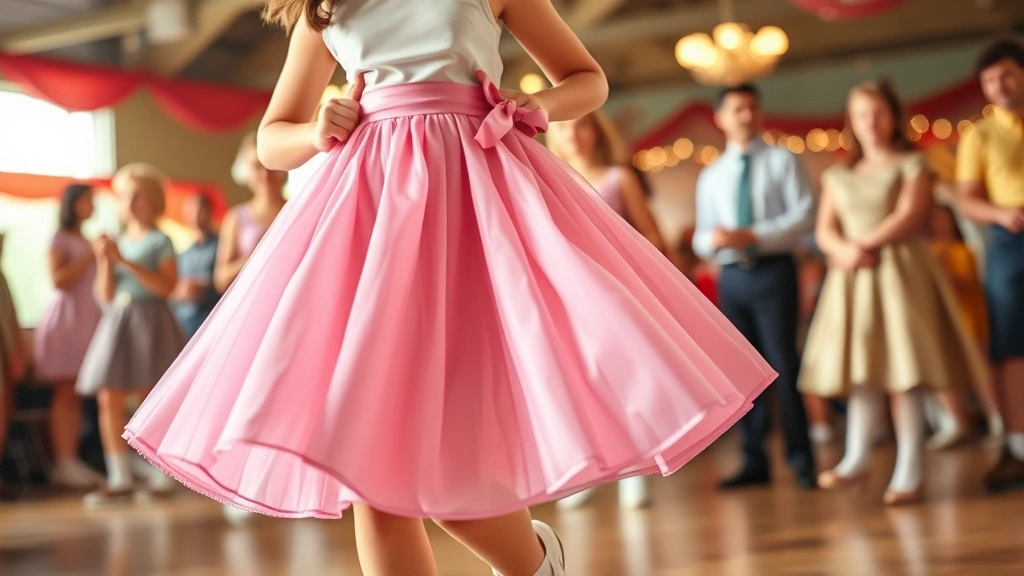
The poodle skirt’s design brilliance lies in its combination of practical and aesthetic elements. The full, gathered skirt featured a high waistline that created a flattering silhouette for teenage girls. The voluminous skirt moved beautifully when dancing or walking, creating a sense of freedom and movement that contrasted sharply with the more restrictive fashions of previous decades.
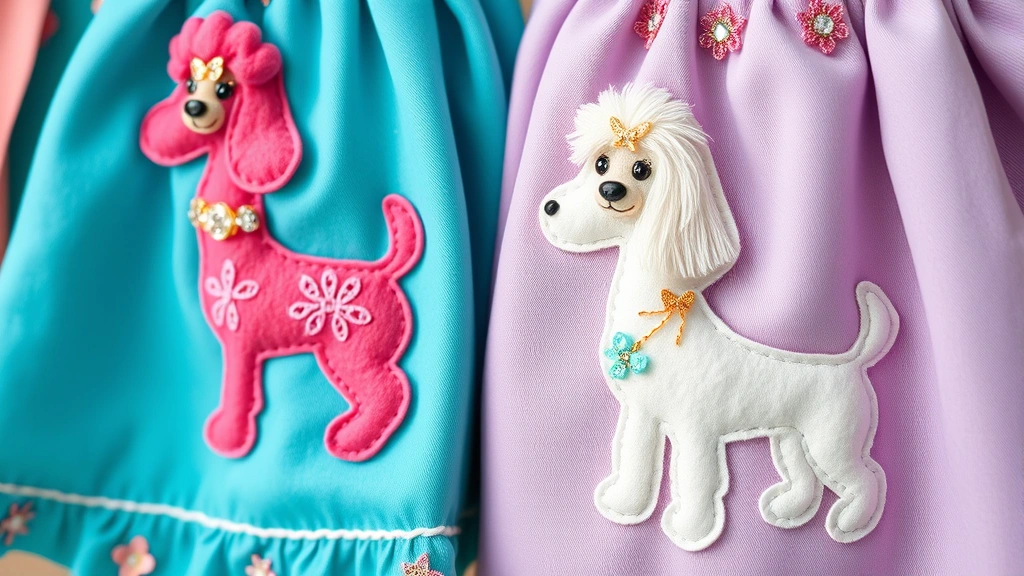
The signature poodle appliqué—typically rendered in contrasting felt or fabric—served as the garment’s focal point. These whimsical dog designs, often wearing decorative collars or rhinestone embellishments, introduced humor and personality to the skirt. Beyond poodles, girls also wore skirts adorned with other playful motifs: musical notes, hearts, stars, and various other decorative elements that allowed for individual expression within the broader trend.
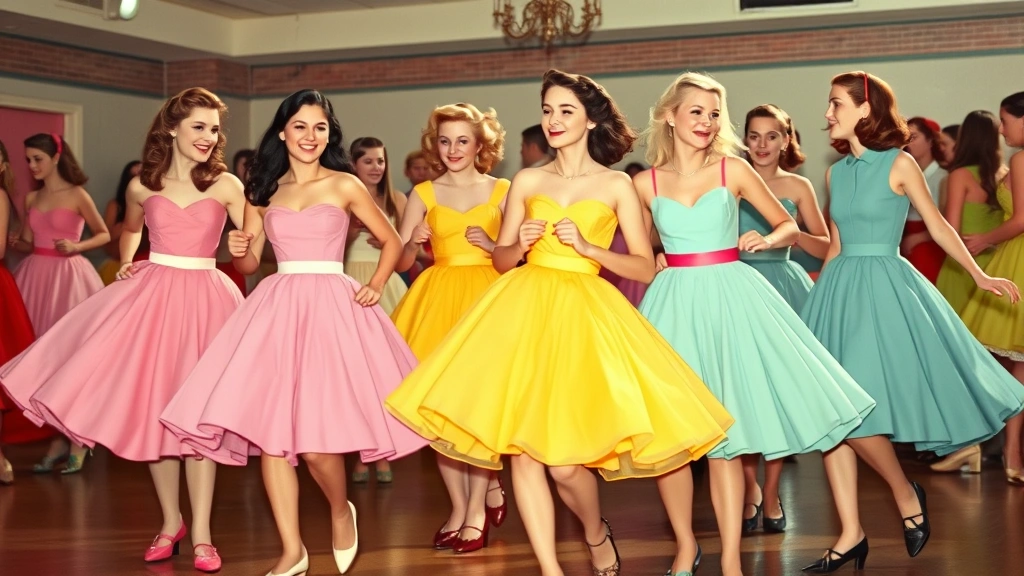
The color palette of poodle skirts was equally important to their popularity. Pastel shades—pink, yellow, turquoise, lavender, and mint green—dominated the market. These soft, cheerful colors appealed to teenage girls seeking to project femininity and approachability while maintaining individuality through color selection. The pastel palette also complemented the era’s broader aesthetic preferences, visible across home furnishings, automobiles, and consumer goods.
Poodle skirts were typically paired with bobby socks, saddle shoes, and fitted tops that emphasized the silhouette created by the full skirt. This coordinated look became the uniform of 1950s teenage girl fashion, immediately recognizable and reproducible by girls across the nation. The simplicity of assembling this complete outfit—requiring only a few basic pieces—contributed to its universal adoption.
Media, Entertainment, and Cultural Influence
The poodle skirt’s meteoric rise cannot be separated from its prominent placement in 1950s entertainment and media. Television became the dominant medium during this era, and shows like American Bandstand and The Mickey Mouse Club featured teenage dancers and performers wearing poodle skirts. These television broadcasts reached millions of viewers weekly, providing constant exposure and aspirational imagery for teenage girls nationwide.
Hollywood films also played a crucial role in popularizing the poodle skirt. Movies featuring teenage characters and high school settings showcased poodle skirts as the essential garment for socially successful teenage girls. The association between poodle skirts and popularity, romance, and fun created powerful psychological incentives for girls to acquire and wear them.
Music and dance culture further amplified the poodle skirt’s popularity. As rock and roll emerged as the dominant teenage music genre, the poodle skirt became the preferred garment for dancing at school dances, sock hops, and teen hangouts. The full skirt’s movement created visually exciting effects when girls danced, making the garment particularly photogenic and memorable in entertainment contexts.
The poodle itself became a status symbol and cultural icon during the 1950s. Toy poodles, which had been relatively obscure in America, suddenly became fashionable pets among the suburban middle class. This parallel trend reinforced the poodle skirt’s cultural relevance and desirability. The cute, non-threatening nature of the poodle design appealed to cultural anxieties about teenage girls while still allowing them to express individuality and participate in youth culture.
The Poodle Skirt’s Social Significance
Beyond fashion, the poodle skirt carried significant social meaning. For teenage girls, wearing a poodle skirt signaled membership in a particular social group and demonstrated awareness of current fashion trends. The garment functioned as a form of social currency, communicating that a girl was fashionable, fun, and socially connected.
The poodle skirt also represented a specific vision of American femininity during the Cold War era. The garment was decidedly feminine, emphasizing curves and celebrating youthful beauty in ways that aligned with 1950s gender ideology. Yet the poodle skirt also allowed girls a degree of playfulness and self-expression that more formal, adult women’s fashion did not permit. This balance—between conventional femininity and youthful exuberance—made the poodle skirt particularly appealing.
For parents and social authorities, the poodle skirt represented a manageable form of teenage rebellion. While some worried about the influence of rock and roll and teenage culture, the poodle skirt seemed like wholesome, cute fashion that posed no real threat. This cultural acceptance from adults made it easier for girls to adopt the style without facing significant parental resistance, unlike more provocative fashion choices that emerged later in the decade.
The poodle skirt also democratized fashion in important ways. Unlike exclusive designer fashions available only to wealthy families, poodle skirts could be purchased affordably by working-class and middle-class girls alike. This accessibility meant that girls from diverse economic backgrounds could participate in the same fashion trend, creating a sense of shared teenage culture that transcended class boundaries—at least in terms of fashion.
How Poodle Skirts Fit Into Broader 1950s Fashion Trends
To fully understand poodle skirt popularity, we must contextualize them within the broader landscape of 1950s fashion history. The decade was characterized by a return to traditional gender roles and emphasized femininity after the more practical, androgynous fashions of the war years. Christian Dior’s “New Look,” which debuted in 1947 and dominated the 1950s, celebrated exaggerated femininity through full skirts, narrow waists, and structured silhouettes.
The poodle skirt represented a teenage adaptation of these broader 1950s silhouette preferences. Like adult women’s fashion, poodle skirts emphasized full skirts and defined waistlines. However, poodle skirts were less structured and more playful than high fashion, making them accessible and age-appropriate for teenage girls. This relationship between haute couture and teenage fashion demonstrates how trends trickle down through fashion hierarchies, adapted for different age groups and market segments.
The poodle skirt also fit within the era’s celebration of consumer culture and material abundance. The 1950s witnessed the rise of shopping as a leisure activity and fashion as an expression of personal identity and social status. Teenage girls, with their newfound purchasing power, embraced this consumer ethos enthusiastically. The ability to buy multiple poodle skirts, mix and match colors and appliqué designs, and constantly refresh one’s wardrobe reflected and reinforced 1950s consumer culture values.
Interestingly, the poodle skirt emerged during a period when fashion was becoming increasingly bifurcated between adult and teenage styles. While adult women wore more conservative, structured fashions designed by couturiers, teenage girls embraced the poodle skirt’s playful informality. This divergence marked the beginning of distinct fashion markets for different age groups—a segmentation that has only intensified in contemporary fashion.
The Legacy and Modern Resurgence
Though the poodle skirt’s moment of peak popularity was relatively brief—roughly the mid-1950s through the early 1960s—its cultural impact has proven enduring. The garment has become synonymous with 1950s nostalgia, instantly evoking the era in popular imagination. This nostalgic appeal has ensured the poodle skirt’s survival in popular culture, appearing regularly in films, television shows, and themed events celebrating 1950s culture.
The poodle skirt experienced a significant resurgence in the 1980s and 1990s when 1950s nostalgia became fashionable again. Designers and retailers recognized the commercial potential of retro 1950s fashion, and poodle skirts returned to stores and runways as novelty items and vintage-inspired pieces. This revival demonstrated the enduring appeal of the garment and its status as an iconic symbol of American fashion history.
Contemporary fashion continues to reference and reinterpret the poodle skirt. Modern designers have created sophisticated, ironic takes on the garment, elevating it to high fashion through expensive fabrics, designer labels, and conceptual frameworks. These contemporary interpretations acknowledge the poodle skirt’s historical significance while demonstrating its potential for reinvention and recontextualization.
The poodle skirt has also become a staple of costume culture, worn at themed parties, Halloween celebrations, and retro-themed events. This costume function has kept the garment visible in popular culture and accessible to new generations. Young people today who may know little about 1950s fashion culture immediately recognize the poodle skirt as a symbol of that era, demonstrating its remarkable cultural durability.
Fashion historians and scholars continue to study the poodle skirt as a significant artifact of American fashion and cultural history. The garment illuminates important questions about youth culture, consumer capitalism, gender representation, and the relationship between fashion and social identity. As a case study in how trends emerge, spread, and endure, the poodle skirt offers valuable insights into fashion dynamics and cultural change.
Understanding the poodle skirt’s popularity also helps us appreciate how fashion evolution through the decades reflects broader social transformations. Each fashion trend carries within it evidence of the era’s values, anxieties, and aspirations. The poodle skirt, in all its whimsical charm, tells the story of post-war American optimism, the emergence of youth culture, and the democratization of fashion through consumer capitalism.
The poodle skirt’s journey from novelty item to cultural icon to nostalgic artifact demonstrates fashion’s power to capture and communicate historical moments. As we continue to navigate contemporary fashion trends, the poodle skirt reminds us that seemingly trivial garments can carry profound cultural significance and enduring historical importance. Whether viewed as a charming relic of the past or a continuing source of fashion inspiration, the poodle skirt remains a testament to the creativity, exuberance, and cultural influence of 1950s American teenage girls.
For those interested in how to find your personal style, the poodle skirt era offers valuable lessons about self-expression through fashion and the importance of understanding historical context in contemporary style choices. Exploring vintage fashion like poodle skirts can inspire modern styling approaches that honor the past while creating something distinctly contemporary.
FAQ
When exactly did poodle skirts become popular?
Poodle skirts reached peak popularity from approximately 1955 to 1960, though they began appearing in stores in the early 1950s and continued to be worn into the 1960s. The mid-to-late 1950s represented their golden age of ubiquity among American teenage girls.
Who invented the poodle skirt?
While no single inventor can be credited, the poodle skirt concept emerged from multiple manufacturers and designers working in the mid-1950s. The silhouette itself drew from broader 1950s fashion trends, while the poodle appliqué became popular through various commercial sources. The garment represents a collaborative evolution rather than a single creation.
Why was the poodle specifically chosen as the main design element?
Toy poodles became fashionable status symbols among affluent Americans during the 1950s, particularly in suburban communities. The cute, non-threatening nature of poodles appealed to cultural preferences of the era, and the image translated effectively to felt appliqué designs. The poodle’s whimsical quality aligned perfectly with the playful aesthetic that teenage fashion embraced.
How much did poodle skirts cost in the 1950s?
Poodle skirts were relatively inexpensive, typically costing between $3 and $8, which was affordable for middle-class and working-class families. This affordability was crucial to their widespread popularity, making trendy fashion accessible to teenagers across economic backgrounds.
Can you still buy authentic vintage poodle skirts today?
Yes, vintage poodle skirts are available through specialty vintage retailers, online marketplaces, and estate sales. However, authentic 1950s poodle skirts in good condition command premium prices. Reproduction poodle skirts are also widely available from contemporary retailers, particularly around Halloween and at specialty costume shops.
Did poodle skirts represent rebellion or conformity?
Poodle skirts represented a complex mix of both. They allowed teenage girls to assert their distinct identity and participate in youth culture, representing a form of generational differentiation from adults. However, wearing a poodle skirt also signaled conformity within peer groups, as the garment became the uniform of socially successful teenage girls. This duality reflects the broader teenage experience of seeking individuality while maintaining social belonging.
How did poodle skirt fashion differ from previous teenage fashion?
Before the 1950s, teenagers typically wore miniaturized versions of adult fashion. Poodle skirts represented the first mass-market fashion specifically designed for and marketed to teenagers as a distinct demographic. The playful, youthful aesthetic of poodle skirts contrasted sharply with the formal, conservative fashions worn by teenagers’ parents, establishing teenagers as a separate fashion market with unique preferences and values.