1950s Fashion for Women: Historian Insights
The 1950s represent one of the most iconic and transformative decades in fashion history, particularly for women. This era emerged from the austerity of the post-World War II period, bringing with it an explosion of femininity, optimism, and elegance that would define an entire generation’s aesthetic sensibilities. The silhouettes, fabrics, and styling choices of this decade continue to inspire contemporary designers and fashion enthusiasts, making 1950s fashion female styles perpetually relevant in today’s wardrobe conversations.
During this golden age of fashion, women’s clothing underwent a remarkable evolution that reflected broader cultural shifts in society. The decade saw the rise of the “New Look,” the proliferation of poodle skirts, the sophistication of tailored suits, and the glamorous evening wear that graced red carpets and social events. Understanding the historical context behind these trends provides invaluable insights into how fashion functions as both a reflection of and influence on cultural movements. Fashion historians recognize the 1950s as a pivotal moment when American fashion began to assert its independence from European couture, creating distinctly American silhouettes and styles.
This comprehensive guide explores the multifaceted world of 1950s women’s fashion through historian perspectives, examining the key silhouettes, iconic designers, cultural influences, and lasting legacy of this remarkable era. Whether you’re interested in fashion history or seeking inspiration for your personal style, the elegance and sophistication of 1950s fashion offers timeless lessons in dressing with intention and grace.
The New Look Revolution
The most significant fashion movement of the 1950s emerged from Paris with Christian Dior’s revolutionary “New Look,” introduced in 1947 but fully realized and celebrated throughout the 1950s. This silhouette represented a dramatic departure from the utilitarian, fabric-restricted styles of the 1940s, embracing instead an exaggerated femininity that emphasized the waist, hips, and bust. The New Look featured a tightly cinched waist, often measuring just 18-20 inches, supported by rigid corsetry, full skirts that extended well below the knee, and a gentle curve through the bodice that created an hourglass figure.
Fashion historians attribute the popularity of this silhouette to post-war optimism and the cultural desire to reestablish traditional gender roles after women’s wartime workforce participation. The extravagant use of fabric in full skirts symbolized returning prosperity and abundance, a stark contrast to wartime rationing. Women who had worked in factories and fields during the war embraced the opportunity to dress in a more conventionally feminine manner, and the fashion industry capitalized on this cultural moment with fervor.
The New Look wasn’t merely a passing trend; it fundamentally altered how women’s bodies were shaped and presented through fashion. The silhouette required extensive undergarments, including structured petticoats and corsets, creating an entirely different approach to foundation wear. This shift influenced everything from how women moved and danced to how they perceived their own bodies. The hourglass figure became the ideal feminine form, promoted through fashion magazines, Hollywood films, and advertising campaigns that reached unprecedented audiences through mass media.
Understanding the evolution from 1940s fashion provides crucial context for appreciating how revolutionary the New Look truly was. The contrast between wartime practicality and 1950s extravagance demonstrates fashion’s responsiveness to historical moments and cultural psychology.
Iconic Silhouettes and Cuts
Beyond the New Look, the 1950s introduced numerous silhouettes that have become iconic representations of the era. The poodle skirt, though often dismissed by fashion historians as a cultural novelty, represented genuine innovation in casual wear and became emblematic of American teenage culture. These full, circular skirts, typically made from felt and often featuring whimsical appliqués, paired with fitted cardigans and saddle shoes, created an entirely new fashion category: clothing designed specifically for youth culture and leisure activities.
The sheath dress emerged as another critical silhouette of the period, offering a more streamlined alternative to the full-skirted New Look styles. Sheath dresses hugged the body closely, often featuring a pencil skirt that extended to just below the knee, and frequently incorporated darts and seaming that emphasized the female form while maintaining an air of sophisticated restraint. This silhouette proved particularly popular for business wear and daytime occasions, reflecting women’s increasing participation in the workforce and the need for practical yet polished clothing.
The circle skirt became a staple of 1950s fashion, created by cutting fabric in a perfect circle and gathering it at the waist, resulting in dramatic fullness when worn with multiple petticoats. These skirts would twirl dramatically when women danced or moved, and they became synonymous with the youth culture and rock-and-roll movement that defined the decade’s cultural landscape. The engineering required to create perfectly balanced circle skirts demonstrates the technical skill involved in 1950s fashion construction.
Wrap dresses and shirt dresses offered more casual alternatives, combining practicality with feminine styling. These styles appealed to women managing household responsibilities while maintaining a polished appearance. The versatility of these silhouettes, paired with their relative affordability compared to couture pieces, made them accessible to average American women and contributed to the democratization of fashion during this period.
The princess coat, with its vertical seaming that created a slenderizing line, represented another important silhouette. These structured coats often featured a fitted silhouette and were considered essential pieces for any well-dressed woman’s wardrobe. The attention to construction and tailoring in 1950s outerwear reflects the era’s emphasis on precision and structured femininity.
Fabrics, Colors, and Textures
The 1950s witnessed an explosion in fabric innovation and availability, as post-war manufacturing capabilities expanded and new synthetic materials entered the market. Cotton remained a staple, particularly for everyday wear and casual styles, but silk, taffeta, and tulle became increasingly popular for more formal occasions. The crispness of taffeta made it ideal for creating the voluminous skirts that defined the era, while tulle added ethereal lightness to evening gowns and party dresses.
Synthetic fabrics like nylon, acetate, and early polyesters revolutionized fashion during the 1950s, offering practical advantages such as easy care and wrinkle resistance. These materials allowed for the creation of affordable, fashionable clothing that could be easily maintained, making stylish fashion accessible to broader segments of the population. Fashion historians note that the introduction of synthetic fabrics democratized fashion in unprecedented ways, allowing middle-class women to own multiple outfits without the intensive care requirements of natural fibers.
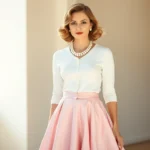
Color palettes of the 1950s reflected the era’s optimism and vitality. Pastels dominated, particularly soft pinks, baby blues, mint greens, and pale yellows, conveying femininity and delicacy. These colors appeared frequently in daytime wear, party dresses, and even formal gowns. Simultaneously, jewel tones like emerald, sapphire, and ruby provided sophisticated alternatives for evening wear and special occasions. Black remained essential for formal events and created dramatic contrast when paired with the era’s voluminous silhouettes.
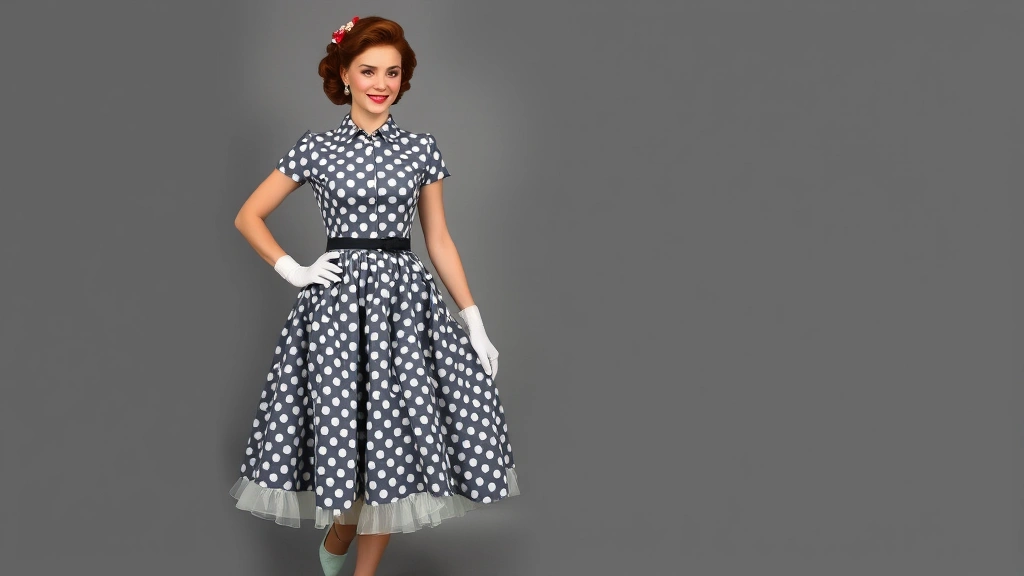
The use of pattern and texture added visual interest to 1950s garments. Polka dots became iconic, appearing on everything from cotton day dresses to silk evening wear. Gingham checks, florals, and geometric prints were equally popular. Novelty prints featuring whimsical imagery reflected the era’s playful spirit and optimistic worldview. Texture played an equally important role, with techniques such as gathering, pleating, and ruching adding dimension and movement to garments.
Embellishments and embroidery became hallmarks of 1950s fashion, particularly in evening wear and special occasion dresses. Sequins, beads, and rhinestones adorned gowns designed for cocktail parties, formal dinners, and dances. Hand-embroidered details demonstrated the craftsmanship valued during this period, while mass-produced embellished fabrics made glamorous styling accessible to women across economic classes.
Influential Designers of the Era
Christian Dior stands as the most influential designer of the 1950s, with his New Look silhouette establishing the decade’s dominant aesthetic. Dior’s designs represented the height of Parisian couture luxury, featuring impeccable construction, dramatic silhouettes, and an unwavering commitment to femininity. His influence extended far beyond his own collections, as other designers worldwide adapted and reinterpreted his vision to suit different markets and price points.
Coco Chanel continued to wield significant influence during the 1950s, offering an alternative to Dior’s extravagant femininity. Chanel’s designs emphasized comfort and practicality while maintaining elegance and sophistication. Her tweed suits, pearls, and understated luxury represented a distinctly different philosophy from Dior’s voluminous skirts, appealing to women who sought sophistication without sacrificing mobility or functionality.
Cristóbal Balenciaga emerged as another major force in 1950s fashion, known for his architectural approach to garment construction and his innovative use of fabric. Balenciaga’s designs often featured clean lines, innovative seaming, and a sculptural quality that influenced the decade’s silhouettes. His work represented the intersection of art and fashion, with garments that functioned as wearable sculpture.
American designers began asserting themselves during the 1950s, challenging European dominance in high fashion. Designers like Norman Norell and James Galanos created sophisticated American couture that rivaled European offerings in quality and innovation. Claire McCardell continued her legacy of practical, innovative sportswear that emphasized comfort and functionality while maintaining style. These American designers helped establish New York as a fashion capital and demonstrated that fashion excellence wasn’t exclusively a European domain.
Elsa Schiaparelli, though past her peak influence, continued designing during the 1950s, contributing her surrealist sensibilities and innovative construction techniques to the decade’s fashion landscape. Her influence on younger designers ensured that experimentation and artistic vision remained valued within the fashion industry.
Everyday Wear vs. Evening Glamour
The 1950s created distinct categories of dress appropriate for different occasions, with clear distinctions between casual daytime wear, business attire, and formal evening clothing. This stratification reflected the era’s social conventions and the importance of dressing appropriately for specific contexts. Understanding these distinctions provides insight into how fashion functioned within 1950s society and how women navigated social expectations through their clothing choices.
Daytime wear prioritized practicality and approachability. Cotton print dresses, often featuring modest necklines and knee-length hemlines, represented standard daytime attire. These dresses typically incorporated simple construction, modest embellishment, and colors that conveyed wholesomeness and femininity. Paired with flats or low heels, cardigans, and minimal jewelry, daytime dressing emphasized neat, put-together appearance without the drama or expense of formal wear.
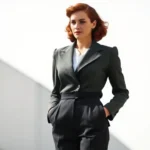
Business attire for women reflected the era’s conservative approach to professional environments. Tailored suits with pencil skirts and fitted jackets created a streamlined silhouette appropriate for office settings. These suits often featured neutral colors like navy, black, grey, or brown, with minimal embellishment emphasizing professionalism and authority. The careful construction and precision tailoring of business suits demonstrated respect for professional contexts and established boundaries between personal and professional presentation.
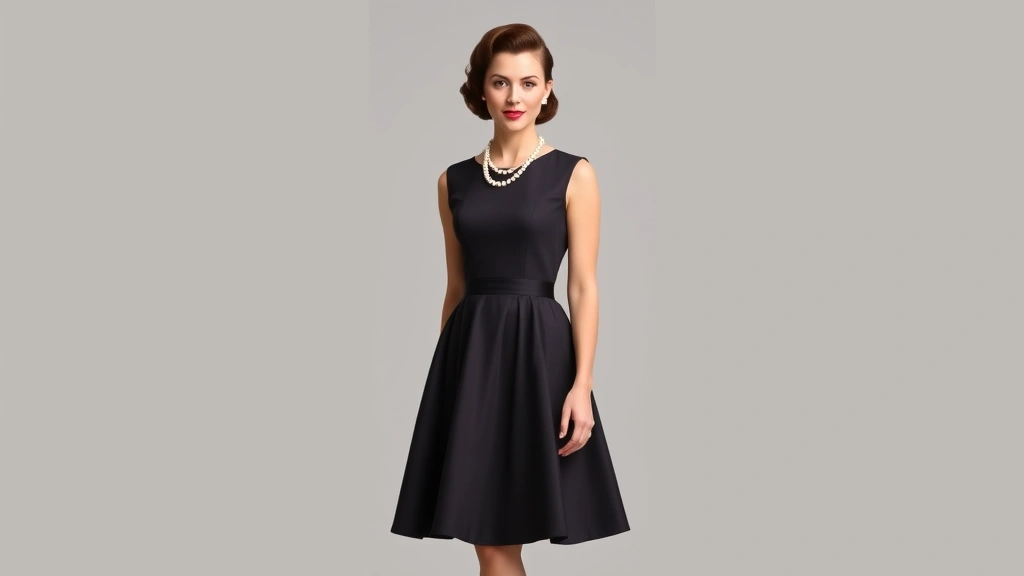
Cocktail dresses represented an important category of 1950s fashion, designed for the sophisticated entertaining that characterized the decade’s social life. These dresses typically featured shorter hemlines, more elaborate construction, and richer fabrics than daytime wear. Often sleeveless or featuring delicate straps, cocktail dresses incorporated embellishment and more daring silhouettes while maintaining the decade’s essential femininity. The category of cocktail dress became increasingly important as post-war prosperity expanded entertaining and social occasions.
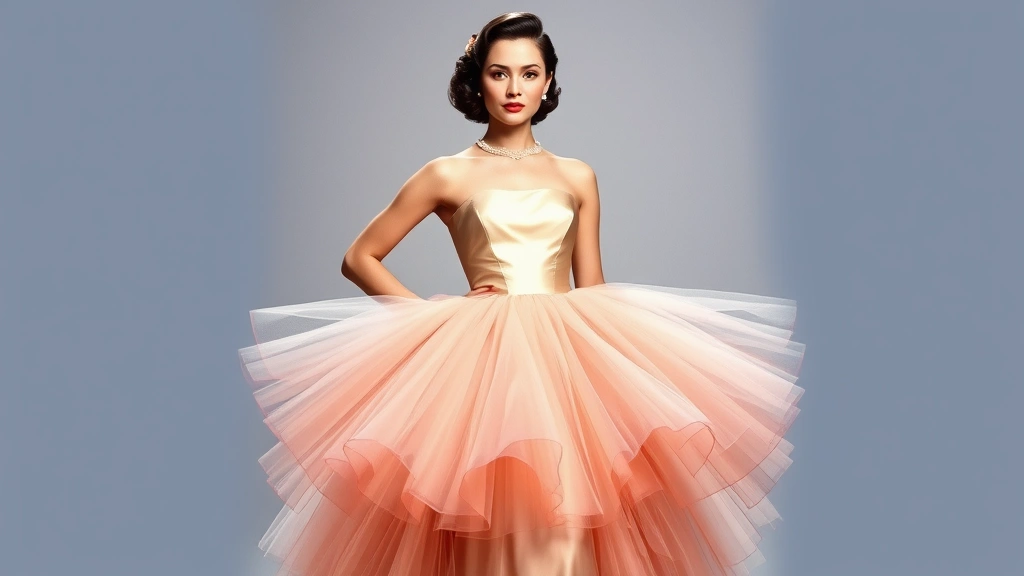
Evening gowns reached the apex of 1950s fashion extravagance. These formal dresses featured the most dramatic silhouettes, luxurious fabrics, and elaborate embellishment. Full skirts extended to the floor, often featuring layers of tulle or crinoline for maximum volume. Strapless or elegantly strapped bodices emphasized the shoulders and neckline, while carefully constructed bodices ensured impeccable fit through the bust and waist. Evening gowns represented the pinnacle of feminine presentation, designed for formal dinners, galas, and special occasions where women could showcase their sophistication and style.
Accessories and Finishing Touches
Accessories played a crucial role in 1950s fashion, functioning as both practical necessities and important style statements. Gloves represented essential accessories for any properly dressed woman, with styles ranging from short wrist-length gloves for daytime wear to long opera gloves for formal evening occasions. Gloves conveyed elegance, formality, and respect for social conventions, making them non-negotiable elements of appropriate dressing.
Handbags ranged from practical everyday styles to elaborate evening bags embellished with beads, rhinestones, or metal frames. The structured handbag with a rigid frame and top handle represented quintessential 1950s style, conveying organization and feminine practicality. As the decade progressed, smaller, more decorative evening bags became popular, often featuring jeweled embellishment or innovative materials.
Shoes evolved throughout the decade, with the iconic stiletto heel emerging as the most recognizable 1950s footwear. These thin, high heels, often reaching three to four inches, created an elongated leg line and contributed to the era’s emphasis on feminine presentation. Saddle shoes, penny loafers, and ballet flats offered more casual alternatives for everyday wear, while peep-toe heels and strappy sandals provided sophisticated options for less formal occasions.
Jewelry played an important role in completing 1950s outfits. Pearl necklaces, particularly single or double strands, conveyed classic elegance and femininity. Chandelier earrings, brooches, and cocktail rings added glamour to evening wear. The use of costume jewelry allowed women to experiment with bolder styles and dramatic pieces without the expense of precious metals and stones. Fashion historians note that the democratization of jewelry through costume pieces allowed broader segments of the population to participate in fashion’s glamorous possibilities.
Hairstyles and hair accessories completed 1950s fashion presentation. The iconic victory rolls and pin curls of earlier decades gave way to fuller, more voluminous styles that complemented the era’s silhouettes. Hair pins, combs, and decorative clips served both functional and aesthetic purposes, adding finishing touches to carefully constructed hairstyles. The importance placed on achieving and maintaining these styles demonstrates the labor involved in achieving 1950s femininity.
Hats represented essential accessories, with styles including pillbox hats, fascinators, and wide-brimmed styles for different occasions. These accessories conveyed formality and attention to detail, making them necessary components of any well-dressed woman’s wardrobe. The prevalence of hat-wearing during the 1950s reflected the era’s emphasis on complete, coordinated presentation.
Cultural Influences and Social Context
Understanding 1950s fashion requires examining the broader cultural context that shaped style preferences and fashion choices. The post-war period witnessed unprecedented economic prosperity in America, enabling increased consumer spending on clothing and fashion. This economic expansion allowed fashion to become more accessible to middle-class consumers, democratizing style in ways that hadn’t been possible during the Depression and war years.
Hollywood exerted enormous influence over 1950s fashion, with film stars serving as style icons whose clothing choices were closely studied and emulated. Actresses like Audrey Hepburn, Grace Kelly, Elizabeth Taylor, and Marilyn Monroe became fashion authorities, with their red carpet appearances and film costumes inspiring women worldwide. The publicity surrounding these celebrities’ fashion choices created aspirational style ideals that influenced consumer purchasing and fashion preferences.
Television emerged as a powerful cultural force during the 1950s, bringing fashion inspiration into American homes through variety shows, dramas, and advertising. The medium’s ability to reach mass audiences made television an increasingly important venue for fashion promotion and trend dissemination. Game shows, variety programs, and dramatic series featured fashionably dressed performers whose styles influenced viewers’ own fashion choices.
The rise of youth culture and teenage consumer power significantly influenced 1950s fashion. Young people developed their own fashion preferences distinct from adult styles, creating distinct youth fashion categories. The poodle skirt, bobby socks, and saddle shoes represented clothing designed specifically for teenagers, reflecting this demographic’s growing economic power and cultural influence. Rock and roll music, with its association with youth rebellion and vitality, influenced fashion choices and created distinct style categories aligned with musical preferences.
Gender roles and domestic ideology profoundly shaped 1950s fashion. The post-war emphasis on women returning to domestic roles influenced clothing design and fashion messaging. Dresses, skirts, and femininely constructed garments dominated women’s fashion, with practical considerations for housework and child-rearing influencing construction and fabric choices. Fashion magazines emphasized women’s roles as wives and mothers, presenting clothing choices within this ideological framework.
The Cold War and American cultural identity influenced fashion in subtle but significant ways. American fashion designers sought to establish fashion independence from European dominance, creating distinctly American styles that reflected American values and aesthetics. The celebration of American prosperity and optimism found expression in bright colors, playful prints, and exuberant silhouettes that distinguished American fashion from more reserved European approaches.
1950s Fashion Legacy Today
The aesthetic and design principles established during the 1950s continue to influence contemporary fashion in profound ways. The hourglass silhouette, though less extreme in modern interpretations, remains an aspirational feminine form. Contemporary designers regularly reference 1950s silhouettes, incorporating full skirts, nipped waists, and structured bodices into modern collections. The enduring popularity of these silhouettes demonstrates their fundamental appeal and their successful expression of feminine ideals.
Vintage and retro fashion movements have elevated 1950s styles to cult status among contemporary consumers. Women seeking alternative fashion approaches often turn to 1950s-inspired clothing, appreciating the era’s emphasis on quality construction, feminine presentation, and optimistic aesthetics. The availability of vintage 1950s garments and reproduction pieces made in contemporary fabrics allows modern women to incorporate authentic 1950s styling into their wardrobes while maintaining contemporary functionality.
Pin-up style and rockabilly fashion movements draw heavily from 1950s aesthetics, reinterpreting the era’s silhouettes and styling for contemporary contexts. These subcultures celebrate 1950s fashion as a form of intentional style rebellion and aesthetic preference. The continued vitality of these fashion movements demonstrates the 1950s’ enduring cultural relevance and aesthetic power.
Contemporary fashion designers regularly draw inspiration from 1950s design principles and silhouettes. Luxury brands incorporate New Look elements into collections, while ready-to-wear designers adapt 1950s construction techniques and silhouettes for modern consumers. Fashion houses like Vogue regularly feature 1950s-inspired collections and analyze the decade’s influence on current fashion trends, acknowledging the era’s continued relevance.
The 1950s demonstrated how fashion functions as a tool for expressing cultural values, establishing social identity, and navigating gender roles. Contemporary fashion theorists continue studying this era to understand how fashion responds to historical moments and shapes cultural consciousness. The decade’s emphasis on quality construction, attention to detail, and intentional dressing offers valuable lessons for contemporary consumers interested in developing more meaningful relationships with their clothing.
Learning about developing personal style often involves studying historical fashion movements like the 1950s. The decade’s clear aesthetic principles and distinctive silhouettes provide excellent reference points for understanding how fashion preferences develop and how personal style evolves. Many contemporary stylists recommend studying 1950s fashion as a foundational exercise for understanding silhouettes, proportion, and feminine presentation.
The legacy of 1950s fashion extends beyond aesthetics into broader conversations about femininity, consumer culture, and women’s agency. The decade presents a complex historical moment where women simultaneously experienced expanded fashion choices and restrictive gender role expectations. Fashion historians continue analyzing how 1950s women negotiated these contradictions through their clothing choices, using fashion as a means of expressing identity and agency within constrained social circumstances.
FAQ
What defined the silhouette of 1950s fashion for women?
The dominant silhouette featured a dramatically cinched waist, full skirts extending below the knee, and an emphasized bust and hip line. This hourglass shape, popularized by Christian Dior’s New Look, required extensive corsetry and petticoats to achieve. The silhouette represented a return to exaggerated femininity after the utilitarian styles of the 1940s.
Who were the most influential fashion designers of the 1950s?
Christian Dior dominated the decade with his revolutionary New Look silhouette. Coco Chanel offered sophisticated alternatives emphasizing comfort and practicality. Cristóbal Balenciaga contributed innovative construction and architectural approaches. American designers like Norman Norell and Claire McCardell established American fashion credibility and independence from European dominance.
What fabrics were most commonly used in 1950s women’s fashion?
Cotton dominated everyday wear, while silk, taffeta, and tulle became increasingly popular for formal occasions. New synthetic fabrics like nylon and acetate revolutionized fashion by offering easy care and affordability. These materials allowed stylish fashion to become accessible to broader segments of the population.
How did social context influence 1950s fashion choices?
Post-war prosperity enabled increased fashion consumption and accessibility. Hollywood celebrities influenced style preferences through film and publicity. The rise of youth culture created distinct teenage fashion categories. Gender role ideology emphasized domestic femininity, while Cold War cultural identity influenced American fashion independence from European traditions.
Are 1950s fashion styles still relevant today?
Absolutely. The hourglass silhouette remains aspirational, and contemporary designers regularly reference 1950s aesthetics. Vintage and retro fashion movements celebrate the era’s styles. Pin-up and rockabilly subcultures maintain 1950s fashion as living practice. The decade’s design principles continue influencing fashion education and contemporary collections across luxury and ready-to-wear segments.
What accessories were essential to complete a 1950s outfit?
Gloves were non-negotiable for proper dressing, ranging from wrist-length for daytime to opera-length for formal occasions. Handbags provided both function and style, often featuring structured frames and elegant details. Stiletto heels, particularly in polished leather, defined 1950s footwear. Pearl jewelry, decorative hats, and hair accessories completed the carefully constructed presentation that characterized the era.
How did 1950s fashion differ for different social occasions?
Daytime wear emphasized practicality with cotton print dresses and modest styling. Business attire featured tailored suits with pencil skirts and neutral colors. Cocktail dresses offered more elaborate construction and richer fabrics. Evening gowns represented the apex of extravagance, featuring dramatic silhouettes, luxurious materials, and elaborate embellishment. These distinct categories reflected the era’s social conventions and the importance of dressing appropriately for specific contexts.
To explore more fashion history and develop your personal style, visit the StyleLoom Daily Blog for comprehensive fashion guides and articles. For contemporary fashion inspiration, check out Fashion Nova Dresses collections. Consider exploring fashion design education if you’re interested in deeper study. For authoritative fashion industry insights, consult Harper’s Bazaar and Elle Magazine for contemporary analysis of historical fashion influence.