Best Fashion Boots for Men: Style Expert Picks
The right pair of boots can transform your entire wardrobe and elevate your personal style to new heights. For men, fashion boots represent far more than functional footwear—they’re a statement piece that communicates confidence, sophistication, and sartorial awareness. Whether you’re navigating urban streets, attending social events, or simply wanting to upgrade your everyday look, selecting the perfect boots requires understanding quality, fit, and how different styles complement your lifestyle.
In this comprehensive guide, we’ll explore the most coveted fashion boots for men, breaking down styles that matter, the craftsmanship that counts, and expert recommendations to help you make an informed decision. From timeless Chelsea boots to edgy combat styles, we’ll examine what makes each silhouette special and how to incorporate them into your existing wardrobe seamlessly.
Your boot selection should reflect your personal aesthetic while maintaining versatility across multiple occasions. The best fashion boots for men balance contemporary trends with enduring appeal, ensuring your investment remains relevant for years to come. Let’s dive into what style experts consider essential footwear for the modern man.
Chelsea Boots: The Timeless Essential
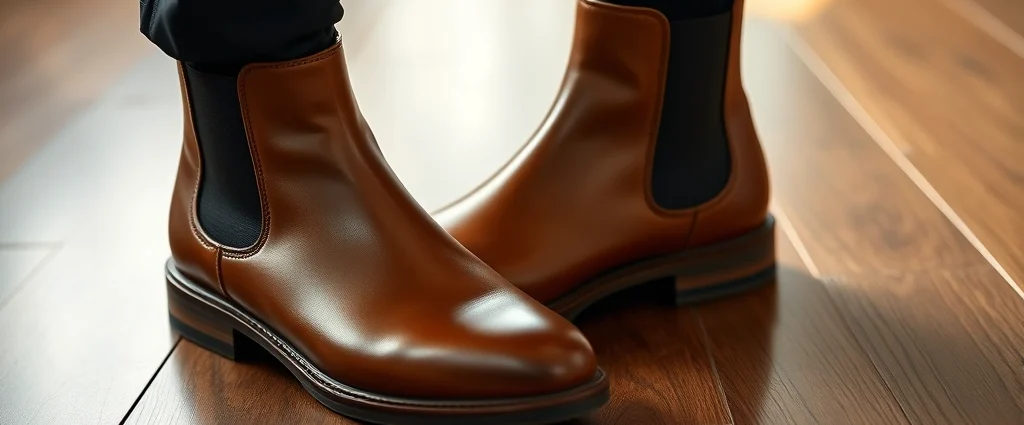
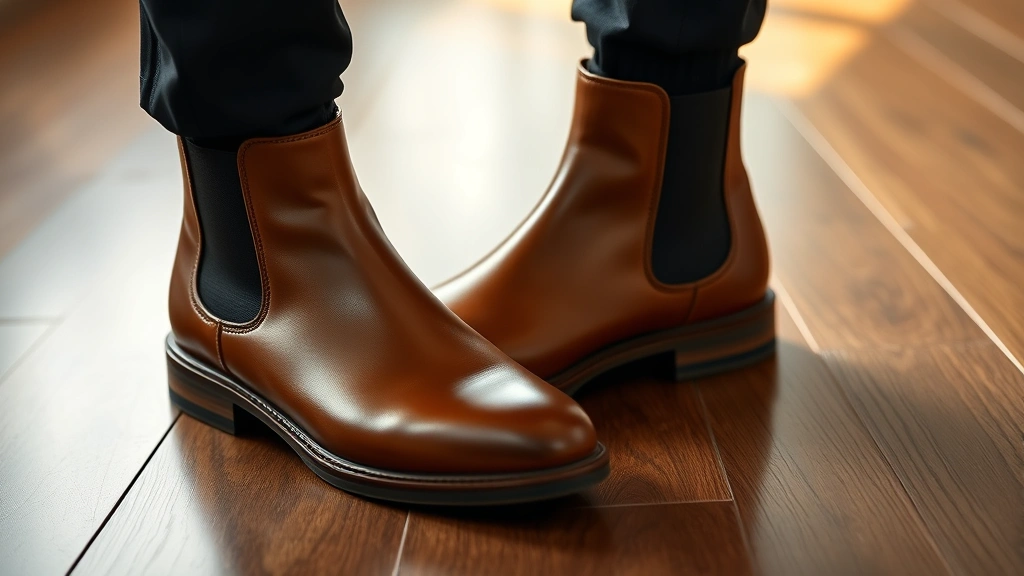
Chelsea boots remain the gold standard in men’s footwear, originating from Victorian-era England and continuing to dominate contemporary fashion. These ankle-height boots feature elastic side panels that provide easy slip-on convenience without sacrificing elegance. What makes Chelsea boots so enduringly popular is their remarkable versatility—they transition seamlessly from business casual to smart-casual environments.
The genius of Chelsea boot design lies in its minimalist aesthetic. Without laces or excessive embellishment, the silhouette remains clean and refined, allowing the quality of materials and craftsmanship to shine. Premium leather Chelsea boots in black or rich brown tones form the foundation of any sophisticated man’s footwear collection. These boots pair exceptionally well with tailored trousers, jeans, and chinos, making them an investment piece that justifies its cost through sheer wearability.
Style experts consistently recommend Chelsea boots as the first purchase for men seeking to elevate their fashion game. The reason is simple: they work across seasons, dress codes, and body types. Whether you’re 5’8″ or 6’4″, Chelsea boots create a balanced silhouette that visually elongates the leg while maintaining proportion. According to Vogue’s fashion editors, Chelsea boots represent the intersection of heritage craftsmanship and modern style sensibility.
When selecting Chelsea boots, focus on heel height (typically 1-1.5 inches) and shaft width. Properly fitted Chelsea boots should hug your ankle without creating uncomfortable pressure points. The elastic panels should provide enough stretch to accommodate your foot comfortably while maintaining structural integrity throughout the boot.
Combat Boots: Edge Meets Sophistication
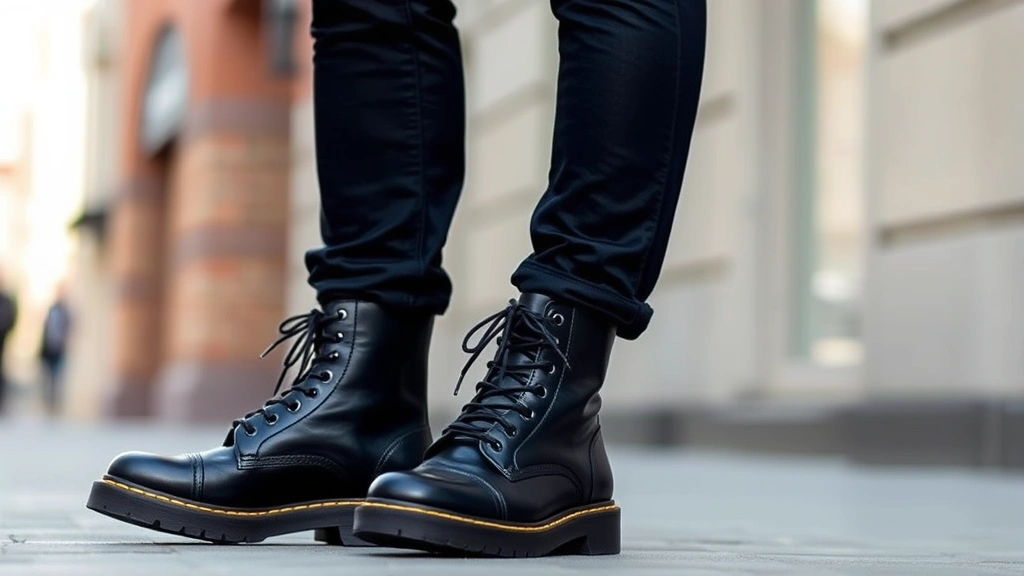
Combat boots have evolved from their military origins to become a fashion staple that injects personality into any outfit. Modern combat boots for men balance rugged authenticity with contemporary styling, offering a bold alternative to more traditional footwear. The lace-up front, visible stitching, and substantial sole communicate confidence and individuality.
What distinguishes high-fashion combat boots from purely utilitarian versions is attention to detail—refined leather quality, precise stitching patterns, and thoughtful proportions. Designer combat boots often feature subtle variations in sole thickness, heel height, and silhouette that elevate them beyond basic work boots. These variations make all the difference in creating a cohesive look rather than appearing costume-like.
Styling combat boots requires intentionality. They pair brilliantly with skinny or tapered jeans, creating visual interest through contrast. For a more sophisticated approach, consider pairing combat boots with tailored trousers in neutral tones or even dress pants for avant-garde styling. The key is letting the boots serve as your outfit’s focal point while keeping other elements relatively subdued.
Leather choice significantly impacts combat boot aesthetics. Full-grain leather develops a beautiful patina over time, while polished leather offers a sleeker appearance. Some fashion-forward options feature textured or distressed finishes that add visual depth and character. These boots work particularly well for creative professionals, musicians, and anyone seeking to express individuality through their style choices.
Desert Boots: Versatile Casual Elegance
Desert boots occupy a unique space in men’s footwear, offering remarkable versatility that bridges casual and smart-casual aesthetics. Characterized by their crepe rubber soles, simple two-eyelet construction, and typically suede uppers, desert boots deliver understated sophistication perfect for warm weather and relaxed settings.
The appeal of desert boots lies in their approachability and comfort. Unlike more formal footwear, desert boots feel inherently casual and inviting, yet they maintain enough refinement to work in semi-formal environments. This balance makes them ideal for men seeking footwear that doesn’t require constant style recalibration depending on the occasion.
Suede construction is the traditional choice for desert boots, offering a soft texture and excellent breathability. However, modern interpretations feature leather, canvas, and innovative synthetic materials that expand styling possibilities. Color selection significantly impacts versatility—tan and neutral tones offer maximum versatility, while bolder colors like rust or olive green allow fashion-conscious men to inject personality into their wardrobes.
Desert boots pair beautifully with chinos, lightweight trousers, and casual denim. They’re particularly effective during transitional seasons when heavier footwear feels unnecessary. The crepe sole provides natural grip and comfort for extended wear, making desert boots practical choices for men with active lifestyles who refuse to compromise on style.
Work Boots: Rugged Authenticity
Work boots have transcended their utilitarian origins to become legitimate fashion statements, particularly within contemporary streetwear and heritage-inspired styling movements. Brands originally manufacturing boots for construction workers and outdoor laborers now find their designs featured in fashion magazines and worn by style-conscious urbanites.
The appeal of authentic work boots is their uncompromising construction and honest aesthetic. These boots are built to withstand punishment, featuring reinforced stitching, oil-resistant leather, and substantial outsoles designed for safety and durability. This authentic craftsmanship resonates with men seeking footwear with genuine substance and heritage.
Styling work boots requires confidence and intentionality. They pair exceptionally well with raw denim, creating a cohesive vintage-inspired aesthetic. For contemporary styling, work boots work beautifully with tapered or cropped trousers that showcase the boot’s silhouette. The key is embracing the boots’ inherent ruggedness rather than attempting to soften their appearance.
Quality matters tremendously with work boots. Brands with decades of manufacturing experience produce boots that develop character and patina as you wear them. The leather becomes softer, the colors deepen, and the boots conform perfectly to your feet. This evolution transforms work boots from purely functional objects into beloved accessories that tell the story of your adventures.
Chukka Boots: Refined Casualness
Chukka boots offer the perfect middle ground for men seeking footwear that bridges formal and casual aesthetics. These ankle-height boots feature two or three eyelet laces and are typically constructed from suede, though leather variations exist. The chukka’s streamlined silhouette provides enough structure for business-casual environments while maintaining the comfort and approachability of casual footwear.
What distinguishes chukkas from other boot styles is their refined simplicity. Without excessive ornamentation or aggressive design elements, chukkas let quality materials and construction speak for themselves. A well-crafted pair in quality suede represents an excellent investment for men seeking everyday footwear that transitions seamlessly between contexts.
The versatility of chukka boots extends across color palettes and material finishes. Classic tan suede offers timeless appeal, while modern interpretations feature burgundy, olive, and even patterned options for men confident in their style choices. Leather chukkas provide additional durability and can work in slightly more formal settings than their suede counterparts.
Chukkas pair beautifully with fashion belts that echo their material or color, creating coordinated looks. They work exceptionally well with chinos, casual trousers, and well-fitted jeans. For men seeking footwear that requires minimal styling thought yet maintains consistent polish, chukka boots deliver.
Chelsea vs Other Boot Styles: Finding Your Match
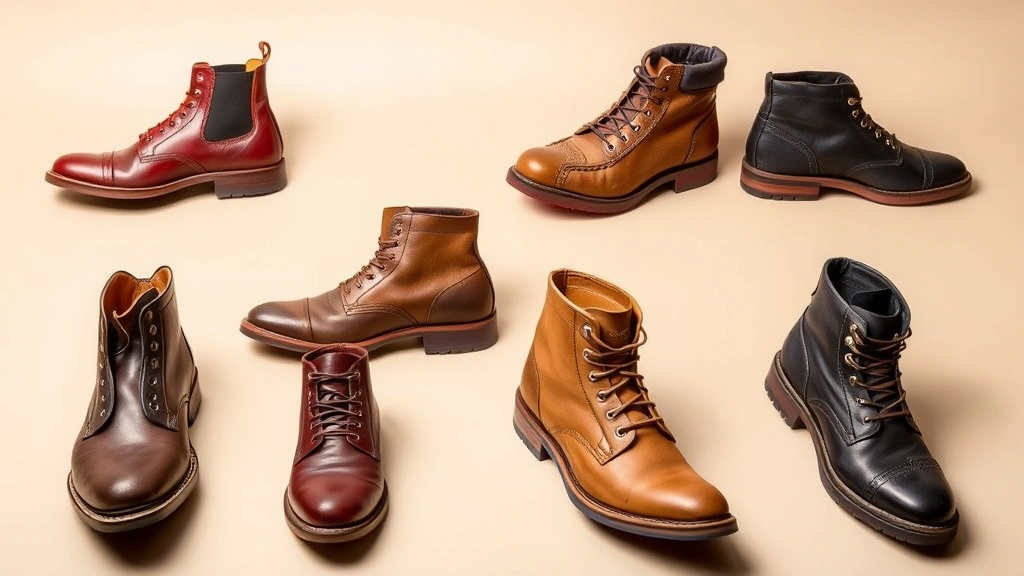
Choosing between Chelsea boots and other boot styles requires honest assessment of your lifestyle, existing wardrobe, and personal aesthetic preferences. Each boot style serves distinct purposes and communicates different messages about your style sensibility.
Chelsea boots excel for men prioritizing versatility and timeless appeal. They work across dress codes, seasons, and occasions with minimal modification. If you’re building a foundational wardrobe or seeking boots that work everywhere, Chelsea boots represent your best investment. Their minimalist design means they complement rather than compete with other wardrobe elements.
Combat boots suit men confident in their style choices and seeking footwear that makes a statement. They work brilliantly for creative professionals, younger demographics, and anyone wanting to inject personality and edge into their aesthetic. Combat boots require intentional styling but deliver unmatched visual impact.
Desert boots appeal to men prioritizing comfort and casual versatility. They’re ideal for warm climates, relaxed lifestyles, and anyone seeking footwear that feels as good as it looks. The crepe sole provides natural cushioning that other boot styles can’t match, making them practical choices for extended wear.
Work boots attract men valuing authenticity and heritage craftsmanship. They suit individuals with active lifestyles, creative professionals, and anyone seeking footwear with genuine substance and character development over time. Work boots require confidence to style but deliver unmatched durability and patina potential.
Consider your climate, professional environment, and lifestyle when selecting boot styles. Men in formal business settings benefit most from Chelsea boots or refined chukkas. Creative professionals and younger demographics have more flexibility experimenting with combat or work boots. Those in warm climates or casual environments thrive with desert boots or lightweight chukkas.
Material Matters: Leather, Suede, and Beyond
The material composition of your boots fundamentally impacts their appearance, durability, comfort, and maintenance requirements. Understanding material properties helps you select boots that align with your lifestyle and aesthetic preferences.
Full-grain leather represents the highest quality leather option, featuring the complete hide with all natural markings intact. Full-grain leather develops a rich patina over time, actually improving in appearance as you wear it. It’s durable, ages beautifully, and justifies premium pricing through longevity and character development. Full-grain leather boots often become more beautiful with age, developing unique marks and color variations that tell stories of your adventures.
Top-grain leather offers excellent quality at slightly lower price points than full-grain. It’s been sanded to remove imperfections, resulting in a more uniform appearance. Top-grain leather remains durable and develops patina, though perhaps less dramatically than full-grain varieties.
Suede provides a luxurious soft texture and excellent breathability, making it ideal for warmer climates and dress boots. However, suede requires more careful maintenance, as it’s susceptible to water damage and staining. Suede boots work beautifully for special occasions and less-demanding environments, though they’re less practical for everyday wear in variable weather.
Nubuck, similar to suede but created from top-grain leather, offers a soft hand-feel with slightly better durability. Nubuck boots provide luxury aesthetics with marginally improved practicality compared to pure suede.
Innovative synthetic materials have improved dramatically, offering water resistance, lower maintenance requirements, and ethical alternatives to leather. Some premium brands now feature hybrid constructions combining natural and synthetic materials for optimal performance.
Consider your climate and lifestyle when selecting materials. Leather boots work everywhere but require occasional conditioning. Suede boots suit dry climates and careful dressers. Synthetic materials appeal to those prioritizing easy maintenance and ethical considerations. Industry experts increasingly discuss sustainable material innovations that balance performance with environmental responsibility.
Styling Your Boots for Maximum Impact
Owning quality boots means nothing if you can’t style them effectively. Strategic styling elevates boots from footwear to focal points that anchor entire outfits and communicate your fashion sensibility.
For Chelsea boots, embrace simplicity. Pair them with well-fitted tailored trousers, chinos, or dark denim. Let the boots’ refined aesthetic shine by keeping other elements relatively understated. A crisp white shirt, neutral sweater, or structured blazer allows Chelsea boots to complete sophisticated looks without visual competition.
Combat boots demand more intentional styling. Pair them with tapered or cropped trousers that showcase the boot’s silhouette. Skinny jeans work beautifully, as does mixing combat boots with dresses or skirts for unexpected style combinations. Layer intentionally—let combat boots serve as your outfit’s statement piece while keeping tops and outerwear more neutral.
Desert boots thrive in warm-weather styling. Pair them with linen trousers, lightweight chinos, or casual shorts. They work beautifully with t-shirts, camp-collar shirts, and relaxed knitwear. Desert boots are your go-to for vacation packing, weekend adventures, and warm-weather entertaining.
Work boots suit raw denim, vintage-inspired styling, and contemporary streetwear. Pair them with tapered trousers, cropped pants, or well-fitted jeans. Work boots work beautifully with rugged outerwear like canvas jackets or heritage denim. Embrace the boots’ authenticity rather than attempting to soften their appearance.
Chukka boots offer flexibility across casual and smart-casual environments. Pair them with chinos, casual trousers, and well-fitted jeans. They work beautifully with sweaters, button-up shirts, and blazers. Chukkas are your everyday boots—versatile, reliable, and consistently polished.
Consider seasonal styling variations. Heavier boots suit winter layering and darker color palettes. Lighter boots work beautifully in spring and summer with shorter pants and brighter colors. Don’t hesitate to experiment with unexpected pairings—fashion evolution happens when you challenge conventional styling rules.
Care and Maintenance Tips
Proper maintenance extends boot lifespan and preserves their aesthetic appeal. Quality boots represent significant investments that deserve appropriate care.
Leather conditioning should occur every 3-6 months, depending on wear frequency and climate. Conditioning prevents leather from drying out and cracking while maintaining suppleness and appearance. Use quality leather conditioners specifically formulated for your boot type—full-grain leather has different needs than suede or nubuck.
Suede and nubuck require specialized care products. Suede brushes remove surface dirt and restore nap direction. Suede erasers eliminate stubborn stains. For water-resistant protection, apply suede-specific protective sprays before wearing new boots.
Store boots properly during off-season months. Use boot trees to maintain shape and prevent creasing. Cedar shoe trees absorb moisture while imparting pleasant aroma. Store boots in cool, dry locations away from direct sunlight, which can fade leather and cause uneven color development.
Address stains immediately. Wipe away fresh mud or dirt with damp cloths before it dries. For stubborn stains, consult boot-specific cleaning guides or professional cleaners specializing in footwear restoration. Preventive treatment with protective sprays significantly reduces staining risk.
Sole maintenance impacts both safety and aesthetics. Inspect soles regularly for wear patterns. Professional cobblers can add protective taps to vulnerable areas or complete sole replacement when necessary. Regular maintenance prevents minor wear from becoming structural problems requiring expensive repairs.
Rotate boots regularly rather than wearing the same pair daily. Rotating allows leather to rest and recover moisture, extending lifespan and preventing accelerated wear. Most footwear experts recommend owning at least two quality boot pairs to facilitate proper rotation.
Address heel wear promptly. As heels deteriorate, they affect your gait and accelerate additional damage. Professional heel replacement costs significantly less than purchasing new boots and extends their useful life considerably.
FAQ
What’s the difference between Chelsea boots and Chukka boots?
Chelsea boots feature elastic side panels and ankle-height construction without laces, offering slip-on convenience and refined aesthetics. Chukka boots feature lace-up fronts (typically 2-3 eyelets) and similar ankle heights, providing a slightly more casual appearance while maintaining versatility. Chelsea boots work better in formal business-casual settings, while chukkas excel in relaxed environments. Both are versatile, but Chelsea boots’ minimalist design appeals to those seeking maximum versatility, while chukkas suit men prioritizing comfort and casual styling.
How much should I spend on quality fashion boots for men?
Quality boots typically range from $200-$600, with premium options exceeding $1,000. Entry-level quality boots ($200-$400) offer solid construction and materials suitable for most men. Mid-range boots ($400-$800) feature superior craftsmanship and materials that justify premium pricing through longevity and character development. Ultra-premium boots ($800+) represent luxury purchases from heritage brands with exceptional reputation and exclusive materials. Rather than focusing on price, consider cost-per-wear. Boots worn 2-3 times weekly for five years represent excellent investments even at premium price points.
Can I wear fashion boots in summer?
Yes, with appropriate style choices. Desert boots with crepe soles and suede uppers work beautifully in warm weather, offering breathability and lightweight comfort. Lighter-colored boots in neutral tones reflect heat better than dark options. Pair summer boots with lightweight fabrics like linen and cotton rather than heavy denim. Avoid heavy leather boots designed for winter wear. Ankle-height boots work better than taller options in summer styling. Consider boots as part of warm-weather styling rather than attempting to force heavy winter boots into summer contexts.
How do I break in new boots without excessive discomfort?
Wear new boots for short periods initially—30 minutes to an hour—to allow leather to adjust to your feet. Gradually increase wearing time as leather softens and molds to your foot shape. Apply leather conditioner during break-in period to soften leather faster. Wear thick socks initially to reduce friction and blistering. If specific areas cause discomfort, use boot stretchers or professional stretching services. Most quality leather boots require 2-4 weeks of gradual break-in before achieving full comfort. Patience during break-in prevents damage to both boots and feet.
What boot styles work best for professional business environments?
Chelsea boots represent the gold standard for business-casual and business-professional environments. Their refined minimalist design works seamlessly with tailored trousers and business attire. Chukka boots in leather or suede also work well in business-casual settings. Avoid combat boots, work boots, and heavily textured options in formal business contexts. Stick with classic colors—black, dark brown, and oxblood—for maximum versatility. Ensure boots are polished and well-maintained, as footwear condition significantly impacts overall professional appearance. Consult your company’s specific dress code for guidance on acceptable boot styles.
Are expensive boots worth the investment?
Quality boots worth $400+ represent excellent investments if worn regularly. Heritage brands with decades of manufacturing experience produce boots that improve with age, develop character through patina, and last decades with proper care. The cost-per-wear calculation often reveals that expensive boots worn 2-3 times weekly are more economical than cheaper alternatives replaced every 1-2 years. Premium boots feature superior leather, exceptional craftsmanship, and ethical manufacturing practices. However, mid-range quality boots ($300-$500) often provide optimal value, balancing excellent quality with reasonable pricing. Choose based on your lifestyle and budget rather than assuming most expensive equals best.
How do I style combat boots without looking costume-like?
Focus on proportion and color coordination. Pair combat boots with well-fitted, tapered trousers that showcase the boot silhouette without excessive bagginess. Choose neutral-colored boots (black, brown, tan) rather than heavily patterned options for everyday styling. Keep other outfit elements relatively subdued—let combat boots serve as your statement piece. Pair with solid-colored tops and structured outerwear. Avoid excessive accessories that compete with boots for visual attention. Start with conservative styling and gradually experiment with bolder combinations as you develop confidence. Remember that combat boots communicate personality and edge—embrace this rather than fighting it through overly cautious styling.
What’s the best boot style for men with shorter stature?
Chelsea boots work beautifully for shorter men, as their clean lines and ankle-height construction create visual elongation without bulk. Avoid excessively chunky soles or oversized silhouettes that can overwhelm smaller frames. Desert boots with crepe soles also work well, as their lightweight appearance doesn’t visually burden proportions. Pair boots with well-fitted, tapered trousers that create clean vertical lines. Avoid heavily textured or patterned boots that add visual weight. Focus on proportional boot sizing—avoid boots with excessively tall shafts. Consider heel height; slightly elevated heels (1-1.5 inches) provide subtle height enhancement without appearing obvious. Work with a stylist to find boots that complement your frame proportionally.
Understanding the nuances of men’s fashion boots empowers you to make confident purchasing decisions that enhance your wardrobe for years. Whether you select boots reflecting your personal style or invest in versatile classics, remember that quality footwear represents foundation pieces deserving thoughtful consideration.
Start by assessing your lifestyle, climate, and existing wardrobe. Consider which boot styles align with your professional environment and social activities. Research brands known for quality craftsmanship and ethical manufacturing. Read reviews from verified purchasers to understand real-world performance. Don’t rush purchasing decisions—quality boots represent investments deserving careful deliberation.
Visit StyleLoom Daily Blog for additional style inspiration and explore our Fashion Book for comprehensive style guidance. Consider complementing your new boots with quality fashion backpacks for travel and work to create cohesive, intentional style.
Fashion experts at GQ Magazine consistently emphasize that boots represent more than functional footwear—they’re personal style declarations. The right boots communicate confidence, taste, and self-awareness. Invest wisely, care properly, and enjoy the journey of developing your distinctive boot collection.