1700’s Fashion Revival: Historical Insights
The eighteenth century stands as one of fashion’s most transformative periods, a time when clothing became a powerful statement of social hierarchy, artistic expression, and cultural refinement. From the opulent courts of Versailles to the emerging middle-class salons of London, fashion in the 1700s reflected the dramatic shifts happening across European society. This era witnessed the evolution from rigid, heavily structured silhouettes to more naturalistic forms, innovations in textile production, and the birth of fashion as we understand it today—a system where style could be consumed, discussed, and reinvented seasonally.
Understanding the fashion landscape of the 1700s provides invaluable insights for contemporary style enthusiasts. The principles of proportion, color harmony, and personal expression that dominated eighteenth-century wardrobes continue to influence modern design. Whether you’re a fashion historian, a period costume enthusiast, or simply someone seeking to understand how past styles shape current trends, exploring this rich era reveals timeless lessons about elegance, innovation, and the social power of dress.
Early 1700s: The Baroque Extravagance
The dawn of the eighteenth century inherited the dramatic aesthetics of the Baroque period, characterized by excessive ornamentation, rich colors, and intricate embroidery. Women’s gowns featured the iconic mantua—a loose overdress that draped elegantly from the shoulders—worn over structured stays that created an hourglass figure. The bodice remained intensely corseted, pushing the bust upward while cinching the waist to impossibly narrow proportions. Skirts, supported by panniers (side hoops), extended dramatically at the hips, creating a silhouette that demanded architectural precision and considerable fabric.
Men’s fashion during this period emphasized status through fabric choice and elaborate decoration. Coats featured deep skirts that fell to the knee, adorned with gold embroidery, buttons of precious metals, and decorative lace at the cuffs and neck. Breeches were tailored close to the leg, often in contrasting colors to the coat, while silk stockings and heeled shoes completed the ensemble. The fashion in the 1700s was fundamentally about display—the more fabric, the more elaborate the decoration, the higher one’s social standing. Explore the complete fashion history timeline to see how this era connects to broader style evolution.
Hairstyles during the early eighteenth century grew increasingly elaborate. Women wore their hair high and voluminous, often incorporating false pieces, ribbons, and ornamental accessories. The fontange headdress—a tall, tiered construction of lace and ribbon—symbolized feminine sophistication. Men favored long, curled locks or, later, the more practical periwig, which required significant investment and maintenance. These hairstyles were not merely aesthetic choices; they represented wealth, leisure time, and access to skilled professionals.
The Rococo Revolution and Feminine Silhouettes
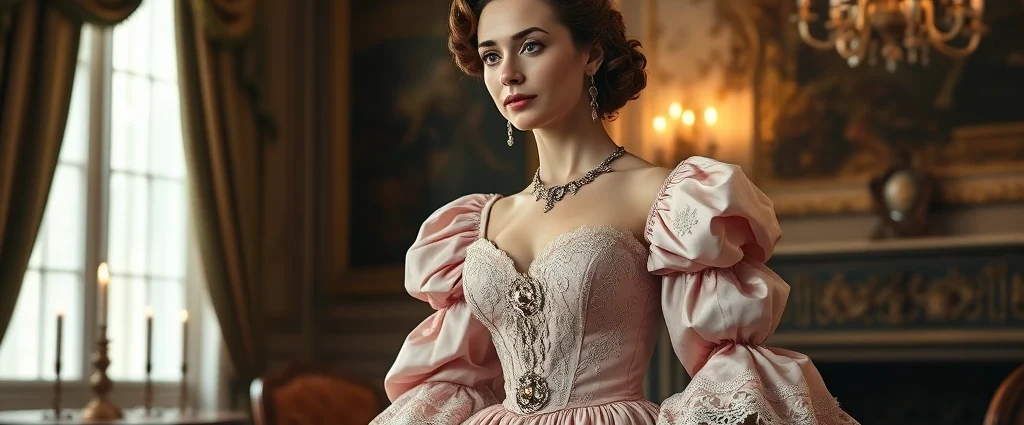
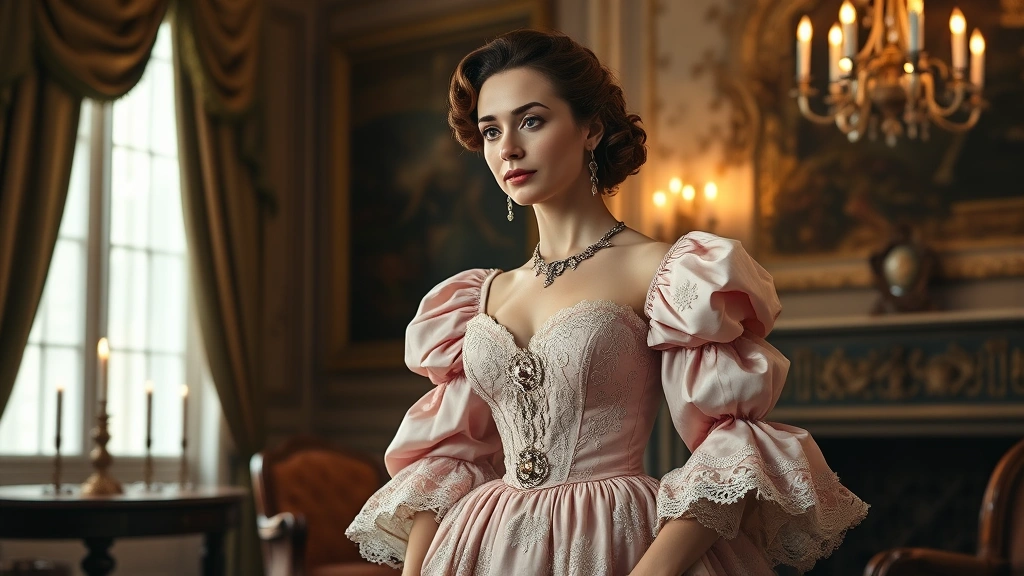
By mid-century, the Rococo movement emerged as a reaction against Baroque heaviness, introducing lighter, more playful aesthetics that would dominate fashion for decades. The sack gown or robe volante replaced the structured mantua, featuring loose, pleated folds that cascaded from the shoulders to the floor. This seemingly relaxed silhouette was deceptive—beneath the flowing fabric, women still wore heavily boned stays, maintaining the desired corseted form while appearing more natural and comfortable. The panniers remained but became somewhat less exaggerated, though still creating dramatic hip extensions.
Rococo fashion celebrated femininity through pastel colors, delicate fabrics, and ornamental details. Silk damasks, brocades, and velvets in soft pinks, pale blues, and cream became fashionable, often embellished with ribbon work, lace insertions, and embroidered floral motifs. The style prioritized elegance over the previous era’s grandeur, though the amount of fabric and labor involved in creating these garments remained a clear marker of wealth. Visit fashion in Italy to understand how regional variations influenced this aesthetic movement.
The Rococo period also introduced the stomacher—a triangular panel of fabric, often elaborately decorated with jewels and embroidery, that covered the front of the bodice. This decorative element became increasingly ornate and served as a focal point for displaying wealth and artistic taste. Sleeves shortened to the elbow, often finished with layers of ruffled lace known as engageantes. The overall effect was one of delicate sophistication, where every element of the garment contributed to an impression of refined femininity and leisure.
Men’s Fashion Evolution
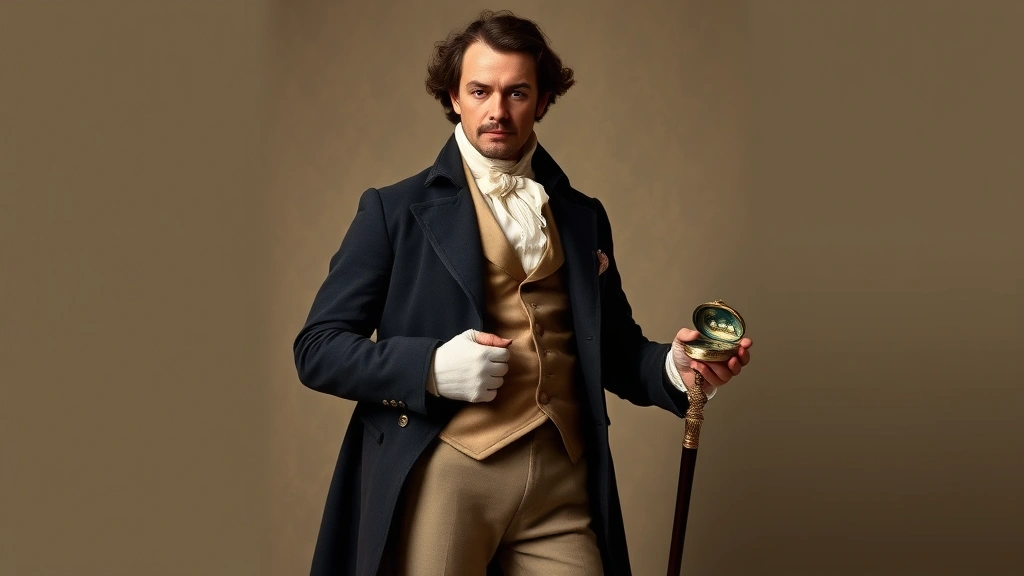
While women’s fashion underwent dramatic transformations, men’s clothing evolved more subtly but significantly throughout the 1700s. The coat remained the dominant garment, but proportions shifted. Early-century coats with their exaggerated skirts gradually became more fitted, with shorter skirts that eventually reached only to the knee. The waistcoat, worn beneath the coat, became increasingly important as a vehicle for color and pattern, often in contrasting fabrics that would be visible when the coat was unbuttoned.
By the 1770s and 1780s, men’s fashion reflected the emerging ideals of Enlightenment rationality and the growing influence of English country style. Coats became even more tailored, with higher buttons and narrower skirts. The exuberant embroidery of earlier decades gave way to more restrained decoration, though fine fabrics remained essential for distinguishing gentleman from commoner. Breeches remained fashionable throughout the century, though their cut became progressively tighter and more anatomical. The three-piece suit—coat, waistcoat, and breeches—became the standard ensemble for respectable men, a silhouette that would influence masculine fashion for centuries to come.
The cravat, a length of linen or silk wound around the neck, evolved from simple practicality to a fashion statement. The way one tied and arranged one’s cravat communicated style and taste, much like accessories do today. Men of fashion would spend considerable time perfecting their cravat arrangements, and fashion publications began to document different tying styles. This attention to detail in seemingly minor accessories demonstrates how fashion in the 1700s treated every element of dress as significant to overall presentation.
The Neoclassical Shift Late Century
The latter decades of the 1700s witnessed a significant philosophical shift that profoundly influenced fashion. The Neoclassical movement, inspired by renewed interest in ancient Greek and Roman cultures, introduced straighter lines, simpler silhouettes, and an emphasis on natural form. This aesthetic aligned with Enlightenment values that questioned excessive ornamentation and frivolous display. Women’s gowns became increasingly high-waisted, moving the gathered fullness from the hips to beneath the bust, creating a columnar silhouette that referenced classical drapery.
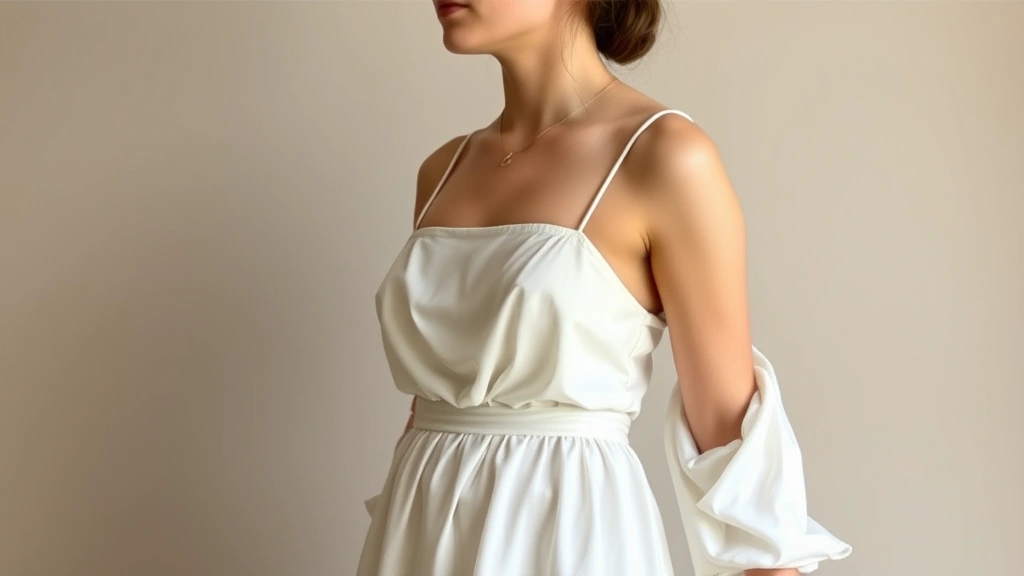
The chemise gown emerged as the ultimate expression of neoclassical ideals—a simple, loose garment of fine linen or cotton that suggested natural beauty rather than artificial construction. Paradoxically, achieving this appearance of effortless simplicity required considerable skill in pattern cutting and fabric selection. The high waistline, sometimes raised to just below the bust, required the abandonment of traditional stays in favor of lighter corsetry or none at all. This represented a genuine shift in body ideals, moving away from the emphasized hourglass toward a more elongated silhouette.
Men’s fashion also embraced neoclassical simplicity, with ornament diminishing and fit becoming paramount. The coat, waistcoat, and breeches ensemble continued but in more severe forms, often in dark, solid colors. Embroidery virtually disappeared from fashionable menswear by the 1790s, replaced by perfect tailoring and fine fabrics. This shift reflected broader social changes, including the American and French Revolutions, which challenged the visual language of aristocratic excess. Understanding how how to find your personal style often involves understanding these historical transitions between ornament and simplicity.
Accessories, Textiles, and Luxury Materials
Throughout the 1700s, accessories held paramount importance in completing fashionable dress. Women wore elaborate fans, often featuring painted scenes or intricate lacework, which served both practical and communicative functions—fan language allowed women to convey messages through subtle gestures. Jewelry ranged from precious gems to elaborate paste pieces, with diamonds, pearls, and colored stones adorning ears, necks, and wrists. Gloves, shoes, and stockings were color-coordinated with gowns and considered essential elements of a complete toilette.
Men’s accessories similarly communicated status and taste. Watches, often with elaborate cases of gold or silver, dangled from waistcoat pockets. Snuffboxes, made from precious materials and sometimes featuring miniature paintings, became essential accessories for gentlemen, serving as both functional objects and opportunities for displaying wealth. Shoe buckles, made of silver, gold, or jeweled materials, represented significant investments and were often transferred between pairs of shoes. Canes or walking sticks, topped with jeweled heads or fashioned from exotic woods, completed the gentleman’s ensemble.
Textiles themselves were luxury commodities that defined much of eighteenth-century fashion. Silk, imported from Asia at considerable expense, remained the fabric of choice for fashionable dress. Specific types of silk—damasks, brocades, taffetas, and satins—each served particular purposes and conveyed different messages. Cotton, increasingly available through colonial trade, began appearing in fashionable dress toward century’s end, particularly in the form of fine muslin. Linen provided the foundation for undergarments and the basis for chemise gowns. The quality, weight, and pattern of these textiles were immediately recognizable to the educated eye and served as primary indicators of a garment’s cost and the wearer’s status.
Fashion as Social Class Indicator
One of the most significant aspects of fashion in the 1700s was its role in visually encoding social hierarchy. Sumptuary laws, though increasingly difficult to enforce, still existed in many regions, theoretically restricting certain fabrics, colors, and styles to particular social classes. However, the real enforcement came through custom and social pressure. The sheer cost of fashionable clothing—the fine fabrics, the skilled labor required for construction, the necessary accessories—meant that only the wealthy could participate fully in fashion.
The silhouette itself communicated social position. The extreme corseting and panniers required for fashionable dress, the trains that swept behind women, the heeled shoes that made productive labor impossible—all of these elements visually demonstrated that the wearer did not need to work. Fashion was leisure made visible. A woman in a properly fitted sack gown with elaborate jewels and an intricate hairstyle could not milk cows or work in fields; this was precisely the point. Similarly, a gentleman in a tailored coat with silk stockings and jeweled buckles was marked as someone whose time and resources were devoted to appearance rather than labor.
The middle classes, growing in wealth and influence throughout the century, began to adopt fashionable dress as a means of asserting their social aspirations. This created anxiety among the aristocracy, who feared the loss of their visual distinction. Fashion publications, including the first fashion magazines and journals, emerged partly as a way to communicate the ever-changing rules of fashionable dress, making it increasingly difficult for those without access to current information to dress appropriately. In this way, fashion became a system of exclusion that went beyond simple economics—it required cultural knowledge and social connections.
Influence on Modern Fashion
The fashion innovations of the 1700s continue to influence contemporary style in profound ways. The basic silhouettes developed during this era—the tailored coat, the fitted waistcoat, the high-waisted gown—remain fundamental to how we dress today. The concept of seasonal fashion changes, the importance of accessories in completing an outfit, and the idea that clothing communicates social information all emerged from eighteenth-century practices. Modern fashion designers frequently reference historical periods, and the 1700s provides endless inspiration for collections emphasizing elegance, proportion, and refined detail.
The evolution from Baroque excess to neoclassical simplicity mirrors contemporary fashion cycles, where maximalism gives way to minimalism and vice versa. Understanding this historical pattern helps us recognize that current fashion trends exist within longer historical narratives. The tension between ornament and simplicity, between following fashion and expressing individuality, between the practical and the decorative—these conflicts that animated eighteenth-century dress remain central to how we approach fashion today. Explore the Style Loom Daily blog for contemporary perspectives on how historical fashion informs current design.
The concept of the silhouette as a way to understand fashion aesthetics comes directly from studying historical periods like the 1700s. When fashion historians and designers discuss the “silhouette” of a collection or era, they’re employing analytical frameworks developed through the study of historical dress. The 1700s also established the practice of fashion as a system—where certain elements coordinate together, where accessories complete an outfit, where proportion and fit matter as much as fabric choice. These foundational principles underpin how fashion functions today.
Contemporary interest in historical fashion, whether through costume drama television series or the popularity of historical fashion blogs, demonstrates how the aesthetics of the 1700s continue to captivate modern audiences. The elegance of neoclassical simplicity appeals to contemporary minimalists, while the ornate details of Rococo style inspire maximalists. Learning about best fashion design schools reveals that historical study remains central to fashion education, ensuring that future designers understand these foundational periods.
Fashion in the 1700s also established the social functions of dress that remain relevant today. We still use clothing to signal social status, to express creativity and personality, to participate in communities of taste, and to navigate social hierarchies. The eighteenth century simply made these functions more explicit and visible. Understanding how fashion worked in this period provides insight into how it functions now, revealing that much of what we consider natural or inevitable about fashion is actually a product of specific historical developments.
FAQ
What were the main fashion silhouettes for women in the 1700s?
Women’s fashion in the 1700s featured several distinct silhouettes. Early in the century, the mantua—a loose overdress worn over structured stays—dominated. By mid-century, the sack gown or robe volante replaced it, featuring pleated folds that cascaded from the shoulders while maintaining corseted structure beneath. Panniers created dramatic hip extensions throughout most of the century. By the 1790s, the high-waisted chemise gown with a columnar silhouette reflected neoclassical influences. All of these silhouettes required significant understructure and were markers of wealth and leisure.
How did men’s fashion change during the 1700s?
Men’s fashion evolved from the ornate, heavily embroidered coats of the early 1700s to the more tailored, restrained silhouettes of the 1790s. Early-century coats featured dramatic skirts and elaborate decoration; by mid-century, skirts shortened and became more fitted. The three-piece suit of coat, waistcoat, and breeches became standard. Embroidery diminished as the century progressed, replaced by perfect tailoring and fine fabrics in dark colors. This shift reflected broader changes in masculine ideals and Enlightenment values emphasizing reason over ornament.
What textiles were most fashionable in the 1700s?
Silk remained the most prestigious and fashionable fabric throughout the 1700s, available in various weaves including damasks, brocades, taffetas, and satins. Cotton and linen were also important—linen for undergarments and the basis of chemise gowns, cotton increasingly popular toward century’s end, particularly as fine muslin. The cost and quality of these textiles were immediately recognizable and served as primary status indicators. The weight, pattern, and sheen of fabric communicated wealth and fashion awareness.
How did hairstyles reflect fashion in the 1700s?
Hairstyles were crucial to fashionable appearance throughout the 1700s. Women wore hair high and voluminous, often incorporating false pieces, ribbons, and ornaments. The fontange headdress—a tall, tiered construction—epitomized early-century fashion. Men favored long, curled locks or periwigs, which required significant investment and maintenance. By century’s end, simpler hairstyles began replacing the elaborate constructions. These hairstyles weren’t merely aesthetic; they demonstrated wealth, leisure time, and access to skilled professionals, making them integral to overall fashionable presentation.
What role did accessories play in eighteenth-century fashion?
Accessories were essential to completing fashionable dress in the 1700s. Women wore elaborate fans, jewelry, gloves, and coordinated shoes and stockings. Men carried watches, snuffboxes, and canes topped with jeweled heads. Jewelry ranged from precious gems to elaborate paste pieces. Shoe buckles, often jeweled or made of precious metals, represented significant investments. These accessories communicated taste, wealth, and fashion awareness. Understanding how to coordinate and select appropriate accessories was as important as the garments themselves, much as it remains in contemporary fashion.
How did the neoclassical movement change fashion at the end of the 1700s?
The neoclassical movement, influenced by renewed interest in ancient Greece and Rome and aligned with Enlightenment values, fundamentally altered late-eighteenth-century fashion. Women’s gowns became higher-waisted with straighter lines referencing classical drapery. The chemise gown emerged as the ultimate neoclassical expression—simple, loose linen garments suggesting natural beauty rather than artificial construction. Men’s fashion embraced simplicity, with ornament disappearing and tailoring becoming paramount. This shift reflected broader philosophical changes questioning excessive display, particularly influenced by the American and French Revolutions.
Why is studying fashion in the 1700s relevant to modern style?
Studying eighteenth-century fashion reveals the historical origins of contemporary fashion practices. The silhouettes, the importance of accessories, the concept of seasonal changes, and the idea that clothing communicates social information all emerged from this period. Understanding how fashion functioned historically provides insight into how it operates today. Additionally, many contemporary designers reference the 1700s for inspiration, and the tension between ornament and simplicity, maximalism and minimalism, that characterizes current fashion cycles mirrors historical patterns established in this era.