


Is a Fashion Designing Course Worth It? Expert Insights
The fashion industry stands as one of the most dynamic, creative, and competitive sectors in the global economy, generating over $400 billion annually. For aspiring designers with a passion for aesthetics, innovation, and self-expression, the question of whether to pursue a fashion designing course has never been more relevant. This comprehensive guide explores the tangible benefits, potential challenges, and career trajectories that await those considering formal fashion education.
In today’s digital-first world, the pathway to becoming a fashion designer has transformed dramatically. While traditional brick-and-mortar institutions remain prestigious, online courses, hybrid programs, and specialized certifications have democratized access to professional-grade training. Understanding whether formal education aligns with your career ambitions requires examining both the investment and the returns—financial, creative, and professional.
The Current State of Fashion Education
Fashion education has undergone a remarkable transformation over the past decade. The industry now demands professionals who blend artistic vision with technical expertise, business acumen, and digital fluency. According to the Vogue Business Institute, fashion schools worldwide are increasingly emphasizing sustainability, technology integration, and global market awareness alongside traditional design fundamentals.
The rise of sustainable fashion and ethical production has fundamentally shifted curriculum priorities. Students pursuing a fashion design degree now learn about circular economy principles, ethical sourcing, and environmental impact assessment. This evolution reflects the industry’s commitment to responsible practices and aligns with consumer expectations for transparency and sustainability.
Prestigious institutions like the Fashion Institute of Technology (FIT) and Central Saint Martins have expanded their offerings to include digital fashion, virtual prototyping, and metaverse design. These cutting-edge specializations position graduates at the forefront of fashion’s technological revolution, creating unprecedented opportunities for innovation.
The globalization of fashion education means students can access world-class instruction from anywhere. Best fashion schools in the world now offer hybrid models, allowing aspiring designers to learn from industry veterans while maintaining flexibility in their personal and professional lives.

Career Opportunities and Salary Expectations
A formal fashion designing course opens doors to diverse career paths that extend far beyond the traditional “designer” role. Graduates pursue positions as fashion designers, pattern makers, textile specialists, trend forecasters, fashion merchandisers, and creative directors. The U.S. Bureau of Labor Statistics reports that fashion designers earn a median annual salary of $75,000, with experienced professionals in major fashion hubs commanding significantly higher compensation.
The fashion industry employs professionals across multiple sectors: luxury brands, fast fashion retailers, sportswear companies, sustainable fashion labels, costume design for film and theater, and even video game character design. This diversity means your career trajectory isn’t predetermined—you maintain agency in shaping your professional path.
Entry-level positions typically offer salaries between $35,000 and $50,000, with rapid advancement potential for talented designers who build strong portfolios. Senior designers, creative directors, and brand founders can earn six-figure incomes. Beyond traditional employment, many graduates launch independent brands, freelance as consultants, or establish themselves as style influencers—paths that a structured education accelerates.
Specialized roles command premium compensation. Technical designers, who bridge the gap between creative vision and production reality, are in high demand across the industry. Sustainability consultants and digital fashion specialists represent emerging opportunities with exceptional growth potential. Understanding these varied career paths helps you assess whether a fashion designing course aligns with your long-term aspirations.
Skills You’ll Develop in a Fashion Course
A comprehensive fashion designing course cultivates a sophisticated skill set that extends far beyond sketching designs. Technical proficiency forms the foundation: students master pattern-making, garment construction, draping, and alteration techniques. These hands-on abilities ensure graduates understand the physical reality of bringing designs from concept to wearable reality.
Modern fashion courses emphasize digital design tools extensively. Proficiency in Adobe Creative Suite (Photoshop, Illustrator, InDesign), specialized fashion design software like CLO 3D, and digital illustration platforms has become essential. These technical competencies make graduates immediately productive in professional environments where digital workflows dominate.
Equally important is the development of conceptual and creative thinking. Formal education teaches design theory, color psychology, proportion, balance, and composition—principles that transform raw talent into sophisticated artistic expression. You’ll learn to research trends, analyze market dynamics, and translate inspiration into cohesive collections that resonate with target audiences.
Business and entrepreneurial skills increasingly feature in contemporary programs. Understanding supply chain management, cost analysis, marketing, brand positioning, and financial planning prepares graduates for independent ventures or leadership roles. This business education proves invaluable whether you aspire to lead a design team or launch your own label.
Soft skills development—collaboration, communication, presentation, and project management—happens naturally through coursework and group projects. Fashion is inherently collaborative, requiring designers to work effectively with pattern makers, manufacturers, marketers, and retailers. Formal education provides structured environments where these interpersonal competencies flourish.
Sustainability and ethical production knowledge has become non-negotiable. Contemporary programs teach life cycle assessment, sustainable material selection, fair labor practices, and circular design principles. This expertise positions graduates as leaders in fashion’s most pressing transformation toward environmental and social responsibility.
Comparing Traditional vs. Online Fashion Programs
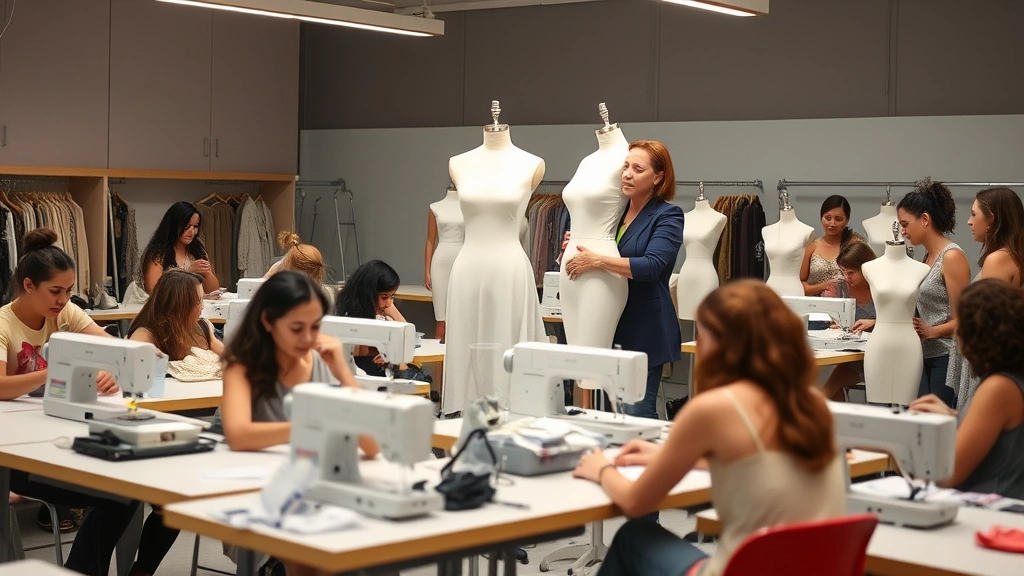
The choice between traditional and online fashion designing courses involves weighing distinct advantages. Traditional programs offer irreplaceable hands-on experience with physical materials, immediate feedback from experienced instructors, and access to specialized equipment like industrial sewing machines and pattern-cutting facilities. The immersive campus environment facilitates serendipitous collaborations and mentor relationships that often define careers.
However, online programs have matured significantly, offering flexibility that appeals to working professionals, parents, and geographically dispersed students. Quality institutions provide comprehensive digital instruction, virtual mentorship, and collaborative projects that simulate professional environments. Online learners often demonstrate exceptional self-discipline and time-management skills—qualities highly valued in fashion’s demanding workplace culture.
Hybrid models represent an increasingly popular compromise, combining online theoretical instruction with intensive in-person workshops and practical sessions. This approach accommodates diverse learning preferences while ensuring students develop genuine hands-on competencies. Many top fashion institutions now offer hybrid pathways, recognizing that flexibility enhances rather than compromises educational quality.
Cost considerations often favor online programs, which typically charge 30-50% less than equivalent traditional degrees. However, this shouldn’t be your sole criterion. Evaluate program reputation, instructor credentials, graduate employment outcomes, and industry partnerships. A less expensive program from an unrecognized institution may represent poor value, while premium tuition at prestigious schools often yields superior career trajectories.
The networking advantage traditionally belonged to campus-based programs, where students formed connections with peers, instructors, and visiting industry professionals. Contemporary online programs increasingly include virtual networking events, alumni communities, and industry collaborations that partially compensate for physical distance. However, campus-based students still access spontaneous mentorship and informal learning opportunities that online environments struggle to replicate.
Industry Connections and Networking Benefits
One of the most underestimated advantages of formal fashion education is the professional network you build. Attending a recognized fashion school connects you with peers who become collaborators, mentors, and lifelong colleagues. Many successful fashion designers attribute their breakthroughs to relationships forged during their education.
Established fashion schools maintain strong connections with industry employers, creating direct pathways to internships and entry-level positions. Guest lectures from renowned designers, pattern makers, and brand executives provide invaluable exposure to industry perspectives. These interactions often lead to mentorship relationships that accelerate career development far beyond what self-taught designers typically achieve.
Alumni networks represent lasting professional assets. Graduates from prestigious programs maintain active communities that facilitate job placements, collaborations, and business opportunities throughout their careers. This extended network becomes particularly valuable during career transitions or entrepreneurial ventures.
Internship programs integrated into formal curricula provide structured industry exposure. Students work at fashion houses, retail companies, textile mills, and design studios under supervision, developing practical experience while building professional references. These internships often convert into permanent positions, jumpstarting careers immediately after graduation.
Industry partnerships also provide access to materials, equipment, and expertise that individual learners cannot access independently. Students may work with luxury fabric suppliers, collaborate with manufacturing partners, or participate in fashion shows that showcase their work to industry professionals. These opportunities accelerate skill development and create portfolio pieces that impress prospective employers.
Financial Investment and ROI Analysis
The cost of a fashion designing course varies dramatically based on institution type, location, and program duration. A four-year bachelor’s degree at a prestigious U.S. fashion school ranges from $80,000 to $200,000 in total tuition. Online certificate programs cost $2,000 to $10,000, while community college fashion programs typically cost $15,000 to $30,000 for two years.
Calculating return on investment requires honest assessment of your career ambitions and market realities. If you aspire to leadership positions at major fashion houses, work for luxury brands, or establish a successful independent label, the credential from a recognized school substantially improves your prospects. The average fashion designer with formal education earns approximately $1.2 million over a 40-year career, compared to $900,000 for self-taught designers—a significant differential.
However, financial investment must account for opportunity costs. Two to four years of full-time study means foregone income and delayed career entry. Some individuals might accumulate equivalent experience and skills through entry-level positions, apprenticeships, and self-directed learning in the same timeframe. This path requires exceptional discipline and access to mentorship, but remains viable for highly motivated individuals.
Scholarship and financial aid opportunities can substantially reduce out-of-pocket costs. Many prestigious fashion schools offer merit-based scholarships, need-based aid, and work-study programs. Research institutions thoroughly before assuming you cannot afford your preferred program—financial barriers often prove surmountable with persistence.
The fashion industry’s volatility adds uncertainty to ROI calculations. Economic downturns, shifting consumer preferences, and technological disruption affect career trajectories unpredictably. However, the industry’s resilience and constant need for creative talent suggest that well-trained designers maintain employment prospects even during challenging periods.
Alternative Pathways to Fashion Success
While formal education offers significant advantages, alternative pathways to fashion success exist and have produced notable designers. Self-taught designers who build impressive portfolios through independent projects, social media presence, and freelance work can attract opportunities without formal credentials. This approach demands exceptional self-discipline, business acumen, and luck, but remains possible in our democratized digital landscape.
Apprenticeships with established designers provide intensive practical training while offering income and real-world experience. This traditional model, still prevalent in European fashion capitals, allows aspiring designers to learn directly from masters while contributing to ongoing design projects. The downside: apprenticeships are difficult to secure and typically involve lower compensation than entry-level positions requiring formal education.
Entry-level positions at fashion companies—starting as sample sewers, technical assistants, or design interns—provide on-the-job training that rivals formal education for practical skills. Combined with self-directed learning and online courses, this path can be cost-effective and lead to leadership positions. However, advancement without credentials often plateaus, limiting opportunities for senior roles at prestigious brands.
Online courses and certifications from platforms like Skillshare, Coursera, and specialized fashion institutes offer affordable skill development without formal degree commitment. These programs work best as supplements to experience rather than replacements for comprehensive education. They’re ideal for individuals already working in fashion who want to develop specific competencies or transition into related roles.
Launching your own label through platforms like Etsy, Shopify, or social media allows you to build a portfolio and test market concepts without traditional employment. Many successful independent designers started this way, bootstrapping their brands while developing business and design skills simultaneously. However, this path requires entrepreneurial mindset, financial resources for materials and marketing, and resilience through the inevitable early failures.
Making Your Decision
Determining whether a fashion designing course aligns with your goals requires honest self-assessment across multiple dimensions. Consider your learning style: do you thrive in structured environments with clear objectives, or do you prefer self-directed exploration? Do you need hands-on practice with physical materials and equipment, or can you develop competencies through digital instruction?
Evaluate your financial situation realistically. Can you afford tuition without excessive debt? Are scholarships likely? Would part-time programs or less expensive institutions adequately serve your needs? Financial stress during education can undermine learning and limit your ability to focus on developing excellence.
Assess your career ambitions specifically. Aspiring designers at luxury houses, major fashion corporations, or prestigious independent labels benefit substantially from formal credentials. Those pursuing niche specializations, freelance work, or independent brands might achieve comparable success through alternative pathways. Understanding your target career helps clarify whether formal education provides essential advantages.
Research specific programs thoroughly rather than assuming prestige equals value. Examine curriculum content, instructor credentials, alumni outcomes, industry partnerships, and graduate employment rates. Contact alumni and ask about their experiences. Visit campuses or explore online platforms to evaluate teaching quality and student community.
Consider your current life circumstances. If you have dependents, financial obligations, or existing career momentum, a full-time program might prove impractical. Conversely, if you’re young, unencumbered, and passionate about fashion, immersive education at a respected institution could transform your trajectory. Timing matters significantly.
Don’t overlook complementary skills and education. Regardless of your choice regarding formal fashion education, developing proficiency in understanding personal style principles, trend analysis, and business fundamentals strengthens your prospects. Many successful designers combine fashion training with expertise in related fields like psychology, anthropology, or engineering.
Finally, remember that fashion education doesn’t end with degree completion or course certification. The industry evolves constantly, requiring continuous learning throughout careers. Successful designers maintain curiosity, study emerging trends, experiment with new techniques, and adapt to technological change. Whether you pursue formal education or alternative pathways, commitment to lifelong learning determines long-term success.
The fashion designing course question ultimately lacks a universal answer. For many aspiring designers—particularly those targeting established fashion houses, seeking structured mentorship, or valuing credentials—formal education delivers exceptional value. For others with strong self-direction, existing industry connections, or unconventional career aspirations, alternative paths prove equally viable. Your decision should reflect your unique circumstances, ambitions, and learning preferences rather than industry assumptions.
FAQ
How long does a typical fashion designing course take?
Fashion education varies significantly in duration. Bachelor’s degree programs typically require four years of full-time study. Associate degrees and diploma programs usually span two years. Certificate programs and specialized courses can range from several weeks to one year depending on intensity and comprehensiveness. Online programs often offer flexible pacing, allowing students to accelerate or extend timelines according to personal circumstances.
Do I need a fashion designing course to become a fashion designer?
Formal education is not strictly required, but it substantially improves career prospects, particularly for positions at established brands and fashion houses. Many successful designers pursued formal training, while others built careers through entry-level positions, apprenticeships, and self-directed learning. Your path depends on your ambitions, resources, and learning preferences. Formal education provides structured skill development, industry connections, and credentials that facilitate advancement.
What’s the job market like for fashion designers?
The fashion industry remains competitive but offers diverse opportunities. According to the Bureau of Labor Statistics, fashion design employment is expected to grow steadily. Growth concentrates in digital fashion, sustainable design, and specialized roles like technical design. Geographic location matters significantly—major fashion hubs like New York, Los Angeles, and Paris offer more opportunities but also higher competition and cost of living.
Can I pursue fashion design education while working?
Absolutely. Many programs offer evening classes, weekend workshops, and online instruction designed for working professionals. Part-time and hybrid programs provide flexibility while maintaining educational rigor. However, balancing work and intensive fashion education requires exceptional time management and commitment. Consider your energy levels and financial situation before enrolling in demanding programs while maintaining employment.
What should I look for in a fashion designing course?
Evaluate curriculum comprehensiveness, covering design fundamentals, technical skills, digital tools, business concepts, and sustainable practices. Assess instructor credentials—active industry professionals typically provide superior instruction. Research alumni outcomes and employment statistics. Investigate industry partnerships, internship opportunities, and networking events. Consider program flexibility, cost, and whether teaching style matches your learning preferences. Visit or explore online platforms to evaluate the student community and campus culture.
Is fashion design education expensive?
Costs vary dramatically. Community college programs cost $15,000-$30,000, online certificates range from $2,000-$10,000, and prestigious university programs range from $80,000-$200,000. Many institutions offer scholarships, financial aid, and work-study programs that reduce out-of-pocket costs. Research funding opportunities thoroughly—financial barriers often prove surmountable with persistence and creative financing approaches.