1860 Fashion Trends: Historian Insights Into Victorian Style Evolution
The 1860s represent one of fashion history’s most transformative decades, marked by dramatic silhouettes, technological innovation, and the emergence of haute couture as we know it today. This era witnessed the rise of the crinoline at its most extreme proportions, the introduction of the sewing machine into mainstream garment production, and the beginning of fashion’s shift toward seasonal collections. Understanding 1860 fashion trends provides invaluable context for modern style enthusiasts and reveals how historical constraints shaped the garments we wear now.
Fashion historians recognize the 1860s as a pivotal moment when clothing transcended mere function to become a sophisticated language of social status, political affiliation, and personal identity. The American Civil War influenced textile availability and production methods, while European designers simultaneously pushed aesthetic boundaries. This decade established design principles that continue to influence contemporary fashion, from the importance of silhouette to the psychology of color choice. Whether you’re interested in finding your personal style or understanding fashion’s historical roots, the 1860s offer profound lessons.
The Crinoline Revolution: Extreme Silhouettes Define the Decade
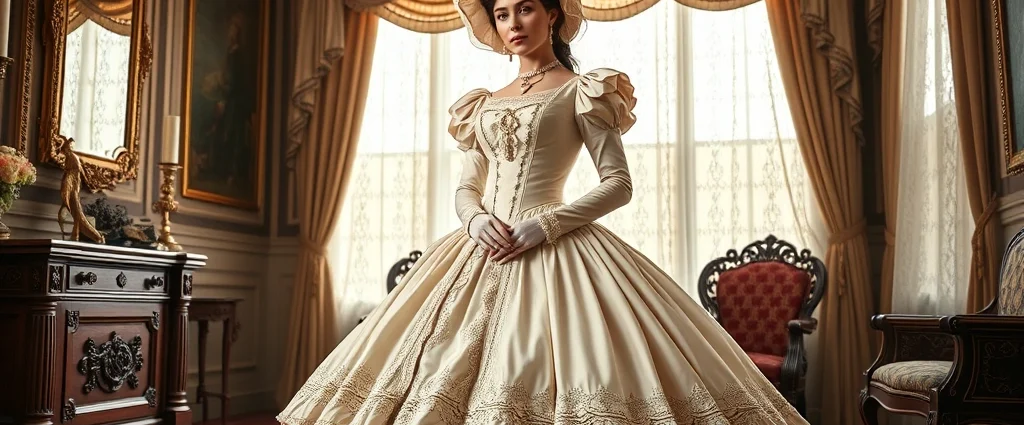
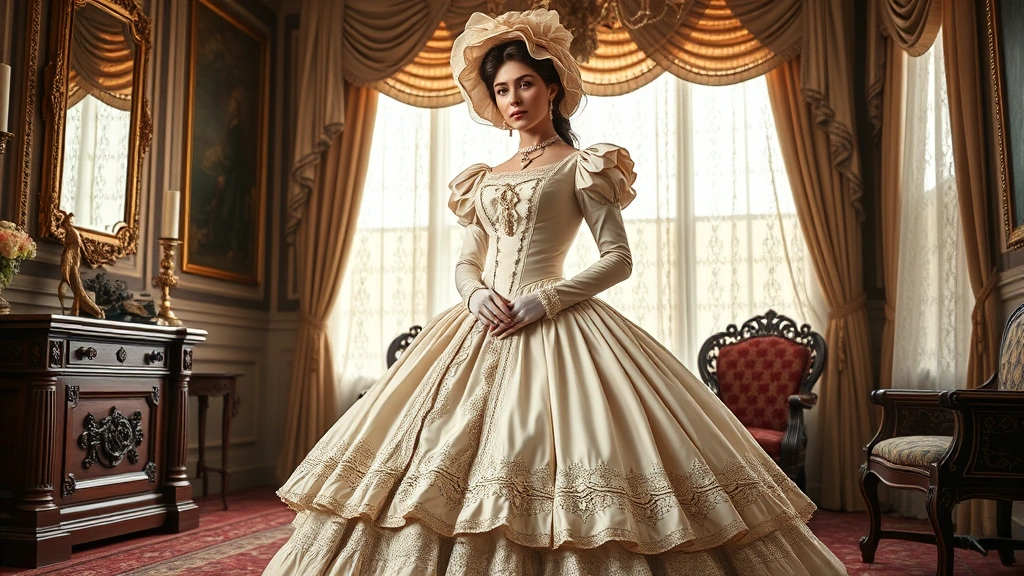
The 1860s crinoline represents fashion’s most exaggerated silhouette, creating bell-shaped skirts that extended up to six feet in circumference. These structures, made from steel hoops or horsehair, transformed women’s bodies into architectural marvels that dominated interior and exterior spaces. Fashion historians note that the crinoline wasn’t merely decorative—it served as a visible marker of wealth, as only affluent women could afford the fabric and structure required for such voluminous garments.
The hoop skirt’s engineering evolved significantly throughout the decade. Early 1860s crinolines featured evenly distributed hoops, but by the mid-1860s, designers concentrated fullness toward the back, creating the proto-bustle silhouette that would dominate the 1870s. This shift reflected changing aesthetic preferences and manufacturing capabilities. The Vogue archives contain fascinating documentation of these transitions, showing how quickly fashion responded to technological and social changes.
Women’s bodies became constrained in ways that limited physical movement, breathing, and comfort. Yet this discomfort communicated a powerful message: a woman wearing such garments didn’t need to work or move freely—she existed primarily for aesthetic display and leisure. The crinoline thus functioned as both fashion statement and social commentary, embodying Victorian ideals about femininity, luxury, and women’s prescribed social roles.
Textile Innovation and Production Methods Transform Fashion Manufacturing
The 1860s witnessed revolutionary changes in how garments were produced, fundamentally altering fashion’s relationship with mass production and accessibility. The sewing machine, invented in the 1840s, gained widespread commercial adoption during this decade, enabling faster garment construction and more complex designs. This technology democratized fashion to some extent, allowing middle-class women access to styles previously reserved for the wealthy.
Cotton production faced significant disruption due to the American Civil War, which restricted Southern cotton exports to European mills. This shortage drove innovation in textile manufacturing and increased experimentation with alternative fibers. Wool became more prominent in women’s fashion, leading to the development of new weaving techniques and fabric types. Silk production also expanded, particularly in France and Italy, establishing these nations as luxury textile centers.
The introduction of aniline dyes during the 1860s revolutionized color possibilities in fashion. These synthetic dyes produced vibrant, previously impossible hues—brilliant magentas, electric blues, and intense yellows—that distinguished 1860s fashion from earlier decades. Textile mills could now produce patterned fabrics more efficiently, leading to the proliferation of printed cotton and wool fabrics that characterized the era. Understanding these fashion design fundamentals helps contextualize how technology shapes aesthetic choices.
Color, Dyes, and Chemical Innovation Shape Aesthetic Possibilities
Fashion historians emphasize that color choice in the 1860s wasn’t merely aesthetic—it reflected access to cutting-edge chemical technology. The first aniline dye, mauveine, was discovered in 1856, but commercial production ramped up significantly during the 1860s. This breakthrough enabled manufacturers to create colors that natural dyes couldn’t achieve, positioning early adopters as fashionable and modern.
The most sought-after colors of the 1860s included deep jewel tones: rich purples, emerald greens, and sapphire blues. These colors signified both wealth and engagement with contemporary technology. Paradoxically, some of these early synthetic dyes proved unstable, fading quickly or running when wet. Yet fashion-conscious women pursued these colors precisely because they were new and exclusive, even if impermanent.
Black remained the dominant color for formal day wear and mourning garments, but the 1860s saw increased use of black with contrasting trims, ribbons, and buttons. This reflected the era’s love of ornamentation and pattern mixing. Plaid and tartan patterns experienced renewed popularity, influenced by Queen Victoria’s well-documented affection for Scottish design. Stripes, florals, and geometric patterns competed for attention in an increasingly visually complex fashion landscape.
Accessories and Ornamental Details: The Art of Embellishment
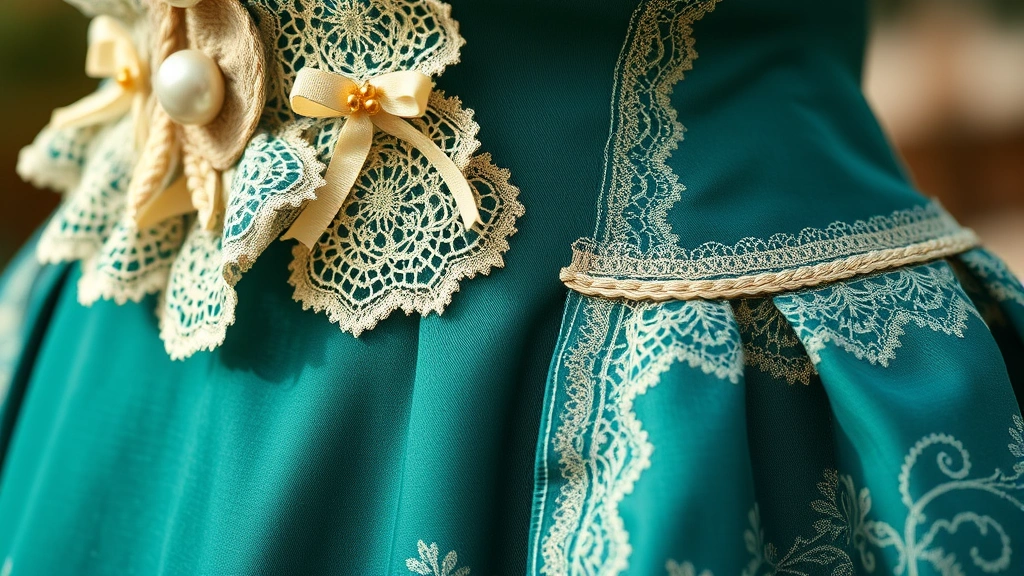
The 1860s represented fashion’s maximalist moment, where more embellishment equaled greater sophistication and status. Lace—particularly French and Belgian lace—adorned nearly every garment. Collars, cuffs, sleeves, and hemlines featured elaborate lace insertions and overlays that required hours of handwork. For wealthy women, purchasing fine lace represented a significant financial investment comparable to haute couture purchases today.
Ribbons, braids, and passementerie (decorative trim) created visual interest and demonstrated construction expertise. Dressmakers arranged these elements in increasingly complex patterns: diagonal sweeps, geometric designs, and tiered effects. Buttons transformed from purely functional closures into decorative elements, with manufacturers producing buttons in materials ranging from pearl and bone to jet and glass.
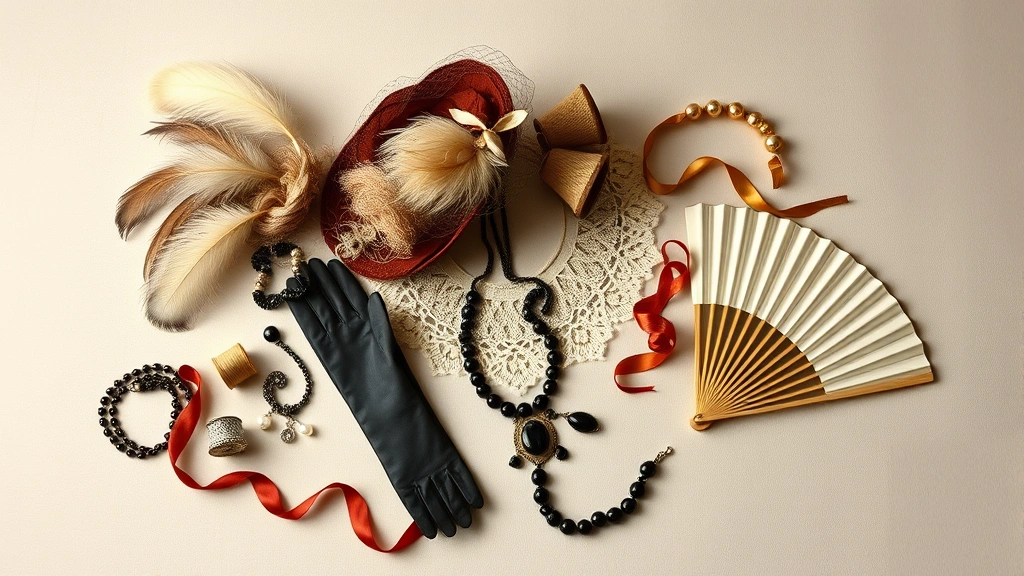
Bonnets and hats grew larger and more elaborate as the decade progressed, featuring feathers, artificial flowers, ribbons, and netting. These accessories weren’t mere adornments—they required significant skill to construct and considerable expense to purchase. A fashionable bonnet could cost more than an entire day dress for working-class women. Gloves, typically long and fitted, became essential accessories, with different styles appropriate for different occasions.
Jewelry in the 1860s reflected mourning culture, particularly following Prince Albert’s death in 1861. Jet jewelry became immensely popular, as it was considered appropriate for mourning while remaining elegant. Gold jewelry featuring pearls and semi-precious stones also remained fashionable for daytime wear, while diamonds and rubies were reserved for evening.
Fashion as Social Hierarchy Indicator: Visible Markers of Status
The 1860s fashion system operated as a rigid hierarchy where clothing communicated precise information about a woman’s social position, marital status, age, and economic resources. This wasn’t accidental—it was the fundamental purpose of fashion during this period. A trained observer could determine someone’s exact social standing by examining their garments’ materials, construction quality, and current fashionability.
Working-class women wore simpler garments made from cheaper fabrics in muted colors, with minimal ornamentation. Their skirts featured modest fullness, achieved through gathered fabric rather than expensive crinolines. Middle-class women occupied a fashion middle ground, wearing respectable garments with some ornamentation but lacking the extreme opulence of aristocratic dress. Upper-class women wore the most fashionable, expensive garments with elaborate trims and the most extreme silhouettes.
The crinoline itself functioned as a class marker—only wealthy women could afford the materials and the lifestyle that allowed wearing such restrictive garments. The size and shape of one’s crinoline communicated wealth more effectively than any verbal statement. Similarly, the ability to wear pale, pristine fabrics signaled that one didn’t perform manual labor. Hands had to be soft and white, nails unblemished, and clothing unstained—all markers of leisure-class status.
Fashion also communicated moral status. Widows wore mourning clothes in prescribed colors and styles, with the depth and duration of mourning dress indicating respectability. Young unmarried women wore different styles than married women, with specific colors and silhouettes distinguishing their marital status. This system meant that fashion functioned as a legible social text, where everyone understood the messages clothing communicated.
Men’s Fashion During the 1860s: Conservative Evolution and Subtle Distinction
While women’s fashion underwent dramatic transformations during the 1860s, men’s fashion evolved more subtly, following principles of restraint and formality that dominated Victorian masculine aesthetics. Men’s clothing during this period became increasingly standardized and regulated by strict social codes that dictated appropriate dress for different occasions and times of day.
The lounge suit emerged during the 1860s as a more relaxed alternative to formal morning coats and evening dress. This development represented a significant shift toward comfort and practicality in menswear, though even lounge suits maintained rigid tailoring and formal silhouettes. Jackets featured narrow lapels and were worn with waistcoats and trousers in matching or complementary fabrics and colors.
Trousers became increasingly narrow throughout the 1860s, reflecting changing masculine aesthetics that emphasized verticality and slenderness. Trouser colors included black, dark gray, dark blue, and earth tones, with patterns limited to subtle stripes or checks. Cuffs on trousers appeared during this decade, initially controversial but gradually becoming accepted fashion elements.
Neckwear represented one of the few areas where men could express individuality and fashion consciousness. Cravats, bow ties, and neckties appeared in various fabrics and colors, with silk being preferred for formal occasions. The width and style of neckwear evolved throughout the decade, providing subtle markers of fashion awareness and social position.
Men’s hats remained essential accessories, with top hats for formal occasions, bowlers for business wear, and various styles for country and sporting activities. The quality and style of one’s hat communicated social status and fashion knowledge. Gloves, typically leather and often white or light gray, completed formal ensembles.
Regional Fashion Variations and International Influences Shape Style Diversity
Fashion in the 1860s wasn’t monolithic—regional variations reflected different climates, economic resources, and cultural traditions. European fashion centers—particularly Paris, London, and Vienna—set trends that gradually filtered to other regions through fashion magazines, traveling dressmakers, and international exhibitions.
Paris maintained its position as fashion’s undisputed capital, with designers like The Metropolitan Museum of Art’s fashion collection documenting the era’s most influential creations. French fashion emphasized elegance, refinement, and innovative design. London fashion emphasized tailoring precision and conservative elegance, with British manufacturers producing high-quality textiles that influenced global fashion production.
In America, the Civil War dramatically impacted fashion availability and production. Northern industrial centers developed domestic textile and garment production to compensate for reduced Southern cotton exports and European imports. This necessity fostered innovation and eventually established American fashion manufacturing as a significant industry. Southern fashion before the war reflected European influences, with wealthy planters’ wives wearing the most fashionable Paris gowns.
Russian aristocratic fashion drew heavily from Paris but incorporated distinctive elements reflecting Russian culture and climate. Fur-trimmed garments became particularly prominent, creating silhouettes distinctly different from Western European fashion. Austrian and German fashion similarly adapted French trends while maintaining regional characteristics in construction techniques and ornamentation preferences.
Colonial fashion in India, Australia, and other British territories adapted European styles to local climates, creating hybrid fashions that reflected both imperial influence and practical adaptation. These regional variations demonstrate that fashion history, even during periods of strong European dominance, involved complex negotiations between international trends and local contexts. Exploring fashion history’s recurring cycles reveals how these 1860s principles continue influencing contemporary style.
The 1860s also witnessed the rise of international fashion exhibitions and trade fairs that facilitated design exchange and commercial competition. The 1867 Paris Exposition Universelle showcased fashions from across Europe and beyond, establishing comparative fashion aesthetics and driving manufacturers to innovate continuously. These exhibitions created opportunities for designers to gain international recognition and for fashion ideas to circulate more rapidly than previously possible.
FAQ: Common Questions About 1860 Fashion Trends
What made 1860s crinolines so large, and how did women manage them?
1860s crinolines reached extreme proportions because they served multiple functions: they created the fashionable silhouette, demonstrated wealth through fabric consumption, and symbolized women’s leisure-class status. Women managed these garments through practice and adaptation—doorways were widened, stairs redesigned, and social spaces rearranged to accommodate crinoline dimensions. Women developed techniques for maneuvering in confined spaces and sitting in specially designed chairs. The extreme size wasn’t merely aesthetic; it was a visible manifestation of social values and economic resources.
How did the American Civil War impact 1860s fashion?
The Civil War disrupted cotton supplies to European mills, driving innovation in textile production and increasing experimentation with alternative fibers. The conflict also accelerated American garment manufacturing development, as Northern industries compensated for reduced imports. Fashion magazines increasingly emphasized patriotic dress, and mourning garments became more prevalent. The war’s social upheaval also influenced fashion’s role in expressing political affiliations and regional identities.
Were synthetic dyes used throughout the 1860s, and were they considered desirable?
Synthetic aniline dyes became increasingly available during the 1860s, though natural dyes remained in use throughout the decade. The vibrant, previously impossible colors produced by synthetic dyes were highly desirable and fashionable, despite some stability issues. Wearing these new colors signaled engagement with contemporary technology and fashion awareness. However, the instability of some early synthetic dyes—fading or running—became a documented problem, leading to ongoing improvements in dye chemistry.
How did men’s fashion differ from women’s fashion during the 1860s?
Men’s fashion remained conservative and standardized, emphasizing tailoring precision and formality, while women’s fashion underwent dramatic transformations in silhouette and ornamentation. Men’s fashion communicated status through fabric quality and tailoring expertise rather than extreme silhouettes. The strict codes governing men’s dress left little room for individual expression, though neckwear and hat styles provided limited opportunities for fashion creativity.
What role did fashion magazines play in spreading 1860s trends?
Fashion magazines—particularly Godey’s Lady’s Book in America and The Englishwoman’s Domestic Magazine in Britain—were crucial for disseminating trends to women across different regions and social classes. These publications featured hand-colored fashion illustrations, sewing instructions, and articles about the latest Paris fashions. Subscribers could replicate fashionable styles with local dressmakers, creating a more connected fashion culture. Magazines also reinforced social values about appropriate dress and gender roles. For deeper understanding of fashion’s cultural impact, explore fashion documentaries that examine historical style.
How did mourning fashion function in 1860s society?
Mourning fashion represented a formalized system of visible grief expression, with prescribed garments, colors, and durations indicating respect for the deceased and social respectability. Following Prince Albert’s death in 1861, Queen Victoria’s extended mourning influenced fashion significantly, with jet jewelry and black garments becoming increasingly prominent. Mourning fashion demonstrated both emotional attachment to the deceased and adherence to social conventions, making it a crucial aspect of 1860s fashion culture.