Victorian Men’s Fashion: A Historian’s Insight
The Victorian era, spanning from 1837 to 1901, represents one of the most distinctive and refined periods in men’s fashion history. This transformative age witnessed the evolution of the modern gentleman, characterized by impeccable tailoring, strict social codes, and an unprecedented emphasis on respectability through appearance. Victorian men’s fashion was far more than mere clothing—it was a visual language that communicated social status, moral character, and professional ambition. The silhouettes, fabrics, and accessories of this period established conventions that continue to influence contemporary menswear design.
Understanding Victorian men’s fashion requires appreciation for the historical context that shaped these sartorial choices. The Industrial Revolution brought new manufacturing capabilities, creating an expanding middle class eager to distinguish themselves through fashionable dress. Simultaneously, Queen Victoria’s reign established a cultural emphasis on propriety and decorum that filtered through every aspect of masculine presentation. From the humble working man to the aristocratic dandy, every gentleman navigated a complex hierarchy of dress codes that defined Victorian society. This exploration into Victorian men’s fashion reveals how historical tailoring techniques, color palettes, and garment construction continue to inspire modern designers and style enthusiasts.
Silhouettes and Structural Innovation
Victorian men’s fashion revolutionized the male silhouette through careful architectural construction and strategic padding. The ideal masculine form during this era emphasized broad shoulders, a tapered waist, and a pronounced chest—achieved through innovative tailoring rather than restrictive corseting (though some gentlemen did employ undergarments). The coat became the cornerstone of Victorian menswear, with the sack coat gradually replacing the frock coat as everyday wear during the latter half of the century.
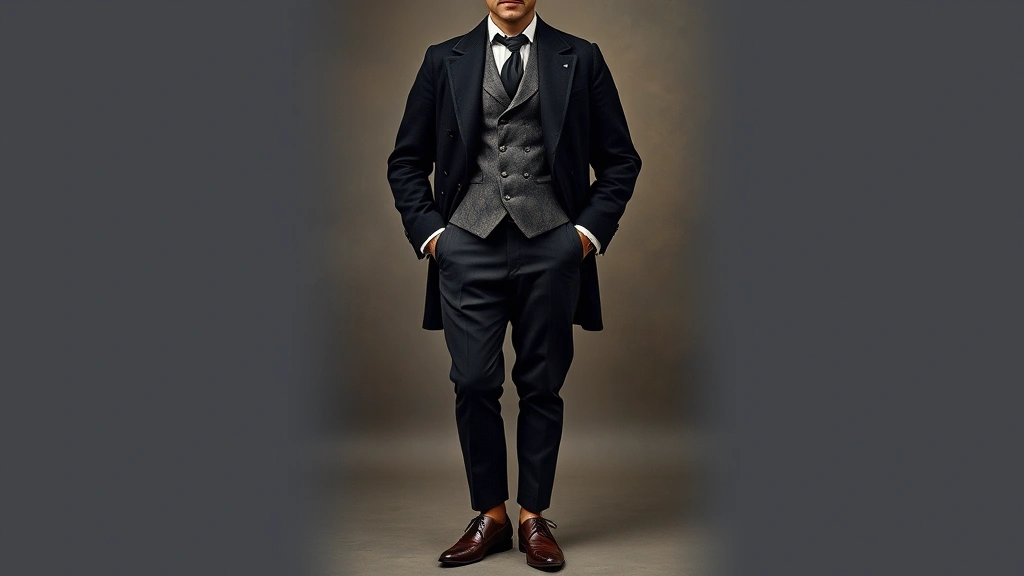
The morning coat, with its distinctive curved away front panels, emerged as the formal daytime alternative to the evening tailcoat. This garment required exceptional skill to construct, with tailors spending countless hours perfecting the pitch, length, and hang of the coat. The three-piece suit—comprising jacket, waistcoat, and trousers—became the uniform of respectability, with each component precisely proportioned to create visual harmony. Victorian tailors understood that proper fit wasn’t simply about measurement; it involved understanding body mechanics, posture, and the way fabric draped across the human form.
Trousers during the Victorian period underwent significant transformation. Early Victorian trousers were relatively loose and straight, but by mid-century, they became increasingly tapered toward the ankle, sometimes requiring a strap beneath the foot to maintain tension. This evolution reflected both practical improvements and changing aesthetic preferences. The rise of trousers gradually lowered, moving from a high waistband near the natural waist to a lower position, fundamentally changing the proportions of the male silhouette and influencing how jackets were cut and worn.
The Art of Precision Tailoring
Victorian tailoring represented the pinnacle of bespoke craftsmanship, with techniques developed during this era remaining fundamental to quality menswear production today. Master tailors trained for years to understand the complex geometry of pattern-making, the physics of fabric grain, and the subtle manipulation required to create garments that fit individual bodies perfectly. Unlike modern ready-to-wear production, every Victorian gentleman’s suit was constructed specifically for him, with multiple fittings ensuring absolute precision.
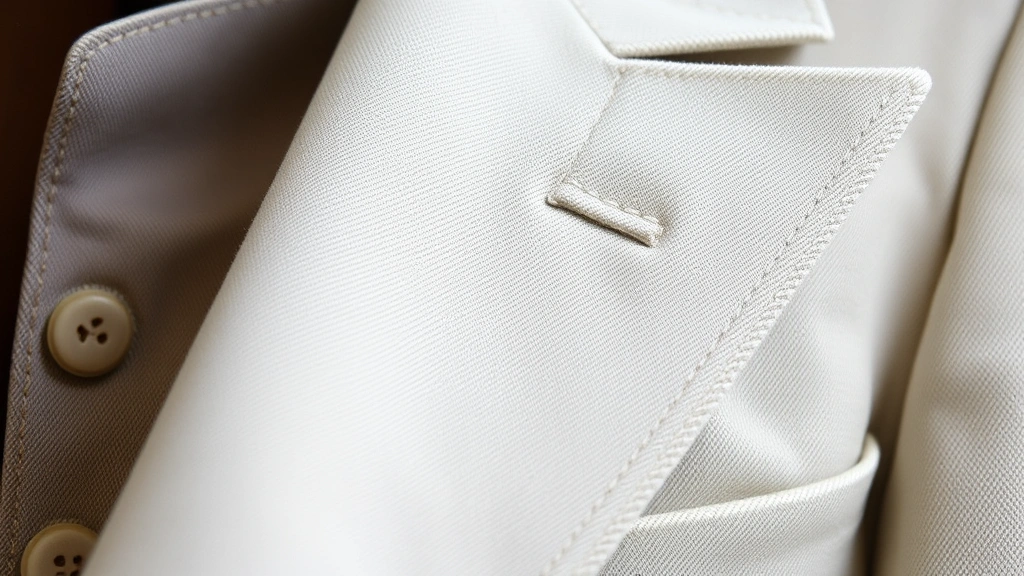
The hand-stitching methods employed by Victorian tailors created garments of remarkable durability and refinement. Lapels were carefully pad-stitched to maintain their shape and roll, while buttonholes received meticulous attention with silk thread worked in precise patterns. The inside construction revealed the craftsmanship—linen stays reinforced the chest area, hair canvas provided structure to the lapels, and silk linings offered comfort and durability. These internal elements, invisible to casual observers, distinguished quality tailoring from inferior work.
Canvas work, the foundation of jacket construction, reached new heights of sophistication during the Victorian period. Tailors developed different densities and weaves of linen canvas for various jacket types and body types, understanding that proper structure required more than simply gluing fabric together. The subtle art of finding personal style through tailored clothing emerged during this era, as individual tailors developed signature construction methods that influenced how garments draped and moved with the wearer.
Key tailoring innovations included:
- Sophisticated dart placement for body-conforming fit
- Complex pattern layouts maximizing fabric efficiency
- Strategic seam placement creating visual length
- Hand-sewn button attachment ensuring longevity
- Interfacing techniques developing jacket structure
- Lining construction enabling easy dressing
Fabrics, Colors, and Material Choices
The Victorian era witnessed extraordinary advancement in textile manufacturing, providing tailors and gentlemen with unprecedented fabric options. Wool remained the dominant choice for suits and jackets, with different weights and weaves serving various seasons and occasions. Superfine merino wool, imported from Australia and South America, became highly prized for its softness and refined appearance. Tweed, initially considered country wear, gradually gained acceptance for less formal occasions, while worsted wools provided smooth, durable surfaces ideal for formal garments.
Color selection during the Victorian period reflected both practical considerations and strict social conventions. Black remained the standard for formal evening wear, while dark colors dominated daytime attire. Navy blue, dark green, and rich brown tones appeared in business and country wear, with subtle variations in weave and finish providing visual interest despite conservative coloring. The prevalence of dark colors served practical purposes in industrial cities where coal smoke and soot required easily-maintained garments, but it also reflected the era’s emphasis on sobriety and respectability.
Silk played a crucial role in Victorian menswear, appearing in waistcoats, linings, and accessories. Waistcoat fabrics offered more latitude for color and pattern, with damasks, brocades, and figured silks allowing gentlemen to express personality while maintaining propriety. Velvet waistcoats in deep jewel tones appeared in evening wear, while cotton and linen waistcoats suited daytime occasions. The contrast between the sober exterior coat and the more decorative waistcoat represented a carefully calibrated balance between restraint and self-expression.
Linen, essential for shirts, collars, and cuffs, demanded significant investment in maintenance. The crisp white linen shirt, starched to architectural precision, became a status symbol indicating both wealth and access to proper laundry services. Subtle patterns appeared in some business shirts, while evening wear demanded pure white linen. The quality of a gentleman’s linens directly reflected his social standing, making shirt selection a matter of considerable importance in Victorian fashion hierarchy.
Accessories and Finishing Details
Victorian gentlemen understood that accessories transformed a suit from merely respectable to genuinely distinguished. The waistcoat served as the primary vehicle for personal expression, with patterns, colors, and fabrics varying according to the occasion and wearer’s taste. Double-breasted waistcoats dominated formal wear, while single-breasted versions suited business attire. Pocket details, button styles, and lapel treatments provided subtle variations that allowed discerning gentlemen to exercise individual preference within acceptable bounds.
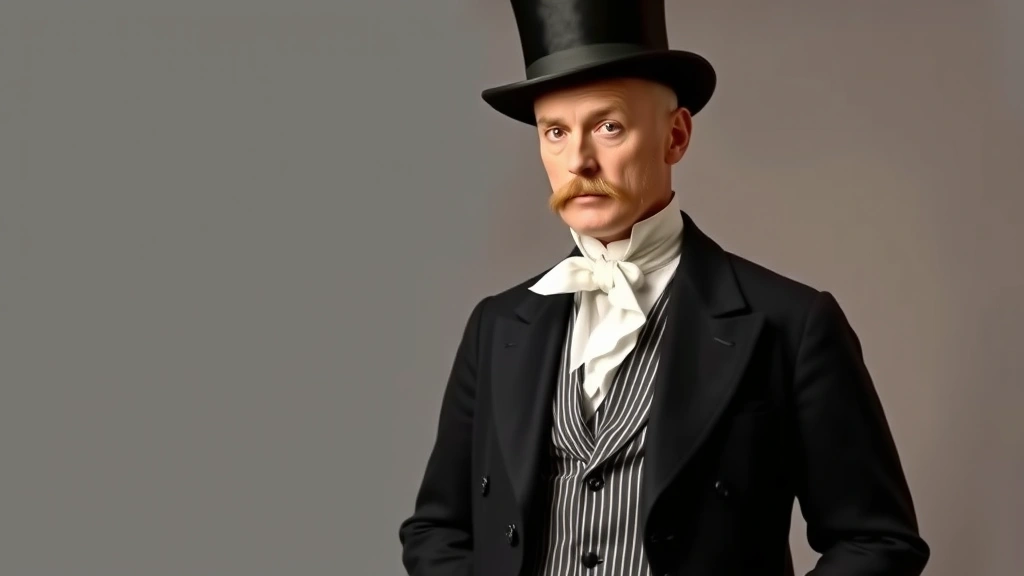
Neckwear represented another crucial element of Victorian masculine presentation. The cravat, evolving throughout the era, eventually gave way to the necktie as the standard formal neckwear. Elaborate knotting techniques transformed simple silk into sophisticated neck ornaments, with different knots serving specific occasions and times of day. Bow ties, particularly in evening wear, required precise tying and positioning to achieve the proper effect. The stock, a stiffened neckcloth worn with formal dress, maintained its position through careful construction and skilled application.
Shirt collars and cuffs received meticulous attention, with styles evolving throughout the Victorian period. High, stiff collars dominated early Victorian fashion, gradually lowering as the era progressed. Detachable collars and cuffs, practical innovations allowing frequent laundering without constant shirt replacement, became widespread. The visible cuff, extending slightly beyond the jacket sleeve, demonstrated proper fit and provided an opportunity for subtle ornamentation through cufflinks and studs.
Footwear completed the Victorian gentleman’s ensemble with equal care. Oxford shoes, lace-up styles with refined proportions, became standard for business and formal wear. Chelsea boots, with their elastic side panels, offered convenient alternatives for less formal occasions. Spats, covering the ankle and lower calf, appeared in formal daytime wear, adding vertical emphasis and protecting trousers from street dirt. The quality and polish of shoes communicated volumes about a gentleman’s attention to detail and social standing.
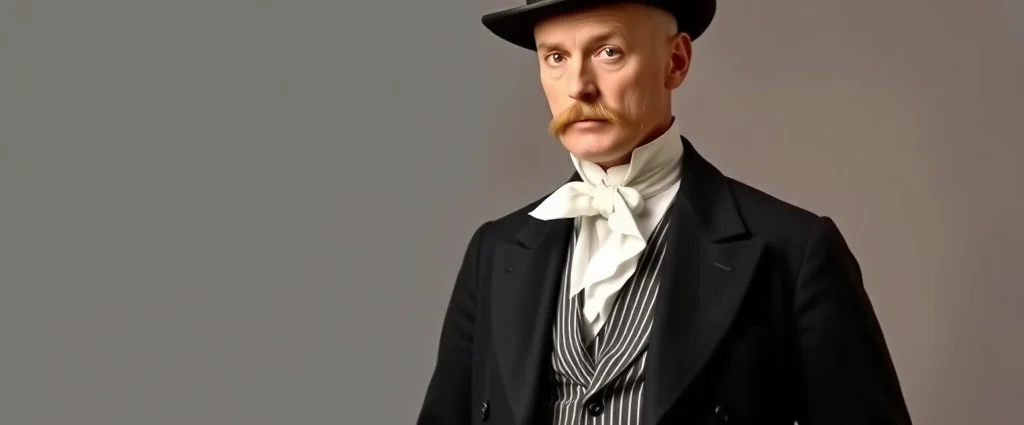
Hat selection proved essential to complete respectability. The top hat, essential for formal occasions, symbolized social position and refined taste. Bowler hats served business and middle-class occasions, while flat caps and homburg hats suited country and less formal urban wear. Hat styles, quality, and even the angle of wear communicated subtle social information, making this accessory far more significant than modern observers might assume.
Social Class and Dress Codes
Victorian fashion operated within a rigid system of social conventions that dictated appropriate dress for different times, occasions, and social positions. Understanding these codes was essential for anyone aspiring to respectable society. The formal morning coat suit, appropriate for daytime formal occasions, differed fundamentally from the evening tailcoat, while business wear occupied an entirely different category. A gentleman’s wardrobe necessarily included multiple suits, each suited to specific occasions and times of day.
The working and lower-middle classes adapted Victorian fashion conventions according to their circumstances and resources. While unable to afford the multiple specialized suits of wealthy gentlemen, working men invested in quality single-breasted jackets and trousers that could be worn for various occasions. The Style Loom Daily Blog explores how historical fashion conventions continue influencing contemporary menswear choices. Waistcoats and neckwear offered affordable opportunities for individual expression, allowing working men to participate in Victorian fashion culture within their economic constraints.
Country wear operated under different rules than urban fashion, with tweed jackets, knickerbockers, and practical boots dominating rural dress. Hunting attire, featuring distinctive colors and cuts, identified gentlemen engaged in country pursuits. The ability to change clothes multiple times daily for different activities—breakfast wear, business attire, afternoon visiting clothes, and evening dress—remained primarily a privilege of the wealthy. This wardrobe flexibility itself signaled social position more eloquently than any individual garment.
Military influence permeated Victorian menswear, with structured tailoring and disciplined silhouettes reflecting martial values. Officers’ dress uniforms influenced civilian coat cuts, while military-inspired details like braid trim and buttons appeared in civilian wear. The Victorian emphasis on posture, bearing, and physical discipline reflected military ideals, making tailored clothing that supported proper stance essential to respectable appearance.
Evolution Through the Decades
Early Victorian fashion (1837-1850s) featured high-buttoned coats with pronounced waists, achieved through careful tailoring and sometimes light corseting. Trousers remained relatively loose, and colors included more variation than later decades. Waistcoats, often in bright colors or patterns, provided visual interest beneath dark coats. The silhouette emphasized an almost feminine waist with broad shoulders, a dramatic contrast to both preceding and following periods.
Mid-Victorian fashion (1860s-1870s) moved toward a more natural silhouette with less extreme waist emphasis. Coats lengthened slightly, and trousers became more tapered. The lounge jacket gained acceptance for informal wear, beginning the transition from formal frock coats toward modern suit jackets. Colors remained conservative, with dark tones dominating, though subtle variations in weave and finish provided visual sophistication. This period saw the fashion design degree programs beginning to formalize tailoring education, elevating the profession’s status.
Late Victorian fashion (1880s-1901) witnessed the emergence of the modern three-piece suit as we know it. The sack coat, previously considered inappropriate for formal occasions, gained acceptance for business and less formal daytime wear. Shoulders became broader through construction rather than padding, and the overall silhouette moved toward the straighter lines that would characterize Edwardian fashion. This period saw increasing standardization of suit construction, though bespoke tailoring remained the standard for quality garments.
Throughout all periods, the waistcoat remained essential, though its prominence gradually diminished as jacket styles changed. Shirt collars evolved from extremely high and stiff in early Victorian times to progressively lower and more comfortable configurations. The necktie underwent continuous refinement, with knot styles and widths varying according to fashion’s dictates. These gradual evolutions reflected both practical improvements in manufacturing and shifting aesthetic preferences within Victorian society.
Contemporary Influence and Revival
Modern menswear design continuously draws inspiration from Victorian tailoring traditions, with contemporary designers studying historical garments to understand construction principles that remain relevant. The emphasis on proper fit, quality materials, and meticulous craftsmanship established during the Victorian era defines luxury menswear today. High-end tailors worldwide employ techniques developed during this period, recognizing that fundamental principles of tailoring transcend historical periods.
The revival of interest in vintage and heritage menswear has sparked renewed appreciation for Victorian garment construction. Contemporary gentlemen seeking distinctive style often reference Victorian fashion, incorporating period elements into modern wardrobes. The three-piece suit, essentially unchanged in fundamental structure since the late Victorian period, remains the standard for formal menswear. Understanding Victorian tailoring principles helps modern men appreciate why quality suits cost what they do and why bespoke tailoring produces superior results.
Sustainable fashion movements increasingly draw parallels to Victorian tailoring practices, emphasizing durability, repairability, and timeless design over fast fashion trends. The Victorian principle of investing in fewer, higher-quality garments suited to multiple occasions aligns with contemporary sustainability values. Modern tailors studying Victorian techniques often discover that historical methods produce garments lasting decades with proper care, contrasting sharply with disposable contemporary fashion.
Fashion historians and fashion documentaries increasingly explore Victorian menswear’s influence on contemporary style. Museums worldwide feature Victorian garments in exhibitions examining historical tailoring and social history. The complexity and sophistication of Victorian menswear challenges modern assumptions about fashion’s historical development, revealing that contemporary menswear represents evolution rather than revolution from established principles.
The Victorian gentleman’s approach to personal presentation—emphasizing quality over quantity, investing in proper fit, and understanding the social language of dress—offers valuable lessons for modern men navigating contemporary fashion choices. As casual dress standards relax, those choosing to dress formally increasingly reference Victorian principles, understanding that timeless elegance emerges from fundamental tailoring principles rather than temporary trends.
FAQ
What was the most important garment in Victorian men’s fashion?
The coat served as the cornerstone of Victorian menswear, with the frock coat dominating formal wear and the sack coat gradually gaining acceptance for informal occasions. The coat’s cut, fit, and construction determined the overall silhouette and communicated social status more effectively than any other garment. A well-tailored coat transformed an entire ensemble, while a poorly-fitted coat undermined even the finest accompanying garments.
How did Victorian men achieve the proper silhouette?
Victorian tailors employed sophisticated construction techniques including strategic padding in shoulders and chest, carefully placed darts for body conformation, and sometimes light corseting for more extreme silhouettes. The skilled manipulation of fabric grain, seam placement, and interfacing created the distinctive broad-shouldered, tapered-waist silhouette. Unlike modern construction, Victorian tailoring relied on hand-stitching and individual fitting to achieve proper proportions for each wearer.
What colors dominated Victorian men’s fashion?
Dark colors—particularly black, dark blue, and deep brown—dominated Victorian menswear, reflecting both practical considerations in industrial cities and cultural emphasis on sobriety and respectability. More color variation appeared in waistcoats and accessories, allowing gentlemen to express personality while maintaining propriety. Evening wear demanded black, while business and country wear allowed slightly more variation within the dark color palette.
How did Victorian tailoring differ from modern suit construction?
Victorian tailoring emphasized hand-stitching, individual fitting, and meticulous attention to construction details invisible to casual observers. Modern mass-production often relies on machine-stitching and standardized sizing, though high-end contemporary tailoring maintains many Victorian principles. Victorian tailors spent far more time on each garment, with multiple fittings ensuring perfect fit for individual wearers. The canvas work, interfacing techniques, and seam construction in Victorian garments often surpass contemporary ready-to-wear quality.
What role did waistcoats play in Victorian men’s fashion?
Waistcoats served as the primary vehicle for personal expression within the constraints of Victorian propriety. While jackets and trousers remained relatively conservative, waistcoats allowed variation in color, pattern, and fabric. Different waistcoat styles suited different occasions, with formal evening wear requiring specific styles while business attire allowed more casual options. The waistcoat essentially bridged the gap between strict social convention and individual personality expression.
How did social class influence Victorian men’s fashion choices?
Social class determined not only the quality and quantity of garments available but also which styles were appropriate for different occasions and settings. Wealthy gentlemen maintained multiple specialized suits for different times and occasions, while working and middle-class men invested in fewer, more versatile garments. Understanding and following dress codes associated with specific social positions was essential for anyone aspiring to respectability, making fashion choices fundamentally about social navigation rather than mere personal preference.