
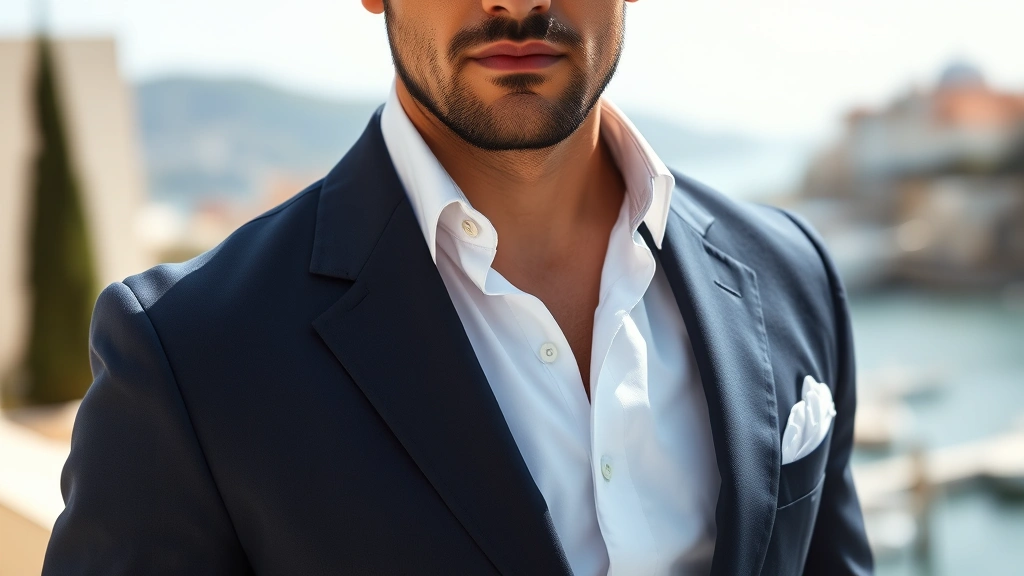
Italian Men’s Fashion: Expert Style Tips for Timeless Elegance
Italian men’s fashion represents the pinnacle of sartorial excellence, combining centuries of craftsmanship with an innate sense of style that transcends fleeting trends. From the cobblestone streets of Milan to the piazzas of Rome, Italian men have perfected an approach to dressing that emphasizes quality, fit, and understated sophistication. This philosophy—often referred to as “la dolce vita”—prioritizes looking effortlessly put-together while maintaining an air of casual confidence that appears natural rather than contrived.
The foundation of Italian men’s fashion lies in understanding that true style isn’t about following rules rigidly; it’s about mastering them well enough to know when and how to bend them. Italian gentlemen understand that the cut of a garment matters more than its label, that fabric quality speaks volumes about character, and that personal presentation reflects respect for both oneself and others. Whether you’re a seasoned fashion enthusiast or someone seeking to elevate your everyday wardrobe, adopting Italian style principles can transform your approach to dressing entirely.
What makes Italian men’s fashion so universally admired is its accessibility. You don’t need a limitless budget or exclusive connections to embrace these principles. Instead, you need knowledge, patience in selecting pieces, and an understanding of how classic elements work together harmoniously. This comprehensive guide will walk you through the essential components of Italian men’s fashion and provide actionable tips to incorporate this timeless aesthetic into your personal style.
The Philosophy Behind Italian Men’s Fashion
Italian men’s fashion is fundamentally rooted in a philosophy that celebrates quality over quantity, timelessness over trendiness, and authenticity over ostentation. This approach stems from Italy’s rich history as a center of art, design, and craftsmanship, where excellence in execution has always been paramount. Unlike fashion movements that prioritize novelty and constant change, Italian style emphasizes pieces that improve with age and never look dated.
The concept of “sprezzatura,” coined by Renaissance writer Baldassare Castiglione, encapsulates the Italian approach perfectly. It describes an elegant nonchalance—the art of making something difficult appear effortless. An Italian man might spend considerable time selecting the perfect jacket or considering color combinations, yet when he appears in public, his effort remains invisible. This deliberate casualness, combined with impeccable grooming and attention to detail, creates an impression of natural sophistication.
Understanding this philosophy is crucial before adopting any specific garments or styles. It means recognizing that different types of fashion styles serve different purposes, and Italian style serves the purpose of timeless elegance. It means investing in pieces you’ll wear for years rather than seasons, and it means developing a personal style rather than chasing trends. This mindset shift is perhaps the most valuable aspect of Italian men’s fashion that you can adopt.
Essential Wardrobe Foundations
Building an Italian-inspired wardrobe begins with understanding the essential foundation pieces that form the backbone of this aesthetic. These items transcend seasonal changes and serve as the neutral canvas upon which you build more interesting combinations.
The white dress shirt is non-negotiable. In Italian fashion, this isn’t merely a formal piece but a versatile staple that works with nearly everything. Pair it with tailored trousers for business settings, roll the sleeves and wear it open over a t-shirt for casual occasions, or layer it under a sweater for added depth. The key is investing in a quality white shirt with proper construction and fabric that maintains its shape and brightness through numerous washings.
The navy blazer represents another cornerstone piece. Italian men favor single-breasted blazers with clean lines and minimal ornamentation. This jacket bridges the gap between casual and formal, working equally well with jeans and dress trousers. Look for a blazer that fits closely through the shoulders and chest without feeling restrictive, with sleeves that end precisely at your wrist bone.
Well-fitted neutral trousers in navy, charcoal, and grey provide the foundation for countless combinations. Italian tailoring emphasizes a slim to straight leg without being overly tight, with a break that just touches the top of your shoe. The rise should sit naturally at your waist without requiring constant adjustment.
Classic knitwear, particularly crew neck and V-neck sweaters in neutral tones, adds warmth and texture without formality. These pieces layer beautifully under blazers or worn alone over collared shirts, creating sophisticated combinations with minimal effort.
A well-made leather belt and quality leather shoes—including oxfords, loafers, and casual leather sneakers—complete the foundation. Italian men understand that shoes and belts should match in formality level and color tone, creating visual harmony in the outfit.
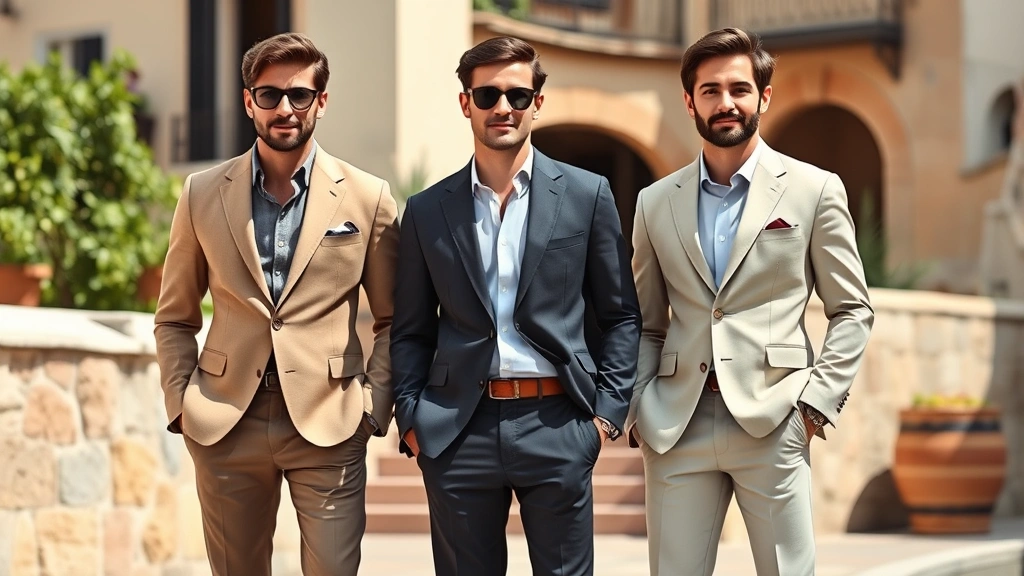
” alt=”Italian men wearing tailored blazers and fitted trousers in neutral tones, standing confidently with relaxed posture”>
The Art of Tailoring and Fit
If Italian men’s fashion has one non-negotiable rule, it’s that fit supersedes everything else. A perfectly tailored garment in a basic color will always look more elegant than an expensive designer piece that doesn’t fit properly. This principle cannot be overstated and represents perhaps the most transformative aspect of adopting Italian style.
Proper fit begins with understanding your body proportions. Italian tailoring emphasizes clean lines that follow your body’s contours without clinging or billowing. A well-fitted shirt should close smoothly across the chest without pulling at the buttons, with sleeves ending at your wrist bone and a length that covers approximately two-thirds of your hand when arms hang naturally. The shoulder seams should sit precisely at your shoulder point, not extending beyond or falling short.
For jackets and blazers, the fit becomes even more critical. The jacket should sit smoothly across your shoulders without wrinkles or divots, with the collar lying flat against your neck and the lapels forming clean, straight lines. When buttoned, the jacket should close without pulling, and when unbuttoned, it should drape naturally. Sleeves should end approximately half an inch above your wrist, allowing your dress shirt cuff to show appropriately.
Trousers demand equal attention. The waistband should sit at your natural waist without requiring a belt to stay in place, though a quality belt adds visual interest. The rise—the distance from the crotch seam to the top of the waistband—should be proportional to your torso length. The leg should be straight through the thigh and knee, tapering slightly at the ankle without creating a skinny silhouette. The break at the shoe should be minimal, just touching the top of your shoe without bunching or dragging.
Achieving perfect fit often requires tailoring. Quality tailors can adjust inseams, take in or let out waistbands, adjust sleeve lengths, and modify jacket shoulders and length. Investing in tailoring transforms ordinary pieces into custom-fitted garments that look far more expensive and elegant than their price tag suggests. This is where many men go wrong—they purchase items and wear them as-is, missing the opportunity to achieve that coveted Italian polish.
Fabric Selection and Quality
Italian fashion’s emphasis on quality becomes nowhere more apparent than in fabric selection. Italian men understand that the way a fabric drapes, moves, and ages directly impacts how a garment looks and feels. This knowledge informs every purchase decision.
Natural fibers form the cornerstone of quality Italian wardrobes. Cotton, wool, linen, and silk each serve specific purposes and offer distinct advantages. Cotton provides breathability and versatility, working for both casual and formal applications. Look for high thread count cotton that feels substantial without being stiff, as it will soften beautifully with wear and washing.
Wool offers warmth, structure, and longevity. Italian tailors favor wool for suiting because it holds its shape, resists wrinkles, and improves with age. Merino wool provides softness without itchiness, while heavier wools offer superior durability. A quality wool blazer or pair of trousers can last decades with proper care.
Linen embodies casual elegance, particularly valuable for summer garments. While linen wrinkles easily—a characteristic Italian men embrace as part of its charm—it offers unmatched breathability and develops character through wear. A linen shirt gains personality as it softens and wrinkles naturally.
Silk appears in ties, scarves, and occasionally dress shirts, adding luxury and visual interest. The sheen and drape of quality silk elevates even simple pieces, which explains why Italian men often incorporate silk accessories.
Beyond fiber content, pay attention to weight and weave. Heavier fabrics generally indicate better quality and durability. A closely woven fabric resists pilling and maintains its appearance longer than loosely woven alternatives. Run your hand across potential purchases—quality fabrics feel pleasant to the touch and demonstrate obvious craftsmanship.
Italian men also understand that fabric care impacts longevity. Quality pieces deserve proper maintenance: dry cleaning when necessary, hand washing delicate items, and storing garments correctly. This investment in care extends a garment’s life considerably, making the initial expense more economical over time.
Color Palettes and Combinations
Italian men’s fashion color palettes emphasize neutrals and earth tones, creating sophisticated combinations that never clash or appear jarring. Understanding how to work within and occasionally expand these palettes represents a key skill in mastering Italian style.
The neutral foundation of Italian fashion includes white, cream, navy, charcoal, grey, black, and brown. These colors serve as the backbone of any Italian wardrobe, providing endless combination possibilities. Navy and grey work particularly well together, as do charcoal and cream. These neutral combinations create visual interest through texture and fit rather than color contrast.
Earth tones expand the palette slightly with warm, natural colors like taupe, olive, rust, and camel. These colors evoke natural materials and complement Mediterranean aesthetics. An olive sweater paired with cream trousers exemplifies the subtle sophistication Italian men favor.
When incorporating color beyond neutrals, Italian men favor muted, sophisticated tones rather than bright primaries. A dusty blue works better than electric blue; a burnt orange suits better than bright orange. These colors appear in small quantities—a tie, a pocket square, or a sweater—rather than dominating an outfit.
Monochromatic dressing—wearing the same color family from head to toe—represents a sophisticated Italian approach. Different shades of grey or various neutral tones create visual interest while maintaining cohesion. This technique makes you appear taller and more sophisticated.
Seasonal color adjustments guide Italian men’s choices. Lighter colors and linens dominate summer wardrobes, while heavier, darker pieces appear in winter. This seasonal awareness maintains freshness without requiring constant wardrobe overhauls.
When combining colors, Italian men follow a simple rule: ensure complementary undertones. Warm neutrals (cream, camel, warm grey) pair beautifully together, while cool neutrals (white, navy, cool grey) create different combinations. Mixing warm and cool undertones intentionally, rather than accidentally, demonstrates style sophistication.
Accessories: The Italian Finishing Touch
If clothing forms the foundation of Italian style, accessories provide the artistry. Italian men understand that accessories communicate personality and attention to detail without requiring loud statements or logo displays.
The necktie remains a cornerstone accessory in formal and business Italian dressing. Quality ties feature silk construction with proper weight and drape. Italian ties often display subtle patterns—small repeats, fine stripes, or understated textures—rather than large, obvious designs. The width should be proportional to your frame and current silhouette, typically between 2.75 and 3.5 inches. Proper tie length reaches your belt buckle when knotted.
The pocket square elevates jacket formality and demonstrates style confidence. Folded simply and showing just a triangle of fabric, a pocket square in complementary color or subtle pattern adds visual interest to the chest area. Many Italian men prefer silk pocket squares in neutral tones or classic patterns.
Watches serve as both functional items and style statements. Italian men favor classic designs in quality materials—stainless steel, leather straps, understated dials—over flashy, logo-heavy pieces. A quality watch worn daily develops patina and character, becoming more beautiful with age.
Leather goods including belts, wallets, and bags deserve investment. Quality leather improves with age, developing a rich patina that synthetic materials cannot replicate. A well-maintained leather belt and matching shoes create visual harmony and demonstrate attention to detail.
Scarves and shawls appear frequently in Italian men’s fashion, particularly in cooler months. Draped casually around the neck or shoulders, a quality wool or silk scarf adds warmth and sophistication. The key is achieving that effortless appearance—it should look like you grabbed it casually rather than carefully arranged it.
Eyewear, whether prescription or sunglasses, offers another opportunity for style expression. Classic frames in quality materials complement Italian aesthetic better than trendy designs. Sunglasses with quality lenses and substantial frames demonstrate taste and protect your eyes appropriately.
Casual Elegance: Mastering Relaxed Sophistication
One of Italian men’s fashion’s greatest strengths is its ability to appear effortlessly elegant in casual settings. This represents the heart of Italian style—looking impeccable without appearing to try too hard. Understanding how to achieve this balance transforms your everyday appearance.
The casual blazer forms the foundation of relaxed Italian elegance. Worn with jeans or casual trousers, an unstructured or semi-structured blazer in neutral colors creates instant sophistication. Pair it with a simple white t-shirt or casual shirt, and you’ve achieved that coveted “just threw this together” elegance.
Elevated basics form the core of casual Italian dressing. Quality t-shirts in neutral colors, simple crew neck sweaters, and well-fitted casual shirts provide versatility. The key is selecting basics in excellent quality fabrics—they’ll look and feel substantially better than budget alternatives.
Denim appears frequently in Italian casual wear, but with crucial distinctions. Italian men favor dark, well-fitted denim in classic cuts without excessive distressing or embellishment. Properly fitted jeans with a straight or slightly tapered leg work with virtually everything in your wardrobe.
Layering creates visual interest and sophistication in casual outfits. A simple t-shirt under an open shirt, a sweater under a casual blazer, or a light jacket over a sweater demonstrates style understanding. Each layer should be visible and intentional, creating depth without appearing bundled.
Footwear choices communicate style in casual settings. Quality leather sneakers in white or neutral tones offer versatility, while loafers and casual leather shoes work with various outfits. The key is maintaining impeccable cleanliness and polish—scuffed, dirty shoes undermine even the most carefully assembled outfit.
Learn about how to become a fashion designer if you’re interested in creating Italian-inspired pieces professionally, or explore fashion design degree programs to deepen your understanding of construction and tailoring principles underlying Italian fashion.
Building Your Italian-Inspired Capsule Wardrobe
Creating a functional Italian-inspired wardrobe doesn’t require purchasing everything at once or spending excessively. Instead, it involves strategic purchases of quality basics that work together cohesively. This approach, often called a capsule wardrobe approach discussed on our Style Loom Daily blog, maximizes versatility while minimizing decision fatigue.
Start with neutral basics: two pairs of well-fitted trousers (navy and charcoal), two white dress shirts, one light blue dress shirt, two quality sweaters (crew neck and V-neck in neutral tones), and one navy blazer. These foundational pieces work together in countless combinations.
Add casual pieces: quality dark denim, neutral t-shirts, casual shirts in white and light blue, and a lightweight cardigan. These pieces bridge formal and casual, allowing you to dress appropriately for various occasions.
Include outerwear: a quality wool overcoat in navy or charcoal, and a casual jacket or bomber in neutral tones. These pieces protect you while maintaining style.
Invest in footwear: formal leather shoes (oxfords or loafers), casual leather shoes, quality leather sneakers, and boots if your climate warrants them. Aim for neutral colors that coordinate with multiple outfits.
Select accessories thoughtfully: quality leather belt, silk ties in neutral tones with subtle patterns, leather wallet, quality watch, and a scarf if you live in a cooler climate. These items elevate basics and demonstrate attention to detail.
Purchase these pieces gradually, ensuring each new addition works with existing items. This approach prevents impulse purchases and ensures wardrobe cohesion. You’ll notice yourself reaching for the same pieces repeatedly—this signals they’re working well within your wardrobe.
Explore fashion trends across different demographics to understand how timeless principles apply across audiences, reinforcing why Italian style’s emphasis on classic pieces transcends age and gender.
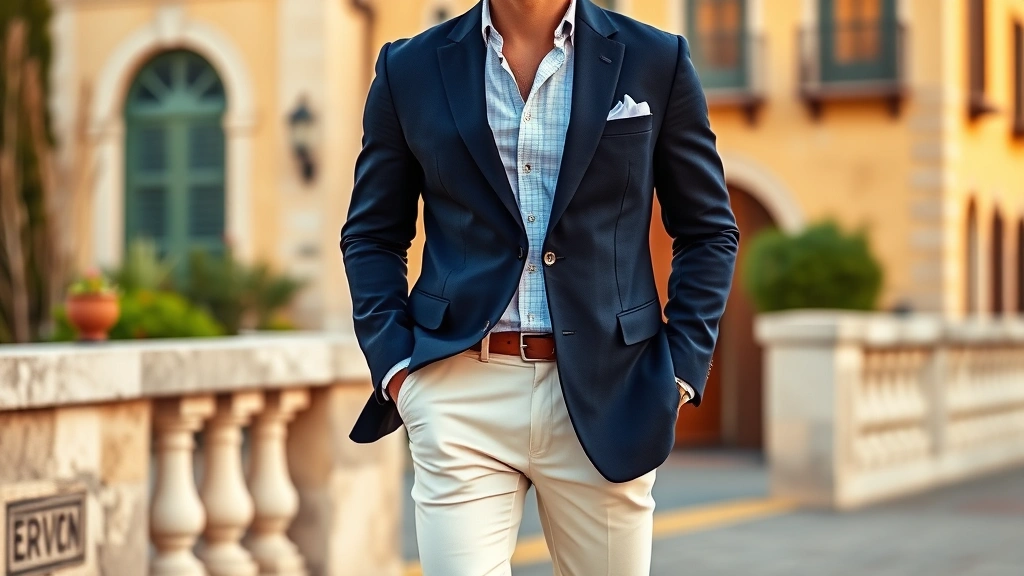
” alt=”Man in tailored navy blazer and cream trousers, standing near Mediterranean-style architecture, demonstrating effortless Italian elegance”>
FAQ
What’s the most important principle in Italian men’s fashion?
Fit trumps everything else. A perfectly tailored garment in a basic color will always look more elegant and expensive than an ill-fitting designer piece. Italian men prioritize how clothes fit their body over brand names or trends.
How much should I spend on Italian-inspired pieces?
You don’t need unlimited budget. Focus on quality basics—spend more on foundational pieces like blazers, trousers, and shoes that you’ll wear repeatedly. Save on trendy items you’ll wear less frequently. A quality basic piece from a mid-range retailer, properly tailored, outperforms an expensive poorly-fitting item.
Can I incorporate Italian style if I’m not Italian?
Absolutely. Italian style principles—quality, proper fit, neutral palettes, and timeless pieces—are universal. Anyone can adopt these principles regardless of heritage. The key is understanding the philosophy and applying it consistently.
How do I achieve that effortless Italian appearance?
Practice the principle of sprezzatura: invest time in selecting quality pieces and ensuring perfect fit, but present the results as though you put no effort into it. This means avoiding logos, trends, and anything that looks too coordinated or “trying too hard.”
What’s the role of tailoring in Italian fashion?
Tailoring is essential. Even expensive pieces benefit from professional adjustments. A skilled tailor can transform ordinary pieces into custom-fitted garments that look far more expensive and elegant. Budget 10-15% of your clothing budget for tailoring.
Are there specific Italian brands I should purchase?
While brands like Brunello Cucinelli, Loro Piana, and Canali exemplify Italian craftsmanship, you don’t need exclusive designer labels. Focus on quality, fit, and materials regardless of brand. Many mid-range retailers offer excellent Italian-inspired pieces at accessible prices.
How should I care for quality pieces?
Follow care instructions carefully. Dry clean when necessary, hand wash delicate items, and store properly. Quality pieces deserve proper maintenance—this investment extends their life considerably and maintains their appearance. A wool blazer properly cared for can last decades.
Can I wear Italian style in warm climates?
Absolutely. Italian style adapts beautifully to warm weather through fabric selection. Choose lightweight fabrics like linen, cotton, and silk. Wear lighter colors and shorter sleeves while maintaining the same tailoring standards and color principles that define Italian style.