
Embrace Greek Fashion: Designer Insights and Timeless Style Philosophy
Greek fashion represents far more than simply wearing clothes—it’s a cultural philosophy rooted in thousands of years of artistic excellence, natural beauty, and understated elegance. From the flowing drapes of ancient togas to contemporary designer collections that grace international runways, Greek style embodies a unique approach to fashion that celebrates the human form while maintaining an air of effortless sophistication. This aesthetic has profoundly influenced global fashion trends, inspiring designers worldwide to incorporate elements of Greek classicism into their modern collections.
Today’s Greek fashion landscape is experiencing a remarkable renaissance, with emerging and established designers drawing inspiration from their heritage while pushing boundaries with innovative techniques and sustainable practices. Whether you’re exploring how to find your personal style or seeking to understand the deeper cultural foundations of fashion design, Greek fashion offers invaluable lessons in timeless elegance and purposeful creativity.
The Ancient Roots of Greek Fashion Philosophy
Understanding modern Greek fashion requires stepping back into antiquity, where the foundations of Western aesthetic principles were established. The ancient Greeks developed a revolutionary approach to clothing that prioritized harmony, proportion, and the celebration of the human silhouette. Unlike many ancient civilizations that favored elaborate ornamentation and rigid structures, Greek fashion embraced simplicity as the ultimate form of sophistication.
The iconic chiton and himation—draped garments that epitomized Greek style—weren’t merely functional pieces of clothing. They represented a philosophical stance on beauty and elegance. These garments utilized geometric precision in their construction while allowing fabric to flow naturally with the body’s movement, creating an aesthetic that felt both intentional and organic. This balance between structure and fluidity remains central to Greek fashion philosophy today.
The concept of kalos kagathos—the ideal of inner and outer beauty combined—deeply influenced how Greeks approached personal adornment. Fashion wasn’t about displaying wealth or status through excessive decoration; instead, it was about expressing one’s character and values through refined taste and appropriate choices. This democratic approach to elegance, where true style came from understanding proportion and restraint rather than material excess, fundamentally shaped the Greek fashion ethos.
As you explore the complete fashion history timeline from ancient styles to modern trends, you’ll notice how these ancient principles continue echoing through contemporary design. Greek fashion history reveals that timeless style transcends specific eras—it’s built on principles that remain eternally relevant.
Contemporary Greek Designers Shaping Global Trends
Modern Greece hosts an exceptional array of talented designers who are redefining international fashion while honoring their cultural heritage. These visionary creators understand that Greek fashion isn’t about copying the past—it’s about extracting timeless principles and translating them into contemporary expressions that resonate with today’s conscious consumers.
Leading Greek designers like Celia Kritharioti and Mary Katrantzou have achieved international acclaim by infusing traditional Greek elements with avant-garde sensibilities. Kritharioti’s ethereal gowns capture the essence of classical draping while incorporating modern fabrications and unexpected color palettes. Her work demonstrates how Greek fashion philosophy can create pieces that feel simultaneously ancient and thoroughly contemporary.
Mary Katrantzou revolutionized luxury fashion through her innovative approach to digital printing and pattern design, creating collections that blend ancient Greek mythology with cutting-edge technology. Her designs prove that Greek fashion can be bold, experimental, and intellectually sophisticated while maintaining connection to cultural roots. This innovative spirit defines the contemporary Greek design movement.
Beyond haute couture, emerging Greek designers are creating accessible collections that democratize Greek fashion aesthetic. Brands like Myra Swim and Ioanna Kourbela offer sophisticated ready-to-wear pieces that celebrate Mediterranean sensibility through quality fabrics, thoughtful construction, and timeless silhouettes. These designers understand that true Greek fashion doesn’t require prohibitive price points—it requires understanding proportion, quality, and purpose.
Understanding these contemporary voices helps contextualize how Greek fashion has evolved. For those interested in broader design education, exploring fashion design degree programs can provide insights into how modern designers approach their craft.
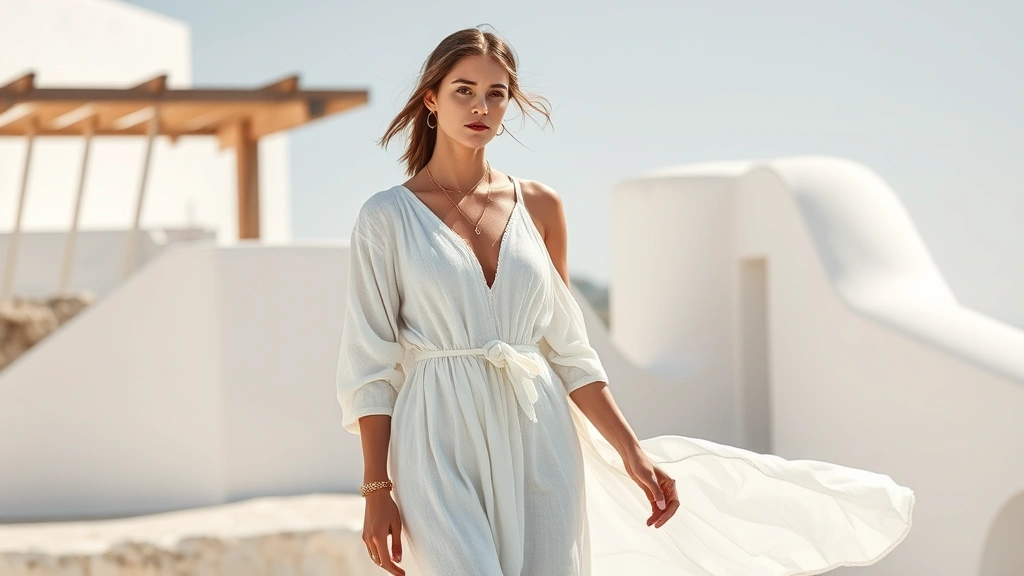
” alt=”Greek fashion model wearing flowing white linen dress with gold accessories, Mediterranean setting, natural sunlight, serene expression, elegant minimalist styling”>
Key Elements That Define Greek Fashion Aesthetics
Greek fashion possesses distinctive characteristics that immediately identify its influence across global design. Understanding these core elements enables you to recognize and incorporate Greek fashion principles into your personal style.
Draping and Fabric Flow: The most recognizable element of Greek fashion is masterful draping. Rather than relying on fitted seams and structured tailoring, Greek design celebrates how fabric interacts with the body. Whether through asymmetrical hemlines, flowing sleeves, or strategically placed gathering, draping creates movement and dimension while flattering diverse body types. This approach represents a democratic philosophy where fashion enhances rather than constrains.
Neutral and Earthy Color Palettes: Classical Greek fashion favored natural dyes that produced whites, creams, terracottas, ochres, and deep blues. Contemporary Greek designers maintain this aesthetic preference, creating collections dominated by neutral tones that feel sophisticated and timeless. These colors work harmoniously with Mediterranean landscapes and allow texture and silhouette to become the focal points.
Quality Fabrics and Natural Materials: Greek fashion emphasizes natural fibers—linen, cotton, wool, and increasingly, sustainable alternatives. These materials align with Mediterranean climate practicality while offering inherent elegance through their texture and movement. The emphasis on quality over quantity reflects Greek values regarding craftsmanship and durability.
Minimalist Aesthetic: Less is unquestionably more in Greek fashion philosophy. Ornamental details are used sparingly and strategically, allowing clean lines and proportional harmony to create visual impact. This restraint requires confidence and understanding of form—elements that distinguish truly sophisticated design.
Gold Accents and Jewelry: When Greek fashion incorporates ornamentation, gold often plays a starring role. Whether through delicate jewelry, metallic threading, or gold-leaf embellishments, these touches add luxury without overwhelming the overall aesthetic. The interplay between minimalism and selective opulence creates distinctive visual interest.
Asymmetry and Unexpected Details: Contemporary Greek designers frequently employ asymmetrical hemlines, unexpected cutouts, or unconventional necklines. These elements prevent simplicity from becoming boring, adding sophistication through subtle surprise. This approach proves that minimalism and creativity aren’t mutually exclusive.
Looking at how these elements appear across different eras, including 90s fashion influences, reveals how Greek aesthetics remain relevant across generations. The principles transcend temporal boundaries.
Sustainability and Ethical Practices in Greek Design
Contemporary Greek fashion has embraced sustainability not as a marketing trend but as a philosophical alignment with ancient values regarding respect for natural resources and community craftsmanship. This commitment distinguishes Greek fashion in an industry increasingly scrutinized for environmental impact.
Many Greek designers prioritize local production, supporting traditional craftsmanship communities throughout the country. By manufacturing within Greece rather than outsourcing to distant factories, these designers maintain quality control, ensure fair labor practices, and reduce carbon footprints associated with international shipping. This localized approach honors the tradition of skilled artisanship that defines Greek cultural identity.
The emphasis on quality fabrics and timeless design directly supports sustainability goals. Greek fashion pieces are created to last decades, not seasons. This philosophy contradicts fast fashion culture, encouraging consumers to invest in fewer, higher-quality items that transcend trends. Such longevity represents the ultimate sustainability—garments that remain relevant and wearable across years.
Innovative Greek designers are also exploring sustainable materials, including organic cotton, linen from responsible sources, and innovative fabrics created from agricultural byproducts. These experiments demonstrate that Greek fashion can embrace environmental consciousness while maintaining the aesthetic standards and quality expectations that define the tradition.
The intersection of Greek fashion ethics and contemporary sustainability concerns creates compelling opportunities for conscious consumers. When you choose Greek fashion, you’re supporting design philosophies that prioritize environmental stewardship, fair labor practices, and lasting value.
How to Incorporate Greek Fashion Into Your Wardrobe
Embracing Greek fashion doesn’t require purchasing entire designer collections or abandoning your current style. Instead, it involves understanding core principles and thoughtfully integrating elements into your existing wardrobe. Here’s how to begin your Greek fashion journey:
Start with Quality Basics: Invest in well-constructed pieces in neutral colors—white linen shirts, cream cotton dresses, camel-toned trousers. These foundational items embody Greek simplicity while providing versatility. Quality basics serve as canvases for more distinctive pieces and accessories.
Embrace Draping: Seek out pieces with thoughtful draping—wrap dresses, asymmetrical hemlines, flowing sleeves. These silhouettes flatter various body types while creating the fluid movement characteristic of Greek fashion. Draping adds sophistication without relying on fitted tailoring.
Choose Natural Fabrics: Prioritize linen, cotton, and silk over synthetic materials. Natural fabrics feel luxurious, age beautifully, and align with Greek fashion philosophy. They also offer practical advantages in warm climates and provide inherent elegance through texture.
Accessorize with Intention: Greek fashion favors minimal but impactful accessories. A delicate gold necklace, structured leather sandals, or a simple leather belt can elevate neutral basics into cohesive outfits. Choose pieces that complement rather than compete with your clothing.
Invest in Statement Pieces: Rather than accumulating numerous items, select a few distinctive pieces that reflect Greek design principles. A beautifully draped evening gown, a structured linen blazer, or artfully designed sandals can anchor your wardrobe and inspire countless outfit combinations.
Consider Your Color Palette: Adopt a predominantly neutral color scheme—whites, creams, taupes, grays, and soft blues. This palette creates cohesion, allows pieces to mix effortlessly, and reflects Mediterranean sensibility. Introduce accent colors sparingly through accessories or layering.
For additional inspiration on developing a cohesive aesthetic, exploring fashion nova dresses and other contemporary collections can provide perspective on how different brands interpret modern silhouettes. Additionally, Style Loom Daily Blog offers ongoing insights into fashion trends and styling strategies.
The Influence of Greek Fashion on Modern Style
Greek fashion’s influence extends far beyond Greece itself, permeating global luxury design, high fashion, and contemporary style culture. Understanding this influence reveals why Greek aesthetics remain perpetually relevant in fashion’s ever-shifting landscape.
International luxury brands frequently draw inspiration from Greek design principles. The minimalist aesthetic championed by Scandinavian designers reflects Greek values regarding simplicity and functionality. The emphasis on quality craftsmanship seen in Italian fashion echoes Greek respect for artisanal tradition. Even avant-garde designers incorporate classical draping and asymmetrical silhouettes inspired by ancient Greek garments.
Fashion institutions and academic programs worldwide teach Greek design principles as foundational concepts. The proportion theories developed by ancient Greeks inform contemporary pattern-making and silhouette development. Understanding these mathematical relationships between body and fabric remains essential to quality design education.
The resurgence of interest in sustainable fashion and ethical production directly connects to Greek fashion philosophy. As consumers increasingly reject fast fashion’s disposability, they gravitate toward design principles that emphasize longevity, quality, and purposeful creation. Greek fashion’s inherent sustainability aligns perfectly with contemporary values.
Celebrity culture and social media have amplified Greek fashion’s visibility. When influential figures wear contemporary Greek designers or adopt Greek-inspired aesthetics, they introduce these principles to broader audiences. Red carpet appearances featuring Greek design houses demonstrate that classical elegance remains the ultimate luxury statement.
The connection between Greek fashion and broader cultural movements can’t be overlooked. As people seek more meaningful connections to heritage and tradition, Greek fashion offers an accessible entry point into classical aesthetics. This cultural appreciation extends beyond fashion into architecture, art, and lifestyle choices that emphasize harmony and proportion.
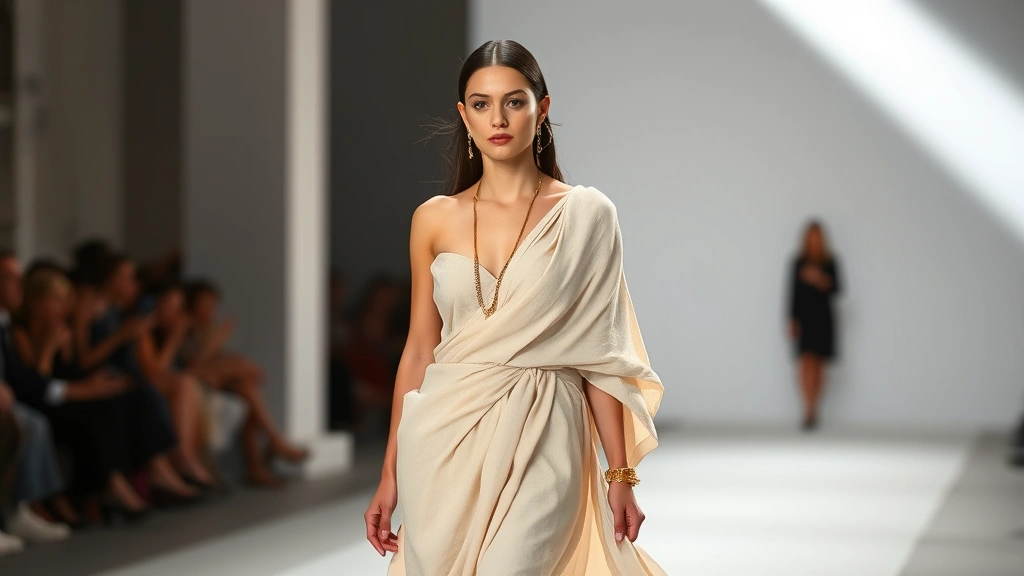
” alt=”Luxury Greek fashion runway show, model in draped cream linen gown with gold jewelry, sophisticated Mediterranean aesthetic, professional lighting, elegant minimalist composition”>
FAQ
What makes Greek fashion different from other Mediterranean fashion styles?
While Mediterranean fashion broadly emphasizes light fabrics and warm colors, Greek fashion specifically prioritizes classical proportion, philosophical minimalism, and mathematical harmony in design. Greek fashion draws explicitly from ancient Greek aesthetic principles, creating distinctive characteristics that differentiate it from Spanish, Italian, or Portuguese styles. The emphasis on draping and asymmetry also distinguishes Greek design from other Mediterranean traditions.
Can I wear Greek fashion in non-Mediterranean climates?
Absolutely. While Greek fashion developed in Mediterranean conditions, its principles translate across climates. The emphasis on quality fabrics, timeless silhouettes, and neutral colors works beautifully in various settings. Layer Greek-inspired pieces with appropriate outerwear for cooler climates, and the fundamental aesthetics remain equally effective and sophisticated.
Is Greek fashion only for formal occasions?
Greek fashion encompasses both formal and casual wear. While dramatic evening gowns represent haute couture applications, everyday Greek fashion includes simple linen basics, comfortable dresses, and practical pieces that embody the same design philosophy. The versatility of Greek aesthetics allows them to function across various dress codes and occasions.
How do I identify authentic Greek fashion designers?
Authentic Greek designers typically emphasize their heritage, often highlighting Greek production or traditional craftsmanship. Look for designers who explain their design philosophy in relation to classical principles. Research brand histories and production locations—legitimate Greek fashion houses are usually transparent about their origins and manufacturing practices. Visiting Vogue and Business of Fashion provides reliable information about established designers.
What’s the price range for Greek fashion pieces?
Greek fashion exists across price ranges. Luxury designer pieces from established houses like Mary Katrantzou or Celia Kritharioti command premium prices reflecting craftsmanship and design innovation. However, contemporary Greek brands offer accessible collections at moderate prices, and numerous emerging designers create quality pieces at reasonable costs. Investment pieces justify higher prices through longevity and timeless appeal.
How can I learn more about Greek fashion history and design?
Fashion institutions, museums, and educational resources offer extensive information. The Metropolitan Museum of Art maintains collections of Greek garments with detailed historical context. Fashion history books and documentaries explore Greek influence on contemporary design. Following Greek designers on social media and reading fashion publications provides ongoing insights into current trends and designer philosophies.
Are Greek fashion pieces sustainable?
Many contemporary Greek designers prioritize sustainability through local production, natural materials, and timeless design. However, not all Greek brands maintain equally strong sustainability practices. Research individual designers regarding their material sourcing, production methods, and labor practices. Supporting designers who explicitly commit to environmental responsibility ensures your purchases align with sustainability values.