
1930s Men’s Style Revival: Fashion Historian Insights
The 1930s represent a golden era of masculine elegance that continues to captivate contemporary fashion enthusiasts and style-conscious men worldwide. This transformative decade, nestled between the exuberant Jazz Age and the austerity of wartime rationing, birthed a distinctive aesthetic that balanced sophistication with accessibility. From the refined tailoring of Savile Row to the Hollywood glamour radiating from silver screens, 1930s male fashion established enduring principles of dressing well that remain remarkably relevant today.
Fashion historians and style experts consistently point to this period as a watershed moment in menswear evolution. The 1930s witnessed the consolidation of modern tailoring standards, the rise of ready-to-wear clothing, and the democratization of style that previously belonged exclusively to aristocratic circles. Understanding this era provides invaluable insights into timeless fashion principles and offers contemporary men a blueprint for cultivating sophisticated personal style.
The Iconic Silhouette and Tailoring Standards
The 1930s male silhouette represented a dramatic departure from the loose, shapeless cuts of the preceding decade. Fashion historians identify this period as the moment when structured tailoring became the foundation of respectable menswear. The ideal 1930s male figure featured broad shoulders, a defined waist, and a tapered leg—proportions that required expert construction and meticulous pattern-making.
Tailors during this era understood that proper fit transcended mere measurement; it involved psychological proportion and visual balance. The jacket silhouette featured what period experts call the “natural shoulder,” where fabric draped naturally without excessive padding or exaggerated slope. Armholes sat higher than contemporary standards, creating a more refined line that enhanced the wearer’s posture and presence. Lapels displayed moderate width, typically between 3.5 to 4 inches, creating visual harmony with the overall proportions.
The waistline represented a crucial design element that distinguished 1930s tailoring from both earlier and later periods. Positioned at the natural waist rather than elevated or dropped, this placement created the distinctive silhouette that fashion historians recognize as quintessentially 1930s. Buttons typically sat higher on the jacket, with the highest button positioned to create a visual break at the waist, emphasizing the structured line that made men appear both powerful and refined.
Trousers embodied similar tailoring principles, featuring a higher rise—typically 12 to 14 inches from the waistband to the crotch seam—that complemented the jacket’s proportions. The trouser break displayed minimal fabric at the shoe, creating clean lines that emphasized leg length and posture. Pleats remained a standard feature, typically single-pleated on one side or double-pleated for those preferring additional volume and comfort. This comprehensive guide to 1930s fashion trends explores these tailoring nuances in greater detail.
The structured aesthetic extended to overcoats, which featured similar shoulder treatment and waist definition. Overcoats typically reached to just below the knee, providing protection without excessive volume. The collar treatment varied, with some featuring traditional notch lapels while others showcased peak lapels that created a more dramatic, authoritative appearance.
Essential Garments Defining the Era
Understanding 1930s male fashion requires familiarity with the core garments that comprised a well-dressed man’s wardrobe. Unlike contemporary fashion’s emphasis on casual versatility, 1930s menswear maintained clear distinctions between garments intended for different occasions and times of day.
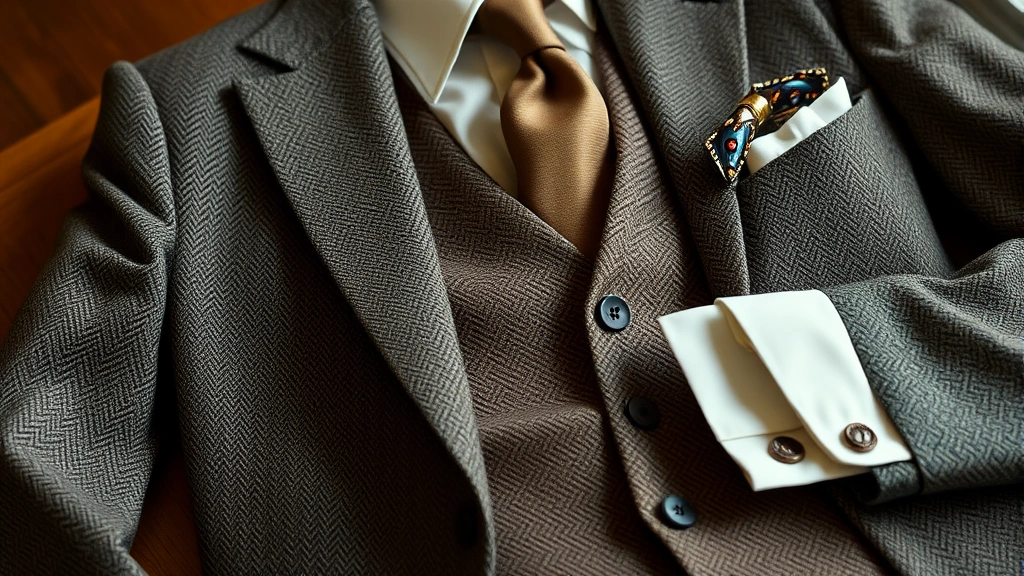
The Business Suit formed the foundation of professional male dressing. Three-piece suits—comprising jacket, waistcoat, and trousers—remained standard for businessmen, though two-piece configurations gained acceptance as informality gradually increased. Fabrics ranged from robust tweeds and worsteds for business wear to lighter tropical wools for warmer months. The waistcoat, often constructed from contrasting fabric or pattern, added visual interest while serving the practical function of covering the shirt beneath. Contemporary men seeking to find their personal style often reference 1930s suiting as an inspiration source.
Formal Evening Wear maintained strict conventions that reflected the era’s social hierarchies. Tuxedos featured peak lapels faced in silk, with buttons positioned to create the characteristic high-button configuration. White piqué waistcoats, bow ties, and dress shirts with wing collars completed the ensemble. Black tie remained the standard for evening events, though white tie appeared for the most formal occasions. Dinner jackets displayed subtle construction details that distinguished them from business jackets, including the characteristic silk-facing on lapels and pocket flaps.
Casual Sportswear represented an emerging category during the 1930s, reflecting society’s gradually increasing informality. Sports jackets, typically constructed from robust tweed or patterned wool, could be paired with contrasting trousers for weekend wear. These jackets featured softer construction than business wear, with natural shoulders and slightly fuller cuts that accommodated movement. Knit sweaters, particularly in neutral tones, gained acceptance as alternatives to jackets for truly casual occasions.
Shirts demonstrated remarkable variety in collar styles, reflecting both regional preferences and occupational requirements. Spread collars dominated business wear, while point collars offered a more conservative appearance. Detachable collars remained common, particularly for formal wear, allowing men to maintain pristine appearance throughout the day. Striped patterns, subtle checks, and solid colors dominated the palette, with white remaining essential for formal occasions.
Outerwear included overcoats for winter and lighter topcoats for transitional seasons. Overcoats featured the same tailored silhouette as jackets, with careful attention to proportion and balance. Raincoats, often constructed from rubberized cotton or early synthetic materials, provided practical protection without sacrificing style.
Color Palettes and Pattern Preferences
The 1930s color palette reflected both economic constraints and aesthetic preferences shaped by the decade’s cultural context. The Great Depression influenced fabric selection, with durable, practical colors dominating business wear while lighter, more optimistic tones appeared in leisure clothing.
Neutral Foundations established the era’s aesthetic framework. Black, charcoal gray, and navy blue formed the foundation of professional wardrobes, providing versatility and projecting authority. These colors remained standard for formal wear, while business professionals rotated between them based on season and occasion. Medium grays offered a lighter alternative for spring and summer, while deeper charcoal tones dominated autumn and winter.
Pattern Integration added sophistication to the neutral base. Subtle pinstripes graced business suits, with stripe widths varying from hairline-thin to more pronounced patterns. Herringbone weaves created texture and visual interest without introducing actual color variation. Windowpane checks, glen checks, and other geometric patterns appeared in sports jackets and casual wear, though business formality typically restricted patterns to subtle, understated designs.
Accent Colors appeared primarily in accessories and secondary garments. Deep burgundy, forest green, and rich brown tones featured in ties, pocket squares, and sweaters. Waistcoats provided opportunities for bolder pattern expression, with paisley, geometric, and tonal patterns adding personality while remaining professional. Shirt colors expanded beyond white and cream to include subtle blues, grays, and barely-there stripes that maintained business-appropriate restraint.
Seasonal Variations influenced color choices throughout the year. Summer required lighter fabrics in cream, tan, and light gray, while maintaining the same silhouette principles. Tropical wools and linen blends provided comfort in warmer climates while preserving the refined aesthetic. Winter demanded richer, deeper tones that complemented heavier fabrics and layered dressing.
Print Characteristics reflected the era’s graphic sensibilities. Art Deco influences appeared in geometric patterns, while traditional tartans and plaids maintained their aristocratic heritage. Diagonal lines, subtle checks, and refined prints dominated, with large-scale patterns reserved for casual wear among the fashion-forward elite.
Accessories and Grooming Traditions
Accessories transformed 1930s male outfits from functional clothing into complete style statements. Every element, from hat selection to shoe polish, communicated social status, professional standing, and personal taste.
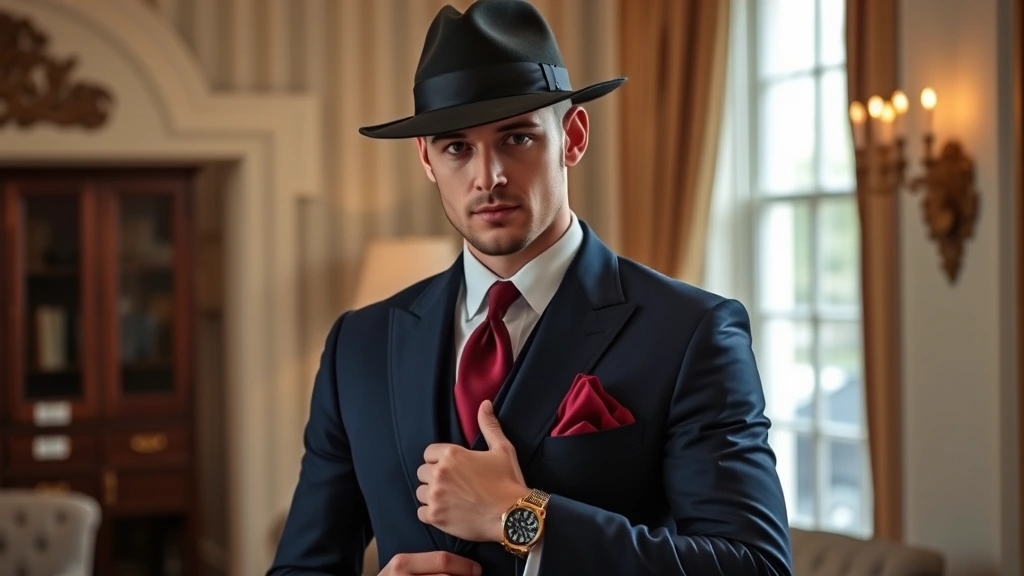
Hats and Headwear remained essential accessories that no well-dressed man would omit. Fedoras, the era’s iconic hat style, featured a slightly wider brim and subtle crease that complemented the period’s tailored silhouette. Homburgs provided a more formal alternative for business and evening wear, while bowlers maintained their traditional association with conservative, traditional dressing. Summer straw hats, Panama hats, and boater hats offered seasonal variations that maintained formality while accommodating warmer weather.
Neckwear displayed remarkable creativity within formal constraints. Silk ties, typically narrow by contemporary standards (approximately 2.5 to 3 inches wide), featured bold patterns, subtle textures, and sophisticated color combinations. The four-in-hand knot dominated, though Windsor knots gained popularity among those seeking a fuller appearance. Bow ties appeared for business wear among traditional dressers and remained standard for formal evening occasions. Pocket squares, typically silk and often in complementary patterns or contrasting colors, added finishing touches to jacket pockets.
Footwear encompassed distinct categories for different occasions. Oxfords in black or brown served business purposes, while dress shoes featured more refined construction for evening wear. Two-tone shoes, particularly spectators combining contrasting leather colors, reflected the era’s playful sophistication. Loafers, though not yet mainstream, began appearing among the fashion-forward, particularly in leisure contexts. Brogues, with their distinctive perforated detailing, provided textural interest for less formal occasions.
Grooming Standards established expectations that contemporary men find surprisingly relevant. Hair styling emphasized neat, controlled appearance with careful attention to part placement and pomade application. Facial hair remained contentious, with clean-shaven faces representing the modern ideal for business and formal occasions, while some maintained carefully trimmed mustaches as marks of distinction. Eyebrows received deliberate attention, often shaped to complement facial structure.
Additional Accessories completed the ensemble with meticulous attention to detail. Cufflinks, typically in gold or silver tones, fastened shirt cuffs with understated elegance. Wristwatches, increasingly commonplace, featured rectangular or slightly rounded cases in precious metals. Rings remained restrained, with wedding bands and signet rings representing appropriate choices. Suspenders, though concealed beneath waistcoats and jackets, maintained their functional and aesthetic importance, often featuring silk construction and decorative details.
Hollywood’s Transformative Influence
The 1930s witnessed Hollywood’s emergence as a fashion authority that rivaled traditional menswear centers like London’s Savile Row. Film stars became style icons whose sartorial choices influenced millions of men seeking to emulate their sophisticated appearance.
Iconic Figures and Their Impact established new standards for masculine elegance. Gary Cooper epitomized the casual sophistication that appealed to American audiences, demonstrating how tailored garments could project approachability alongside refinement. Cary Grant represented the ultimate expression of formal dressing, his impeccable tailoring and accessory choices establishing benchmarks that endure today. Fred Astaire, while primarily known for dance, influenced casual sportswear through his film appearances, demonstrating how sweaters and sports jackets could project elegance in relaxed contexts.
Costume Design Innovation accelerated the spread of 1930s style conventions. Hollywood costume designers, working with leading tailors and fabric manufacturers, created garments that captured public imagination. These costumes, often featured in publicity photographs and newsreels, reached audiences far beyond theater audiences through magazine reproductions and newspaper features.
Democratization of Style represented Hollywood’s most significant contribution to 1930s menswear. Previously, access to sophisticated tailoring and quality fabrics remained restricted to wealthy elites. Hollywood’s influence encouraged manufacturers to produce ready-to-wear garments that approximated high-end tailoring at accessible prices. Department stores capitalized on this demand, creating dedicated menswear sections that featured Hollywood-inspired styles.
Trend Acceleration marked a departure from earlier fashion cycles. Previously, fashion changes occurred gradually over years or decades. Hollywood’s influence compressed these cycles, introducing new silhouettes, color combinations, and accessory treatments that spread rapidly through visual media. This acceleration paralleled broader cultural changes in communication and consumer behavior.
Contemporary fashion type resources often reference Hollywood’s golden age as a foundational influence on modern menswear aesthetics.
Integrating 1930s Style into Modern Wardrobes
Contemporary men seeking to incorporate 1930s style elements must navigate the tension between historical authenticity and modern practicality. Fashion historians recommend a selective, thoughtful approach that captures the era’s essence while accommodating contemporary lifestyle requirements.
Foundational Pieces provide the most accessible entry points for 1930s-inspired dressing. A well-tailored navy or charcoal suit, constructed with attention to proper proportions and fit, creates an immediate connection to the era’s aesthetic. Modern tailors increasingly understand 1930s tailoring principles, making it possible to commission garments that capture period authenticity while incorporating contemporary comfort features. Similarly, quality white dress shirts with spread collars offer versatility while maintaining period character.
Accessory Layering allows contemporary men to experiment with 1930s style without requiring complete wardrobe transformation. Vintage or reproduction fedoras and homburgs add instant period flavor to modern business attire. Silk ties featuring period-appropriate patterns and widths coordinate effectively with contemporary suits. Pocket squares, often neglected in modern dressing, immediately elevate any jacket and connect directly to 1930s traditions. Vintage watches and cufflinks, increasingly available through online marketplaces and specialty retailers, add authentic details that satisfy both aesthetic and historical interests.
Sports Jacket Applications offer particularly valuable opportunities for contemporary integration. A tweed sports jacket with subtle pattern, paired with contrasting trousers in neutral tones, captures the 1930s sportswear aesthetic while remaining appropriate for modern casual business environments. Layering such jackets with period-appropriate sweaters and accessories creates depth and visual interest that distinguishes the wearer from contemporary fashion norms.
Footwear Choices present another accessible avenue for period exploration. Classic oxford shoes in black or brown leather, maintained with careful attention to polish and condition, provide professional foundations that align with 1930s standards. Spectator shoes, available through contemporary manufacturers, add playful sophistication to weekend wear. Loafers, though anachronistic to strict 1930s context, offer a compromise between historical authenticity and modern casual dressing.
Avoiding Common Pitfalls requires understanding which elements translate effectively to contemporary contexts. Exaggerated recreations often appear costume-like rather than stylish, undermining the wearer’s credibility. Mixing 1930s elements indiscriminately with contemporary fast fashion creates visual discord. Instead, successful integration requires investing in quality pieces, understanding proportional relationships, and developing a cohesive aesthetic philosophy that honors the era’s principles while acknowledging modern realities.
Exploring decades fashion resources provides broader context for understanding how 1930s style relates to adjacent periods and contemporary fashion evolution.
Seasonal Adaptation ensures year-round wearability of 1930s-inspired elements. Summer requires lighter fabrics, higher necklines, and straw accessories, while winter accommodates heavier textiles, layering opportunities, and formal overcoats. Spring and autumn present opportunities for transitional pieces like sports jackets and medium-weight sweaters that capture the era’s essence across multiple seasons.
Professional Context Considerations influence how extensively men can integrate 1930s elements into business wardrobes. Conservative industries and traditional employers reward period-appropriate styling more enthusiastically than creative fields where contemporary fashion dominates. Understanding workplace norms while maintaining personal style requires thoughtful calibration and selective element application.
The 1930s established enduring menswear principles that transcend historical context. Vogue’s fashion coverage consistently references this era when discussing tailoring excellence and sophisticated dressing. Contemporary style authorities recognize that the decade’s emphasis on proportion, fit, and quality construction remain relevant regardless of fashion cycle changes.
Investment Perspective encourages viewing 1930s-inspired pieces as long-term wardrobe foundations rather than trendy acquisitions. A properly tailored suit constructed using period principles will retain relevance indefinitely, providing consistent value across decades. This approach aligns with broader sustainability movements emphasizing quality over quantity and longevity over disposability.
Fashion historians and contemporary stylists increasingly recommend studying the 1930s as a masterclass in masculine elegance. The era’s constraints—economic limitations, social conventions, and available technology—forced designers and tailors to prioritize quality, proportion, and timeless principles over novelty. These constraints paradoxically created more enduring aesthetic achievements than periods of unlimited resources and experimental excess.
Personal Style Development benefits significantly from understanding 1930s principles. The era’s emphasis on understanding one’s body proportions, selecting appropriate silhouettes, and coordinating elements thoughtfully provides frameworks applicable to any contemporary fashion context. Fashion style guidance increasingly references historical periods as teaching tools for developing personal aesthetic philosophies.
The 1930s represent more than historical curiosity; they embody enduring principles about how men can dress with sophistication, confidence, and authenticity. By studying this transformative decade and selectively integrating its lessons into contemporary practice, modern men access a rich tradition of masculine elegance while establishing their own distinctive style.
FAQ
What silhouette characterized 1930s men’s fashion?
The 1930s featured a structured silhouette with broad, natural shoulders, a defined waist, and tapered legs. Higher armholes, moderate lapel widths, and higher button placement created a refined line that emphasized posture and presence. Trousers featured high rises (12-14 inches) with minimal break at the shoe, often incorporating pleats for comfort and volume.
How did Hollywood influence 1930s menswear?
Hollywood transformed menswear by democratizing access to sophisticated style. Film stars like Gary Cooper and Cary Grant became style icons whose choices influenced millions. Costume designers created garments that captured public imagination, and manufacturers produced ready-to-wear approximations of high-end tailoring at accessible prices, accelerating fashion cycles and spreading trends rapidly through visual media.
What colors dominated 1930s male fashion?
Neutral foundations including black, charcoal gray, and navy blue established the professional palette, with medium grays appearing seasonally. Subtle pinstripes, herringbone weaves, and geometric patterns added sophistication without introducing bold colors. Accent colors appeared primarily in accessories, with deep burgundy, forest green, and rich brown tones featuring in ties, pocket squares, and sweaters.
Which accessories were essential for 1930s men?
Hats remained non-negotiable, with fedoras, homburgs, and bowlers serving different occasions. Silk ties, typically narrow, featured bold patterns within restrained color schemes. Pocket squares, cufflinks, and quality watches added finishing details. Suspenders, though concealed, maintained functional and aesthetic importance. Clean-shaven faces represented the modern ideal, though carefully trimmed mustaches indicated distinction.
How can contemporary men incorporate 1930s style?
Begin with foundational pieces like well-tailored navy or charcoal suits with proper proportions. Layer accessories including period-appropriate ties, pocket squares, and hats to add period flavor. Sports jackets in tweed paired with contrasting trousers capture the era’s aesthetic. Invest in quality pieces rather than costume-like recreations, understanding that successful integration requires cohesive philosophy honoring the era’s principles while acknowledging modern realities.
What distinguished formal 1930s menswear from business wear?
Formal wear featured peak lapels faced in silk, white piqué waistcoats, wing-collar dress shirts, and bow ties. Black tie remained standard, though white tie appeared for the most formal occasions. Dinner jackets displayed distinctive silk-facing on lapels and pocket flaps. Business wear featured similar tailoring principles but with notch lapels, standard collar shirts, and four-in-hand ties in more conservative patterns.
Why do fashion historians consider the 1930s significant?
The 1930s consolidated modern tailoring standards, established enduring menswear principles, and democratized access to sophisticated style. Economic constraints forced designers to prioritize quality and proportion over novelty, creating aesthetically enduring achievements. The decade’s emphasis on understanding body proportions, selecting appropriate silhouettes, and coordinating elements thoughtfully established frameworks applicable across decades.