1920’s Men’s Fashion: Expert Insight into the Golden Age of Style
The 1920s represent one of the most transformative decades in men’s fashion history, marking a decisive shift from the rigid Victorian and Edwardian silhouettes toward a more relaxed, modern aesthetic. Often called the Jazz Age, this era witnessed unprecedented social change, economic prosperity, and cultural rebellion that fundamentally reshaped how men dressed. The post-World War I period brought a generation eager to shed the formality of their fathers, embracing looser fits, brighter colors, and innovative tailoring techniques that would influence menswear for generations to come.
This golden era of men’s style was characterized by a fascinating duality: while some men embraced the dapper, well-tailored look of the gentleman, others pushed boundaries with bold patterns, high-waisted trousers, and accessories that would have scandalized their predecessors. Understanding the evolution of men’s style through historical periods gives us invaluable perspective on contemporary fashion trends. The 1920s didn’t just influence immediate successor decades; its DNA runs through modern menswear even today, from the resurgence of high-waisted pants to the appreciation for quality tailoring and vintage aesthetics.
The Silhouette Revolution: Breaking Free from Edwardian Constraints
Before the 1920s arrived, men’s fashion had been tightly controlled by rigid standards. The Edwardian era demanded high, stiff collars, narrow chests, and an almost corseted appearance that restricted movement and reflected the stiff social hierarchies of the time. The 1920s changed everything. Returning soldiers and young men refused to return to such constraints, demanding clothing that allowed them to move, dance, and live more freely. This wasn’t merely a fashion preference—it was a cultural statement about modernism, youth, and progress.
The new silhouette featured broader shoulders, straighter lines, and a more natural waist. Jackets became looser and longer, often worn unbuttoned or with only the middle button fastened. Trousers widened significantly, particularly at the ankle, creating the characteristic bell-bottom effect that became iconic. This change in proportions reflected a democratic shift in society; men from various classes could achieve stylish looks without requiring expensive, heavily constructed garments. The relaxed fit also accommodated the more athletic builds that younger men were developing through sports and outdoor activities.
Chest padding became less pronounced, and the overall construction of suits emphasized comfort without sacrificing elegance. Experts from Vogue have noted that this era established the foundation for the modern men’s suit as we know it today. The 1920s essentially democratized high fashion, making it possible for ordinary men to look sophisticated without requiring custom tailoring or excessive expense.
Iconic Garments That Defined the Decade
Several specific garments became synonymous with 1920s men’s fashion, each telling a story about the era’s values and innovations. The three-piece suit remained the cornerstone of respectable dressing, but with significant modifications from previous decades. Vests became lower-cut and less structured, waistcoats featured patterns that would have been considered outrageous just years earlier, and the jacket’s construction allowed for greater ease of movement.
The Norfolk jacket gained popularity as a more casual alternative to formal suiting, featuring box pleats and a belt at the waist. This garment bridged the gap between formal and informal wear, perfect for the modern man who needed versatility. Understanding earlier fashion periods helps us appreciate how radically different the 1920s approach was to garment construction and styling philosophy.
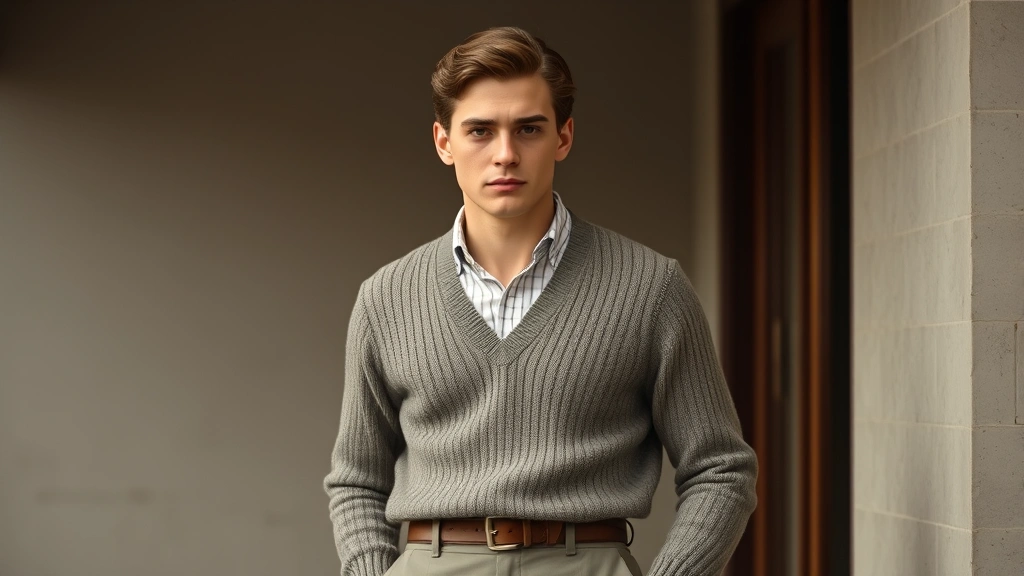
Knitted garments emerged as never before in men’s fashion. Cardigans, pullovers, and sweaters became acceptable for both casual and semi-formal occasions. The V-neck sweater became particularly fashionable, often worn over a collared shirt. Knit technology had advanced, allowing for finer, more sophisticated constructions that didn’t appear homemade or working-class. This democratization of sweater-wearing reflected the era’s more casual approach to personal style.
The plus-four trousers represented the ultimate in 1920s innovation—high-waisted, wide-legged, and usually featuring a distinctive pleat. These weren’t just for golf; many men wore them as everyday trousers. The term “plus-four” referred to the extra four inches of fabric added beyond the knee, allowing for a dramatic silhouette that looked elegant rather than sloppy. Young men, in particular, embraced these trousers as a symbol of their rejection of their fathers’ fashion choices.
Color Palettes and Patterns: From Subtle to Sensational
The 1920s introduced an unprecedented range of colors to men’s fashion. While previous decades had restricted men to dark, neutral tones—black, navy, gray, brown—the Jazz Age brought acceptance of lighter, brighter hues. Pale blues, soft pinks, lavenders, and even pale yellows appeared in shirts, ties, and waistcoats. This color revolution wasn’t universally accepted; conservative dressers maintained traditional dark suits, but progressive men embraced the new palette with enthusiasm.
Pattern mixing became acceptable in ways that would have seemed chaotic to previous generations. Men wore checked jackets with striped shirts and patterned ties, creating bold, confident statements. Houndstooth, windowpane checks, and subtle herringbone patterns appeared throughout the decade. The key to successful 1920s pattern mixing was confidence and proportion—larger patterns were balanced with smaller ones, and colors were chosen to complement rather than clash.
Waistcoats became particularly adventurous, featuring bold geometric patterns, floral designs, and even Art Deco motifs. These vests provided an opportunity for self-expression without the commitment of a full suit. A man could purchase a traditional suit and express his individuality through his choice of waistcoat. This approach to layering and pattern mixing established principles that remain central to men’s fashion today. Contemporary fashion style often looks back to this era for inspiration on how to balance boldness with sophistication.
The rise of pastel and medium-tone suits in tan, beige, and light gray provided alternatives to the traditional dark suit. These lighter suits, particularly popular for summer wear and in warmer climates, required lighter-colored shirts and accessories, creating entirely new styling possibilities. Spectator shoes—featuring contrasting colors—became popular precisely because the overall palette had broadened so dramatically.
Accessories and the Details That Mattered
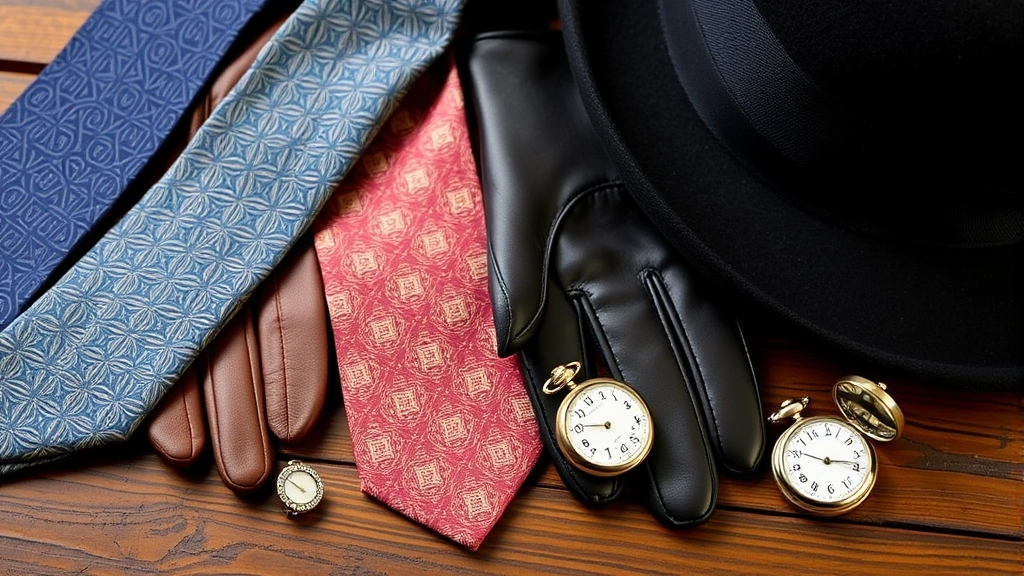
In 1920s men’s fashion, accessories weren’t afterthoughts—they were essential components of a complete look. The necktie evolved significantly during this period, becoming wider and featuring bolder patterns. Ties were often made from silk with geometric or abstract designs, worn with a simple knot that allowed the pattern to display prominently. The bow tie remained popular, particularly for formal occasions, and came in an enormous range of patterns and colors.
Pocket watches and chains became less essential as wristwatches gained acceptance, but many men still carried the traditional timepiece as a status symbol. Cufflinks grew more elaborate and artistic, often featuring Art Deco designs or precious materials. Shirt studs for formal wear became smaller and more refined, moving away from the large, ostentatious styles of the Edwardian era.
Hats remained absolutely essential to men’s fashion throughout the 1920s. The fedora, homburg, and straw boater dominated, each appropriate for different occasions and seasons. Hats weren’t merely functional; they were status symbols and style statements. A well-chosen hat could complete an outfit and communicate a man’s social position and fashion consciousness. The style and angle at which a man wore his hat conveyed attitude and personality.
Handkerchiefs, both pocket squares and practical cloths, became important accessories. A silk pocket square in a coordinating or contrasting color added polish to a suit jacket. Suspenders, though often hidden beneath vests and jackets, remained important for keeping trousers in the correct position. Some men deliberately displayed their suspenders as part of their outfit, particularly in more casual settings.
Gloves were considered essential for well-dressed men, particularly in winter. Leather gloves in tan, gray, or black were worn with most outfits, and removing them was part of the ritual of greeting someone. Even summer gloves in lighter materials maintained this tradition, serving both practical and aesthetic purposes. Historical fashion eras often featured even more elaborate accessorizing, but the 1920s maintained a balance between decoration and restraint.
Footwear Trends and Shoe Styles
Shoes in the 1920s underwent dramatic transformation, reflecting both technological advances and changing social attitudes. The spectator shoe became iconic, featuring contrasting colors—typically white leather with black or brown leather panels. These shoes were bold and modern, perfect for the man who wanted to make a style statement. They weren’t considered appropriate for formal evening wear, but for daytime and semi-formal occasions, spectators were fashionable and widely worn.
The Oxford shoe remained popular for formal occasions, but 1920s versions featured slightly higher heels and broader toe boxes than their predecessors. Brogues with elaborate perforations and decorative details became more acceptable, particularly in lighter colors. The traditional derby shoe also remained in the rotation, offering a slightly less formal alternative to Oxfords.
Loafers and slip-on shoes began appearing during the late 1920s, presaging the casual shoe revolution that would accelerate in subsequent decades. Two-tone shoes in various color combinations allowed for creative styling and self-expression. Heel heights varied, but most dress shoes featured heels of approximately one inch, providing a slight lift without appearing feminine or excessive.
Casual shoes included canvas sneakers for sports and leisure activities, though these were rarely worn in town or for social occasions. Suede shoes in neutral tones became acceptable for daytime wear, offering a softer, more relaxed aesthetic than polished leather. The quality of shoe construction remained high throughout the 1920s; these were investment pieces meant to last for years with proper care.
Influence of Jazz Culture on Men’s Fashion
The Jazz Age didn’t just provide a name for the 1920s; it fundamentally influenced men’s fashion through the performers and cultural icons who embodied the era’s spirit. Fashion journalists and critics have extensively documented how jazz musicians and performers pushed fashion boundaries, introducing elements that gradually became mainstream.
Jazz performers wore bold colors, loose fits, and dramatic accessories that shocked conservative society but appealed powerfully to younger men. The zoot suit, though more closely associated with the 1940s, had its roots in 1920s jazz culture, with exaggerated proportions and bold patterns. Young men who frequented jazz clubs adopted elements of this look, even if they couldn’t wear full zoot suits in professional or formal settings.
The cultural rebellion embodied in jazz music manifested in fashion through deliberate rejection of conservative dress codes. Men who attended jazz performances and speakeasies during Prohibition wore clothing that signaled their participation in this underground culture. Slightly longer hair, brighter ties, and more adventurous color choices identified a man as part of the modern, progressive movement.
Performers like Duke Ellington and Louis Armstrong influenced style through their stage presence and personal fashion choices. These icons demonstrated that Black men could set fashion trends that would be adopted across racial lines. The 1920s saw an unprecedented (though still limited) integration of style influences across racial and cultural boundaries, with jazz culture serving as the primary vehicle for this exchange.
The Well-Dressed Man: Creating Authentic 1920s Looks
For those interested in recreating authentic 1920s men’s fashion today, understanding the principles behind the era’s style is essential. The foundation remains a well-tailored three-piece suit in a neutral or light color. Modern reproductions and vintage pieces are both available, though vintage items should be professionally cleaned and evaluated for wear before purchase.
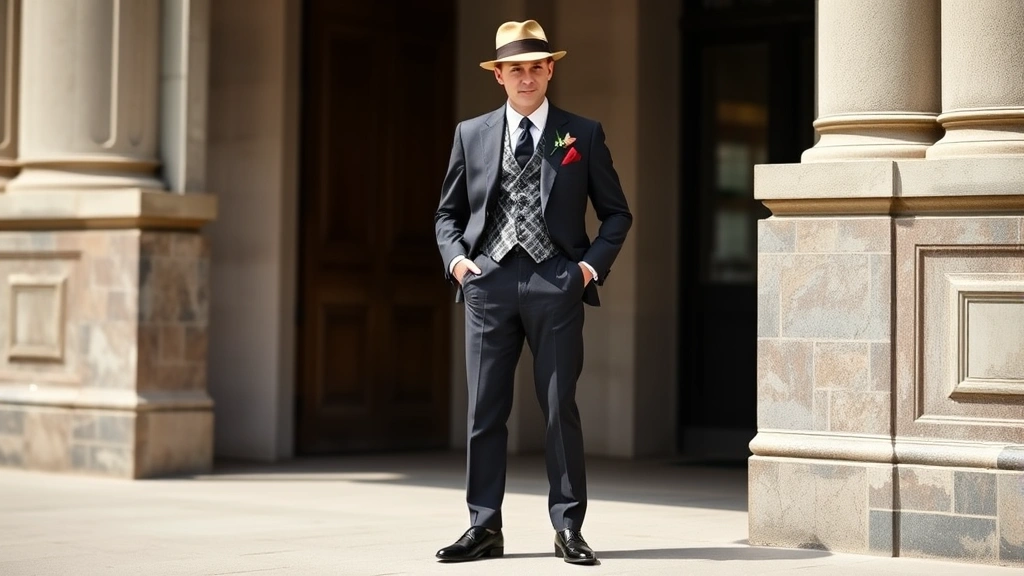
Building a 1920s wardrobe begins with the suit jacket and trousers. High-waisted trousers with a slight break at the ankle create the proper silhouette. The jacket should feature broad shoulders and a straight line through the torso, unbuttoned or with only the middle button fastened. A coordinating or contrasting waistcoat adds visual interest and authenticity.
Shirts should feature pointed collars or the slightly softer club collar, in white, cream, or pale colors. Patterned shirts in subtle checks or stripes are appropriate for less formal occasions. The shirt should be worn with collar stays to maintain proper shape, and sleeves should extend to the wrist bone.
Accessories complete the look: a silk tie in a bold pattern or color, a pocket square, leather gloves, and an appropriate hat. Shoes should be polished leather in neutral tones or spectator styles for daytime wear. The entire ensemble should communicate confidence, attention to detail, and appreciation for quality.
For those exploring different types of fashion and historical recreation, 1920s menswear offers an excellent entry point. The era’s principles—proportion, balance, and quality—remain relevant regardless of whether one’s interest is purely historical or fashion-forward.
How 1920s Men’s Fashion Influences Modern Style
The impact of 1920s men’s fashion extends far beyond historical interest; contemporary menswear designers and stylists regularly draw inspiration from this golden era. High-waisted trousers, nearly abandoned in recent decades, have returned to fashion partly because of renewed appreciation for 1920s silhouettes. Modern designers recognize that the proportions that flattered men in the 1920s still flatter men today.
The principle of pattern mixing that characterized 1920s style has become central to contemporary menswear advice. Fashion experts encourage men to combine different patterns and colors with confidence, a philosophy that traces directly to 1920s innovation. The idea that a man can express individuality through his clothing choices, rather than conforming to rigid dress codes, originated in this era.
Vintage and heritage brands have built entire business models around 1920s aesthetics. Companies specializing in traditional menswear often reference 1920s tailoring, construction techniques, and styling principles. The appreciation for quality materials and craftsmanship that defined 1920s menswear remains a counterpoint to fast fashion, with many contemporary men seeking the same longevity and style that characterized vintage pieces.
Modern formal wear and evening dress owe substantial debts to 1920s innovation. The tuxedo as worn today—with its simplified lines and elegant simplicity—reflects 1920s refinement of formal wear. The move away from elaborate embellishments toward clean, well-proportioned silhouettes represents 1920s thinking applied to contemporary occasions.
Even casual menswear reflects 1920s principles. The cardigan, established as acceptable casual wear in the 1920s, remains a staple. Knitwear in general owes its position in men’s fashion to 1920s acceptance of sweaters and pullovers for daytime wear. The idea that a man can wear comfortable, relaxed clothing while maintaining style and sophistication originated in this transformative decade.
Fashion forecasters and trend analysts regularly return to the 1920s for inspiration when predicting upcoming trends. Business of Fashion and similar industry publications frequently reference 1920s aesthetics when discussing contemporary direction. The era’s balance between innovation and tradition, between bold statement and refined elegance, provides timeless lessons for modern style.
FAQ
What was the most iconic 1920s men’s fashion trend?
The most iconic trend was arguably the high-waisted, wide-legged trouser, particularly the plus-four style. This silhouette represented the era’s rejection of previous constraints and became the visual symbol of 1920s modernity. The dramatic proportions caught attention and communicated fashion-forward thinking.
Could ordinary men afford 1920s fashion?
Yes, one of the 1920s fashion revolution’s greatest achievements was making stylish clothing accessible to men across economic classes. The looser, less structured garments required less skilled tailoring, and ready-made clothing became increasingly available and affordable. A man didn’t need a custom suit to look fashionable in the 1920s.
Were bright colors really acceptable for men in the 1920s?
For the younger, more progressive men, absolutely. Pale blues, pinks, and yellows appeared regularly in shirts and ties. However, conservative dressers and older men maintained traditional dark suits. The 1920s saw a genuine generational divide in fashion acceptance, with younger men pushing boundaries that older generations found shocking.
How do I style 1920s fashion for modern occasions?
Focus on the era’s principles: well-proportioned silhouettes, quality materials, and attention to detail. Pair high-waisted trousers with vintage-inspired shirts and knitwear for a contemporary take on 1920s style. Add modern accessories to prevent the look from feeling like a costume.
What role did technology play in 1920s men’s fashion?
Advances in textile production, dyeing techniques, and garment construction made the 1920s fashion revolution possible. Better synthetic fibers, improved knitting machinery, and more efficient manufacturing allowed for greater variety and accessibility. The wristwatch’s acceptance over the pocket watch also reflected technological change influencing fashion.
How did 1920s men’s fashion differ by region or country?
While American and British styles dominated, regional variations existed. American menswear tended slightly more toward bold colors and patterns, while British style maintained more restraint. European fashion, particularly French, influenced formal wear more than casual styles. Climate also influenced choices, with lighter fabrics and colors in warmer regions.
Are 1920s fashion elements still considered stylish today?
Absolutely. Many contemporary designers draw directly from 1920s aesthetics. High-waisted trousers, suspenders, vests, and quality tailoring all remain fashionable. The era’s principles of proportion and quality have proven timeless, making 1920s menswear perpetually relevant to modern style.