How to Nail 1920s Men’s Style? Expert Guide
The 1920s represented a golden era of masculine fashion, a period when men’s style transcended mere clothing to become a statement of sophistication, rebellion, and modernity. This transformative decade, often called the Roaring Twenties, witnessed unprecedented changes in menswear that still influence contemporary fashion today. The sharp tailoring, bold accessories, and dapper aesthetic of 1920s fashion for men continue to captivate style enthusiasts and fashion-forward gentlemen seeking timeless elegance with a touch of vintage flair.
Whether you’re drawn to the Jazz Age glamour, the speakeasy sophistication, or the rebellious spirit of prohibition-era style, mastering 1920s men’s fashion requires understanding the key elements that defined this remarkable period. From high-waisted trousers and suspenders to fedoras and two-tone Oxford shoes, each component tells a story of innovation and cultural shift. This comprehensive guide will walk you through every essential element needed to authentically capture the essence of 1920s menswear, allowing you to incorporate these timeless pieces into your modern wardrobe with confidence and style.
Understanding the 1920s Fashion Context
To truly master 1920s men’s style, you must first understand the cultural and historical backdrop that shaped this distinctive aesthetic. The 1920s emerged from the ashes of World War I, a period of liberation, economic prosperity, and social rebellion. Men’s fashion reflected this newfound freedom, moving away from the restrictive Victorian silhouettes toward looser, more comfortable fits that still maintained impeccable tailoring standards. The influence of fashion history timeline shows how dramatically menswear transformed during this decade.
The Jazz Age brought with it a democratization of style. While wealthy gentlemen wore bespoke tailored suits from prestigious tailors, working-class men could access ready-made versions that captured the essence of the era. This accessibility meant that 1920s fashion men’s style became a universal language of modernity, worn by businessmen, musicians, gangsters, and everyday laborers alike. The key to understanding this period is recognizing that 1920s menswear balanced formality with innovation, creating a template for sophisticated casual wear that remains relevant today.
Understanding different fashion styles helps contextualize why the 1920s aesthetic remains so influential. This era marked the transition from rigid Edwardian formality to modern masculine expression, establishing many conventions we still follow in contemporary menswear. The silhouette shifted from the S-bend corset influence of previous decades to a straighter, more athletic line that celebrated the male form without exaggeration.
Essential Suits and Jackets
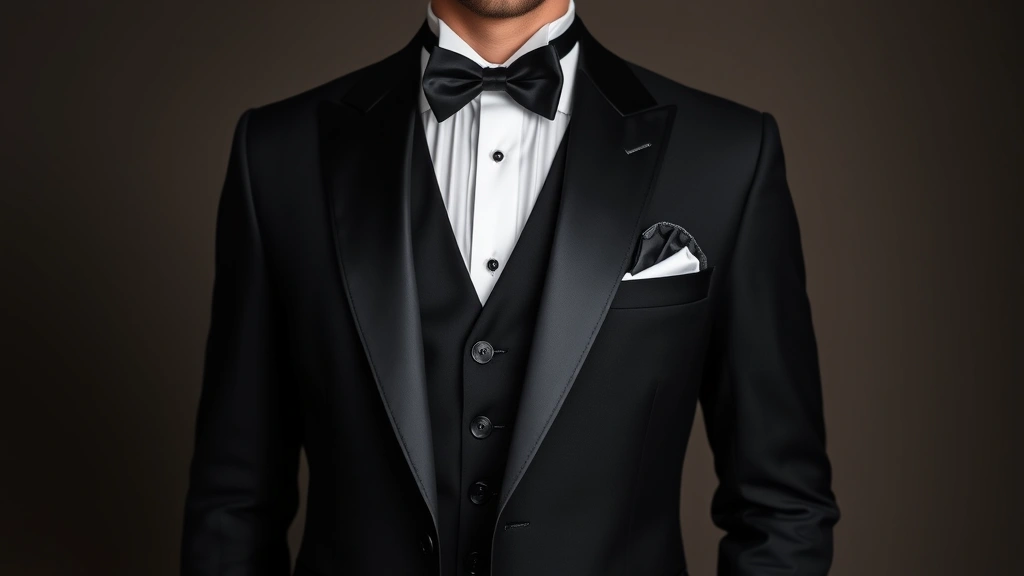
The cornerstone of any 1920s men’s wardrobe is the suit, and understanding the correct proportions and construction is absolutely essential. Unlike modern suits with their slim-fit trends, 1920s suits featured a relaxed, straight-cut silhouette that provided comfort while maintaining sharp tailoring. The jacket typically had a longer length, extending to the middle of the hand when arms hang naturally, with broader shoulders that created a powerful presence without excessive padding.
The classic 1920s suit jacket featured a two-button configuration, though three-button variants existed for slightly more formal occasions. The lapels were notched and relatively narrow compared to modern standards, with a subtle peak that created elegant proportions. Patch pockets were common on casual jackets, while slit pockets appeared on more formal evening wear. The jacket’s waistline sat slightly higher than contemporary cuts, creating a distinctive silhouette that immediately signals the era.
For a more casual approach to 1920s style, sport coats and blazers offered excellent alternatives to full suits. These jackets often featured patterns like houndstooth, herringbone, or subtle checks, adding visual interest while maintaining the era’s sophisticated character. The Norfolk jacket, with its characteristic box pleats and belt, represented another popular choice for less formal occasions. Waistcoats, either matching the suit or contrasting in color and pattern, added another dimension to the ensemble, providing both warmth and visual sophistication.
Zoot suits emerged as a more rebellious interpretation of 1920s style, featuring exaggerated proportions with high-waisted trousers, dramatic drape, and longer jacket lengths. While more associated with the late 1930s and 1940s, early zoot elements appeared in late-1920s fashion for men seeking to make a bolder statement. These suits represented a youthful challenge to conventional style, embodying the decade’s spirit of rebellion and innovation.
Trousers and Bottoms
Perhaps no element defines 1920s men’s fashion more distinctly than the trousers. High-waisted trousers, typically rising to the natural waist or even slightly above, created the characteristic silhouette of the era. These weren’t merely fashion statements but practical garments that accommodated the suspenders that held them in place, making belts largely unnecessary. The high rise provided comfort and allowed for ease of movement, particularly important for men engaged in active work or dancing at speakeasies.
The cut of 1920s trousers was notably straight through the hip and thigh, with a gradual taper toward the ankle that created clean, elongated lines. The break—the slight fold of fabric at the shoe—was pronounced and intentional, quite different from modern preferences for no break or minimal break. This break added to the formal appearance and helped establish the era’s distinctive aesthetic. Cuffs, or turn-ups as they’re called in British English, were standard on most trousers, typically measuring one to one-and-a-half inches in width.
Color and pattern offered significant opportunities for personal expression in 1920s menswear. While neutral grays, blacks, and browns dominated formal wear, casual trousers embraced bold colors and patterns. Light gray, tan, and even cream-colored trousers paired beautifully with darker jackets, creating striking contrast. Patterns included subtle stripes, checks, and herringbone weaves that added texture and visual interest without appearing garish or inappropriate for professional settings.
The fit through the seat and crotch was considerably roomier than contemporary tailoring standards, reflecting both the comfort priorities of the era and the different body ideals of the time. This generous cut actually accommodates modern bodies quite well, making vintage 1920s trousers surprisingly wearable for contemporary gentlemen seeking authentic period styling. Learning to find your personal style within the 1920s framework allows for individual interpretation while maintaining historical accuracy.
Shirts and Neckwear
The foundation of any 1920s outfit begins with the shirt, and period-appropriate selections are crucial for achieving authentic results. Dress shirts of the era featured a higher collar than modern standards, with collar points that extended further apart. The collar itself stood more prominently, requiring starch for proper presentation. Many 1920s shirts incorporated detachable collars, a practical feature that allowed gentlemen to change their collar style without changing the entire shirt, extending the garment’s utility and versatility.
Striped dress shirts dominated the 1920s menswear landscape, with vertical stripes in subtle color combinations providing visual interest while maintaining professional appropriateness. White shirts remained essential for formal occasions, but soft pastels including light blue, pink, and lavender appeared regularly in casual and semi-formal contexts. The fabric itself was typically high-quality cotton or cotton blends, starched heavily to maintain crisp presentation throughout the day.
Neckwear represented a primary avenue for self-expression in 1920s men’s fashion. Wide neckties, often featuring bold geometric patterns or striking color combinations, created focal points at the chest. The tie knot was typically larger than modern Windsor knots, and ties were worn shorter, often not extending past the waistband of the trousers. Bow ties remained popular for formal occasions, with both clip-on and tie-yourself varieties available to gentlemen of varying skill levels.
Knit ties, made from silk or wool, offered textured alternatives to woven ties and worked particularly well with sport coats and casual ensembles. The width of neckties ranged from moderate to quite wide, with three to four inches representing a typical width. Patterns included stripes, geometric designs, and solid colors, often in jewel tones or earth tones that complemented the era’s color palette. Tie pins, clips, and chains served both functional and decorative purposes, securing ties in place while adding precious metal accents to the ensemble.
Footwear and Accessories
The shoes of the 1920s were as distinctive as any other element of the era’s fashion. Two-tone shoes, particularly the combination of black and white or brown and white, became iconic symbols of the decade. These spectator shoes featured contrasting leather panels that created striking visual impact while maintaining the era’s sense of playful sophistication. The oxford was the dominant shoe style, with leather uppers and substantial soles that provided durability and support for the extensive dancing that characterized the period.
Beyond spectators, plain leather oxfords in black, brown, and burgundy provided the foundation for more conservative ensembles. The shoes of the 1920s featured relatively rounded toe boxes compared to modern pointed styles, with a sturdy construction that emphasized quality craftsmanship. Patent leather, highly polished to mirror-like brilliance, appeared on formal evening shoes, catching light and adding glamorous shine to tuxedo ensembles.
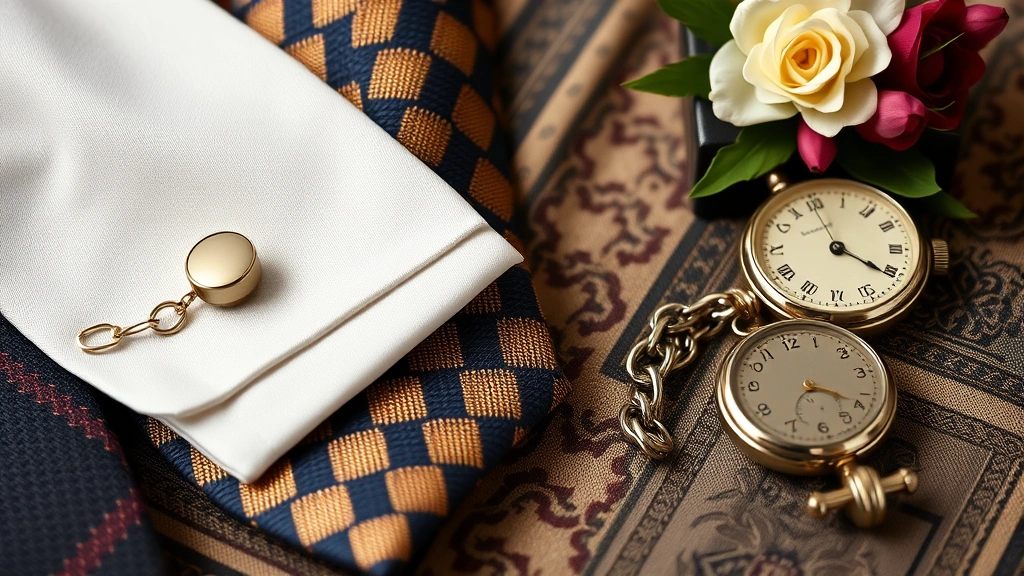
Accessories completed the 1920s gentleman’s appearance with essential sophistication. Suspenders, often featuring leather ends and decorative clips, held up the high-waisted trousers while adding visual detail to the waistcoat. These weren’t hidden elements but rather displayed proudly as functional and decorative components of the outfit. Pocket watches, suspended from the waistcoat by elegant chains, served practical purposes while signaling taste and status.
Cufflinks represented another crucial accessory, fastening shirt cuffs with precious metals, gemstones, or creative designs that reflected personal style. Rings, typically worn on the pinky finger or ring finger, featured signet designs or decorative stones. Handkerchiefs, often silk in coordinating colors or patterns, were tucked into jacket breast pockets, adding another layer of visual interest. Belts, while less common than modern usage due to suspenders, appeared in leather with decorative buckles when worn.
Hats and Headwear
No 1920s gentleman would venture outside without appropriate headwear, making hats absolutely essential to completing authentic period styling. The fedora, perhaps the most iconic hat of the era, featured a creased crown and a brim that could be worn at various angles depending on the wearer’s personality and the occasion. The fedora came in numerous colors, from classic black and brown to bold grays, tans, and even lighter shades, with decorative bands adding personality and style.
The homburg, a slightly more formal option than the fedora, featured a rolled brim and a center crease in the crown, creating a more structured appearance suitable for business and formal occasions. The straw boater or Panama hat appeared in warm weather months, offering breathable comfort while maintaining impeccable style. These light-colored hats paired beautifully with summer suits and linen ensembles, providing both practical sun protection and aesthetic appeal.
The flat cap, also known as a driver’s cap or ivy cap, represented a more casual option appropriate for informal occasions and working-class contexts. These smaller hats sat closer to the head and featured a small stiff brim, making them practical for active pursuits. The newsboy or gatsby cap, with its larger rounded crown and small stiff brim, offered another casual alternative that worked beautifully with sport coats and relaxed ensembles.
Hat etiquette was crucial in 1920s society, with specific rules governing when hats should be worn, tipped, or removed. Outdoors, hats were essential; indoors, removing your hat was a sign of respect and civility. The quality of your hat communicated volumes about your social status and attention to detail, making investment in quality millinery essential for anyone serious about 1920s style. Modern reproductions from quality hat makers ensure you can achieve authentic styling without requiring original vintage pieces.
Complete 1920s Outfit Combinations
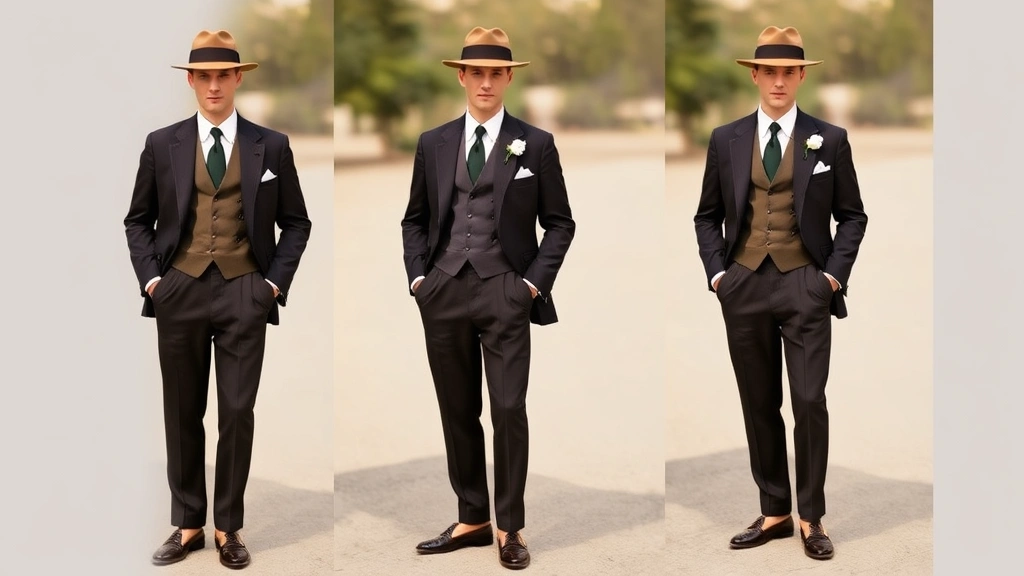
Assembling a complete 1920s ensemble requires understanding how individual elements work together harmoniously. For formal evening wear, combine a black or dark gray suit with a white dress shirt featuring a high collar, a black bow tie, patent leather oxfords, and a fedora in black or dark gray. Add a boutonniere if attending a special event, and consider a formal waistcoat in black or subtle pattern. Cufflinks, a pocket watch chain, and a silk handkerchief complete the sophisticated appearance.
For business or daytime occasions, pair a medium gray or brown suit with a striped dress shirt in subtle colors, a coordinating necktie in moderate width, and polished oxfords in matching brown or black. A fedora in complementary color and a wool overcoat for cooler weather add finishing touches. This combination projects competence and reliability while demonstrating attention to contemporary style.
Casual weekend wear offers more flexibility for personal expression. Combine a patterned sport coat in herringbone or checks with contrasting trousers in a complementary neutral shade, a soft-collared shirt in pastel or light color, and a knit tie in coordinating tones. Two-tone spectator shoes add personality, while a flat cap or casual fedora completes the look. This ensemble works beautifully for social gatherings, sporting events, or relaxed social occasions.
For summertime styling, light-colored linen or cotton suits in cream, tan, or pale gray provide comfort while maintaining sophistication. Pair with light blue or white dress shirts, subtle ties or bow ties, and straw hats or Panama hats in natural colors. Canvas or linen shoes in neutral tones work perfectly with this warm-weather palette. The key to successful 1920s styling across seasons is maintaining the silhouette and proportions while adjusting colors and fabrics for climate appropriateness.
Shopping and Sourcing Authentic Pieces
Building a 1920s wardrobe requires strategic shopping from multiple sources. Vintage clothing shops, both physical and online, offer authentic period pieces that provide genuine 1920s styling. These pieces, while potentially requiring tailoring adjustments, offer superior construction quality and authentic details that modern reproductions sometimes miss. Websites specializing in vintage menswear provide extensive selections, though prices can be significant for quality garments.
Modern reproduction companies create new pieces designed to authentic 1920s specifications, offering the advantage of proper sizing and condition without the premium vintage pricing. These manufacturers understand period construction techniques and details, producing clothing that accurately captures the era’s aesthetic. Many reproduction pieces feature improved durability and care instructions suited to contemporary lifestyles while maintaining historical accuracy.
Department stores and specialty menswear retailers increasingly offer 1920s-inspired pieces that, while not strictly historical reproductions, capture the era’s essential elements. These contemporary interpretations work excellently for those seeking 1920s style without strict historical accuracy. Checking the Style Loom Daily Blog provides current recommendations and styling inspiration for sourcing authentic pieces.
Custom tailors represent another excellent resource for creating perfectly fitted 1920s garments. Working with a tailor experienced in vintage tailoring allows you to specify exact details, fabrics, and proportions that match your vision. While more expensive than ready-made options, custom pieces ensure perfect fit and authentic construction that elevates your entire wardrobe.
Thrift stores and estate sales occasionally yield unexpected treasures—authentic 1920s pieces at fraction of specialty vintage prices. Developing an eye for period details allows savvy shoppers to identify genuine pieces among mixed merchandise. The thrill of discovering authentic period clothing at bargain prices makes these hunts worthwhile, though success requires patience and knowledge of 1920s construction standards.
Online communities dedicated to vintage fashion and 1920s style provide invaluable resources for sourcing, styling advice, and authentication. These communities connect enthusiasts, collectors, and reproduction makers, creating networks where knowledge and recommendations flow freely. Participating in these communities accelerates your learning curve and connects you with fellow style enthusiasts who share your passion for this remarkable era.
FAQ
What are the key differences between 1920s and modern menswear?
The primary differences include higher waistlines on trousers, longer jacket lengths, broader shoulders, wider ties, and more prominent hat wearing in the 1920s. The silhouette is straighter and less body-hugging than contemporary slim-fit trends. Additionally, 1920s menswear emphasized formality and accessories in ways that modern casual culture has largely abandoned, though current vintage-inspired trends are reviving these elements.
Can I wear 1920s style in contemporary settings?
Absolutely! 1920s style translates beautifully to modern contexts when adapted thoughtfully. Full period costume works for themed events, while individual elements integrate seamlessly into contemporary wardrobes. A 1920s-style suit worn with modern shoes, or vintage accessories paired with current clothing, creates interesting fusion styling that honors the era while remaining current. The key is understanding which elements work in your specific context and balancing historical accuracy with contemporary appropriateness.
How do I find my size in vintage 1920s clothing?
Vintage sizing differs significantly from modern standards, requiring careful measurement and comparison. Always request detailed measurements from sellers rather than relying on labeled sizes. Comparing specific measurements of vintage pieces to garments you currently own ensures proper fit. Many vintage 1920s pieces can be tailored by experienced alterations specialists, though extensive modifications become impractical. Building relationships with knowledgeable vintage sellers helps you understand their specific sizing patterns and preferences.
What’s the best way to care for vintage 1920s clothing?
Vintage clothing requires gentle handling and appropriate storage. Dry cleaning is often necessary, though seek cleaners experienced with vintage garments who understand delicate fabrics and construction methods. Store pieces in breathable garment bags away from direct sunlight, excessive heat, and moisture. Proper hangers prevent stretching and maintain garment shape. Professional restoration specialists can address damage while maintaining authenticity, though prevention through careful handling remains preferable to repair.
Are there affordable ways to achieve 1920s style?
Yes! Modern reproductions offer quality styling at lower price points than vintage pieces. Thrift stores occasionally yield affordable authentic pieces requiring minimal tailoring. Mixing reproduction pieces with vintage accessories creates authentic-looking ensembles without requiring complete vintage wardrobes. Building your wardrobe gradually, prioritizing quality foundational pieces, allows you to develop 1920s style sustainably. Additionally, exploring different fashion styles helps you understand how 1920s elements can enhance your existing wardrobe without requiring complete wardrobe replacement.
How do I style 1920s fashion for different body types?
The 1920s silhouette, with its straight lines and high waistlines, actually accommodates diverse body types well. The relaxed fit through hips and thighs works beautifully for larger frames, while the elevated waistline creates flattering proportions for various builds. Selecting appropriate jacket lengths, ensuring proper trouser proportions, and choosing flattering colors and patterns allows you to adapt 1920s style to your specific physiology. Working with experienced tailors ensures proper fit regardless of body type, making authentic 1920s styling accessible to everyone.