1880s Fashion Trends: A Historian’s Insight
The 1880s represent one of the most visually dramatic decades in fashion history, a period when silhouettes reached their most exaggerated proportions and ornamentation knew few bounds. This era, spanning from 1880 to 1889, witnessed the rise of the “Bustle Period,” a time when women’s fashion became increasingly theatrical and architecturally complex. The decade marked a fascinating intersection of Victorian propriety and burgeoning modernity, where fashion served as a powerful statement of social status, gender roles, and cultural values. Understanding 1880s fashion requires us to examine not just the garments themselves, but the social, technological, and economic forces that shaped them.
Fashion historians recognize the 1880s as a pivotal moment when industrial manufacturing began to democratize style, even as the wealthy continued to invest in increasingly elaborate handmade garments. The introduction of new synthetic dyes, improved sewing machine technology, and the expansion of department stores transformed how people accessed and consumed fashion. This decade offers invaluable lessons for contemporary style enthusiasts seeking to understand how fashion style evolves and how historical trends continue to influence modern aesthetics. Whether you’re interested in historical fashion evolution or seeking to understand how to find your personal style, the 1880s provide a rich tapestry of inspiration and insight.

The Bustle Silhouette: Engineering Fashion
The most distinctive feature of 1880s fashion was undoubtedly the bustle—a framework of steel, whalebone, or horsehair that projected dramatically from the back of women’s skirts. Unlike the earlier Victorian bustle of the 1870s, which created a more gradual slope, the 1880s bustle became increasingly pronounced and shelf-like. This architectural marvel reached its apex around 1884-1887, when bustles protruded nearly perpendicular to the body, creating silhouettes that seem almost impossible to modern observers. The bustle required a complex internal structure: steel hoops, springs, and frameworks were meticulously engineered to support the weight of heavy fabrics while maintaining the desired projection.
The engineering of the bustle demonstrates how fashion functioned as both art and science during this period. Corset makers and dressmakers developed specialized skills to construct garments that were simultaneously decorative and structurally sound. The bustle’s prominence made movement challenging and restricted women’s physical freedom, yet it became the height of fashion desirability among the upper and middle classes. This paradox reveals much about Victorian society’s complex relationship with women’s bodies and femininity. The bustle silhouette became so iconic that it defined an entire decade, and understanding this complete fashion history timeline helps contextualize how silhouettes shift across centuries.
Fashion designers and couturiers of the era competed fiercely to create the most innovative bustle designs. Houses like Worth in Paris and various London dressmakers experimented with different materials and construction methods. Some bustles featured multiple tiers, while others incorporated complex pulley systems. The bustle became so exaggerated that satirical illustrations and cartoons of the period frequently mocked its extreme proportions, yet this ridicule only seemed to intensify the fashion’s appeal among those who could afford it.

Women’s Clothing: Fabrics and Details
The 1880s witnessed an explosion of textile innovation and availability. Silk, satin, velvet, and taffeta dominated high fashion, chosen for their lustrous qualities and ability to hold shape. The development of synthetic dyes created new color possibilities, though natural dyes remained prestigious among the wealthiest consumers. Wool fabrics were employed for day dresses and visiting costumes, while cotton and linen served more practical purposes. The decade’s emphasis on surface decoration meant that fabric selection was often secondary to embellishment opportunities.
Embellishment defined 1880s women’s fashion more than perhaps any other era. Dresses featured elaborate beadwork, jet embroidery, silk fringe, lace insertions, and passementerie in stunning profusion. Bodices became increasingly tight and elaborately constructed, often featuring elaborate boning and multiple layers of fabric. The trend toward ornamentation reflected both technological advances in textile production and the Victorian era’s aesthetic philosophy that “more is more.” Sleeves evolved significantly throughout the decade, beginning relatively fitted and gradually developing into the famous “leg of mutton” sleeve shape that would dominate the 1890s.
Skirts underwent constant evolution throughout the 1880s. Early in the decade, skirts featured gathered fullness and multiple tiers of ruffles. As the bustle became more prominent, skirts became increasingly fitted through the hips and thighs, with all fullness concentrated at the back. By mid-decade, skirts often featured elaborate drapery arrangements, with swags, panniers, and elaborate arrangements of fabric creating three-dimensional sculptural effects. The construction of these skirts required significant yardage—a fashionable dress might require eight to twelve yards of fabric, and wealthy women often owned dozens of dresses to accommodate different social occasions. Understanding types of fashion helps us appreciate how the 1880s represented a specific category of ornamented, status-conscious design.
Bodices during this period became increasingly elaborate, often featuring multiple layers, contrasting fabrics, and intricate construction. The corset remained essential to achieving the desired silhouette, and the fitted bodice directly reflected the shape imposed by tight corseting. Many bodices featured elaborate closure systems using hooks, buttons, and laces. Asymmetrical designs became fashionable, with bodices featuring draped elements on one side or elaborate fastenings that created visual interest and demonstrated the wearer’s access to skilled seamstresses.
Men’s Fashion in the 1880s Era
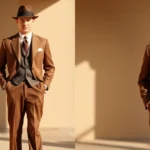
While women’s fashion underwent dramatic transformations, men’s fashion during the 1880s became increasingly standardized and conservative. The three-piece suit—consisting of jacket, waistcoat, and trousers—became the standard uniform for gentlemen, a trend that would continue to dominate men’s formal wear into the twenty-first century. The silhouette was relatively straight and structured, with jackets featuring a pronounced cutaway front and long coat tails. Waistcoats, often made from patterned silk or wool, provided an opportunity for subtle self-expression within the constraints of formal convention.
The 1880s saw the emergence of distinct categories of men’s clothing for different occasions. Morning coats, frock coats, lounge jackets, and smoking jackets each served specific social functions, and a well-dressed gentleman maintained a wardrobe encompassing all these variations. Collar styles evolved throughout the decade, with high starched collars becoming increasingly fashionable. Neckwear became an important accessory, with elaborate ties, cravats, and bow ties offering subtle opportunities for individuality. The color palette for men’s fashion remained muted—blacks, grays, browns, and dark blues dominated, with pattern limited primarily to waistcoats and ties.
Sporting and leisure wear represented one area where men’s fashion could express greater creativity. Tweed suits, knickerbockers, and Norfolk jackets provided more relaxed alternatives for country pursuits. These garments featured more visible pattern and texture than formal wear, and their construction emphasized comfort and practicality. The development of these specialized categories reflects how 1880s society created distinct codes of dress for different contexts, a phenomenon that continues to influence contemporary fashion hierarchies.
Accessories and Adornments
Accessories assumed paramount importance in 1880s fashion, functioning as essential elements rather than mere additions. Gloves, typically made from kid leather or lace, were absolutely essential for respectable women, with different styles appropriate for morning, afternoon, and evening wear. Long gloves reaching above the elbow became fashionable for evening occasions, and the quality and fit of one’s gloves communicated social status. Hats evolved into increasingly elaborate creations, featuring feathers, birds, flowers, and elaborate trimmings. The elaborate hats of this era, some weighing several pounds, required substantial skill to construct and maintain balance while wearing.
Jewelry during the 1880s reflected Victorian sensibilities regarding ornamentation and symbolism. Brooches, lockets, bracelets, and rings allowed women to display wealth and taste. Jet jewelry became particularly fashionable, especially for mourning wear—a significant category given the era’s strict mourning protocols. Diamonds, pearls, and colored gemstones appeared in elaborate settings, often incorporating symbolic motifs such as flowers, insects, or serpents. Men’s jewelry remained minimal, typically limited to watch chains, cufflinks, and studs, though these items could be quite elaborate and expensive.
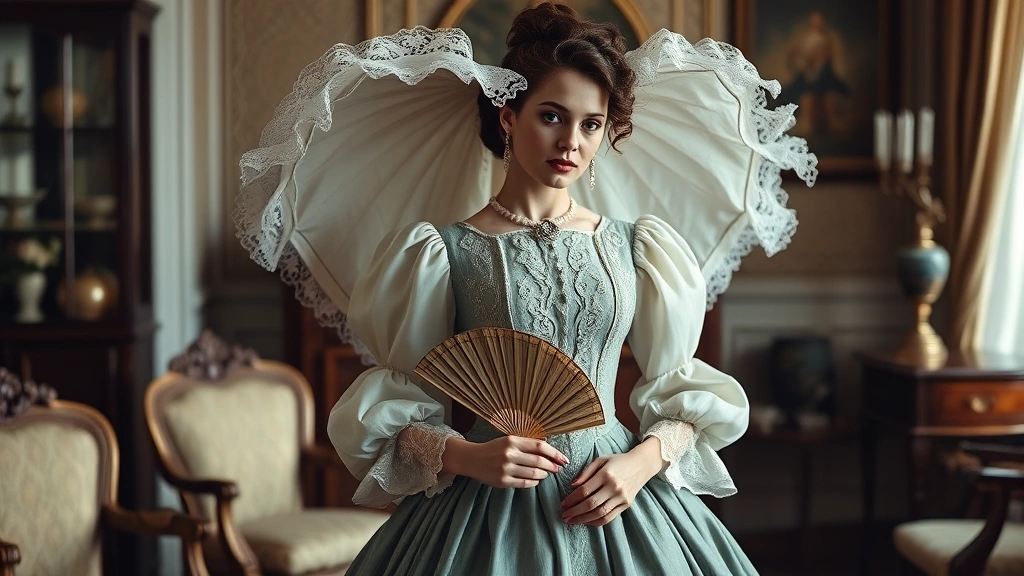
Fans represented another crucial accessory, particularly for evening wear. 1880s fans featured elaborate handles made from bone, ivory, or tortoiseshell, with fan leaves constructed from silk, lace, or feathers. Fans served both practical and communicative functions—the art of fan language allowed women to send coded messages through specific fan movements, a subtle form of expression within restrictive social conventions. Parasols and umbrellas provided protection from sun and rain while serving as fashion statements, often featuring elaborate handles and decorative coverings.
Footwear during the 1880s featured relatively narrow, pointed toes and modest heels. Women’s shoes were often elaborately decorated with buttons, buckles, or ribbon bows. The emphasis on decorative detail extended to hosiery, with women wearing stockings featuring elaborate patterns and colors. Boots remained popular for outdoor wear, and the quality and style of one’s boots communicated social position. Men’s footwear emphasized polished leather and conservative styling, with shoes and boots serving as important status markers.
Color Palettes and Patterns
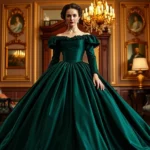
The 1880s embraced rich, saturated colors with enthusiasm. Deep jewel tones—emerald green, sapphire blue, ruby red, and amethyst purple—dominated high fashion. These colors were achieved through the increasingly sophisticated synthetic dye industry, which made such vibrant hues more widely available and affordable than ever before. Black remained essential for formal evening wear and mourning garments, while cream and pale colors dominated daytime wear among the most fashionable. The contrast between the richness of evening colors and the relative restraint of daytime palettes reflected Victorian social conventions regarding appropriate dress for different occasions.
Patterns featured prominently in 1880s textiles, though their application followed specific rules. Stripes appeared in both vertical and horizontal orientations, often combining multiple colors. Plaids and checks dominated sporting and country wear. Floral patterns, rendered in increasingly realistic detail through advanced printing techniques, appeared on silk and cotton fabrics. Damasks and jacquards, woven patterns created during the manufacturing process, added texture and visual interest to more formal fabrics. The combination of multiple patterns in a single outfit, which would horrify modern minimalists, was considered entirely acceptable and even desirable in 1880s fashion.
The interplay between solid and patterned fabrics became an art form in 1880s dress construction. A single dress might combine a patterned silk bodice with a solid taffeta skirt, accented with contrasting ribbon or braid trim. This bold approach to color and pattern combination reflected the era’s maximalist aesthetic philosophy. The development of advanced textile printing technology made such elaborate pattern combinations more achievable for middle-class consumers, though the finest examples remained the province of wealthy women who could afford custom dressmaking.
Social Impact and Class Distinctions
1880s fashion functioned as a sophisticated system of social communication, instantly conveying information about the wearer’s class, marital status, age, and moral character. The extreme elaboration of fashionable dress required significant financial investment, making it an effective marker of wealth and status. A fashionable woman’s wardrobe might cost thousands of dollars in an era when working-class families earned only a few hundred dollars annually. This economic disparity meant that fashion served as a visual manifestation of class hierarchy.
The bustle’s prominence during this decade reveals much about Victorian attitudes toward women’s bodies and femininity. The exaggerated projection created an almost caricatured silhouette that emphasized women’s curves while simultaneously restricting their movement and physical freedom. This paradox—the celebration of femininity through forms that constrained women—reflects the era’s complex and contradictory attitudes toward women’s roles and bodies. Fashion historians see in the 1880s bustle a visual representation of the tensions between Victorian idealization of womanhood and the growing women’s rights movement that challenged traditional gender roles.
For working-class women, fashion presented different challenges and opportunities. While they could not afford the elaborate garments of the wealthy, they attempted to incorporate fashionable elements into more modest wardrobes. Ready-made clothing, increasingly available through department stores and mail-order catalogs, allowed working-class women to approximate fashionable styles at reduced cost. This democratization of fashion was one of the decade’s most significant developments, creating a broader fashion-conscious middle class and establishing patterns of consumption that would accelerate throughout the twentieth century.
The StyleLoom Daily Blog explores how historical fashion continues to influence contemporary style choices, and the 1880s provide particularly rich examples of how fashion codes communicate social information. Understanding historical fashion trends for women over 50 requires appreciating how age-appropriate dressing has evolved since the restrictive codes of the Victorian era.
Professional dressmakers and couturiers achieved significant social status during the 1880s, as their skills were essential to achieving fashionable appearance. The great couture houses of Paris, particularly the House of Worth, established the standards that fashionable women worldwide attempted to emulate. Fashion magazines, which proliferated during this decade, spread knowledge of fashionable styles and created a shared visual culture of fashion aspiration. These publications featured elaborate illustrations showing the latest styles, and women used these images as references when commissioning dresses from local dressmakers.
FAQ
What was the most distinctive feature of 1880s fashion?
The bustle—an elaborate framework projecting dramatically from the back of women’s skirts—represents the most iconic feature of 1880s fashion. These architectural structures reached their most exaggerated proportions during the mid-1880s, creating shelf-like projections that seem almost impossible by modern standards. The bustle required complex engineering using steel, whalebone, and horsehair, and its prominence made it the defining silhouette of the decade.
How did men’s fashion differ from women’s fashion in the 1880s?
While women’s fashion became increasingly elaborate and decorative, men’s fashion grew more standardized and conservative. The three-piece suit became the standard uniform for gentlemen, with relatively straight lines and muted colors. Men’s fashion emphasized propriety and restraint, with minimal ornamentation, while women’s fashion celebrated maximum embellishment and dramatic silhouettes. This contrast reflected Victorian gender ideologies and different social expectations for men and women.
What materials were commonly used in 1880s garments?
Silk, satin, velvet, taffeta, wool, cotton, and linen dominated 1880s fashion. The development of synthetic dyes made vibrant colors widely available, though natural dyes remained prestigious. Embellishment materials included beads, jet, silk fringe, lace, and passementerie. The decade’s technological advances in textile production made elaborate fabrics and patterns increasingly accessible to middle-class consumers.
How did fashion communicate social status in the 1880s?
Fashion served as a sophisticated system of social communication during the 1880s. The extreme elaboration of fashionable dress required significant financial investment, making it an effective status marker. Details such as the quality of materials, complexity of construction, and extent of ornamentation instantly conveyed information about the wearer’s wealth and social position. The ability to maintain multiple elaborate dresses for different occasions was a luxury only the wealthy could afford.
What role did accessories play in 1880s fashion?
Accessories assumed paramount importance in 1880s fashion, functioning as essential elements rather than mere additions. Gloves, hats, fans, parasols, jewelry, and footwear all communicated important information about the wearer’s status and taste. These items required significant skill to construct and maintain, and their quality directly reflected the wearer’s social position. Elaborate hats featuring feathers, birds, and flowers became particularly fashionable and sometimes weighed several pounds.
How did the bustle affect women’s movement and daily life?
The exaggerated bustle of the 1880s severely restricted women’s physical freedom and movement. Sitting, bending, and climbing stairs became challenging with such pronounced projections from the back. Yet fashionable women endured these restrictions as the price of maintaining respectable appearance. This paradox—the celebration of femininity through forms that constrained women—reveals much about Victorian attitudes toward women’s bodies and their prescribed social roles.
How did ready-made clothing affect 1880s fashion?
The expansion of ready-made clothing and department stores democratized fashion access during the 1880s. While wealthy women continued to commission custom dresses from couturiers, middle and working-class women could purchase ready-made garments that approximated fashionable styles at reduced cost. This development created a broader fashion-conscious consumer base and established patterns of fashion consumption that accelerated throughout the twentieth century.
What external influences shaped 1880s fashion trends?
Technological advances in textile manufacturing, synthetic dyes, and sewing machine production enabled the elaborate fashions of the 1880s. The expansion of department stores and mail-order catalogs made fashionable styles more widely available. Fashion magazines proliferated during this decade, spreading knowledge of fashionable styles and creating shared visual culture of fashion aspiration. Colonialism and global trade also influenced color choices and decorative elements.